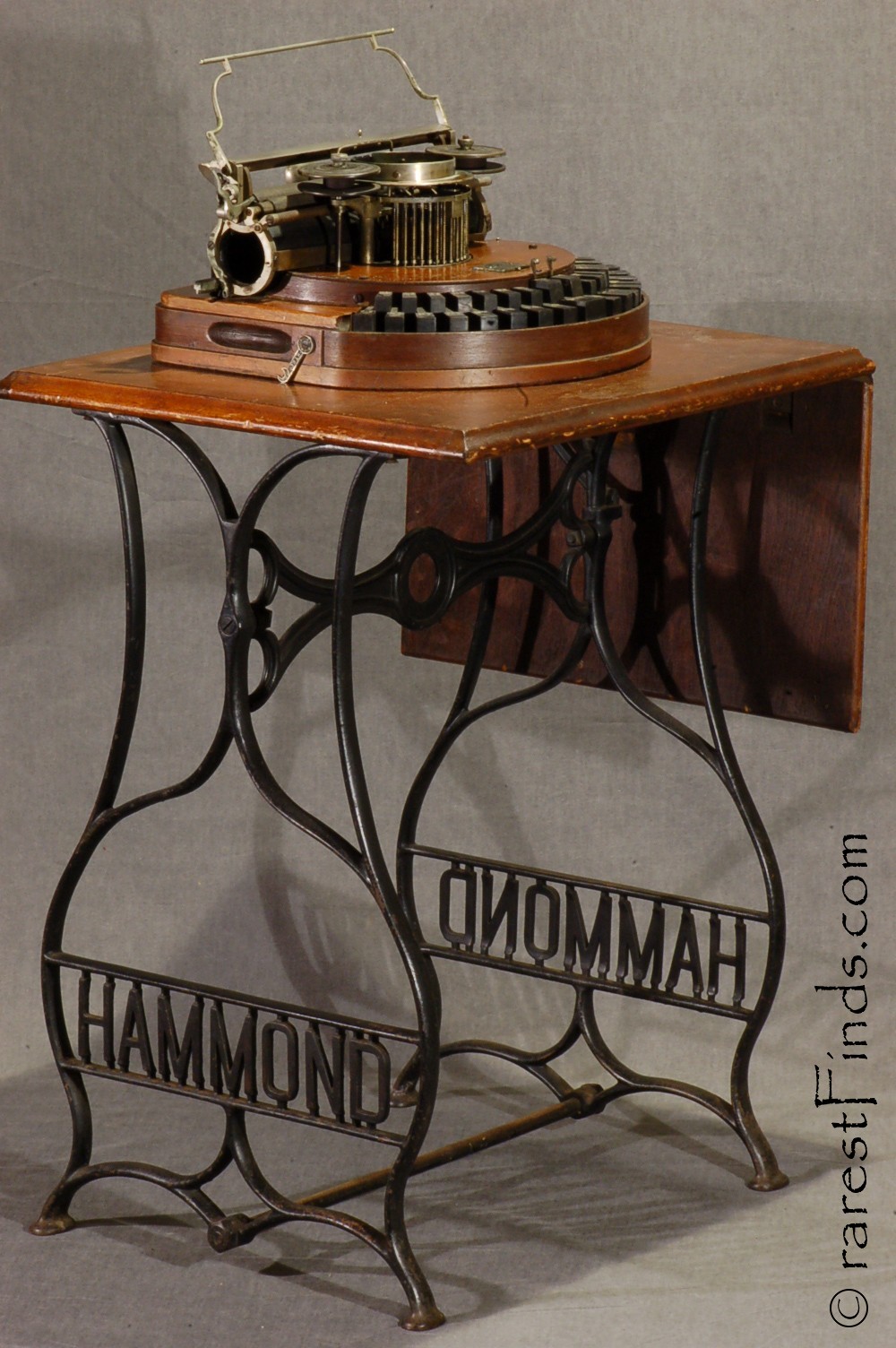
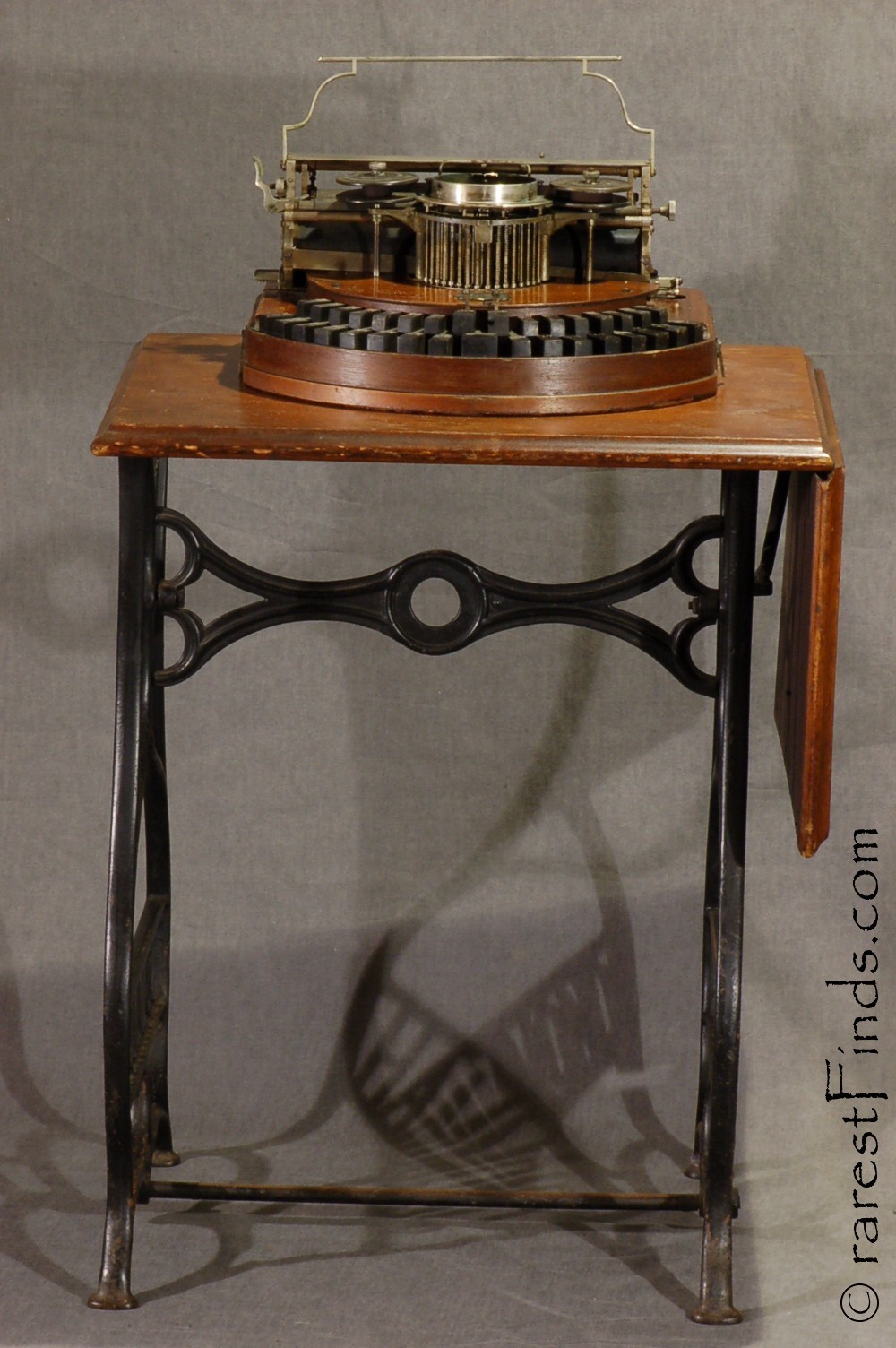
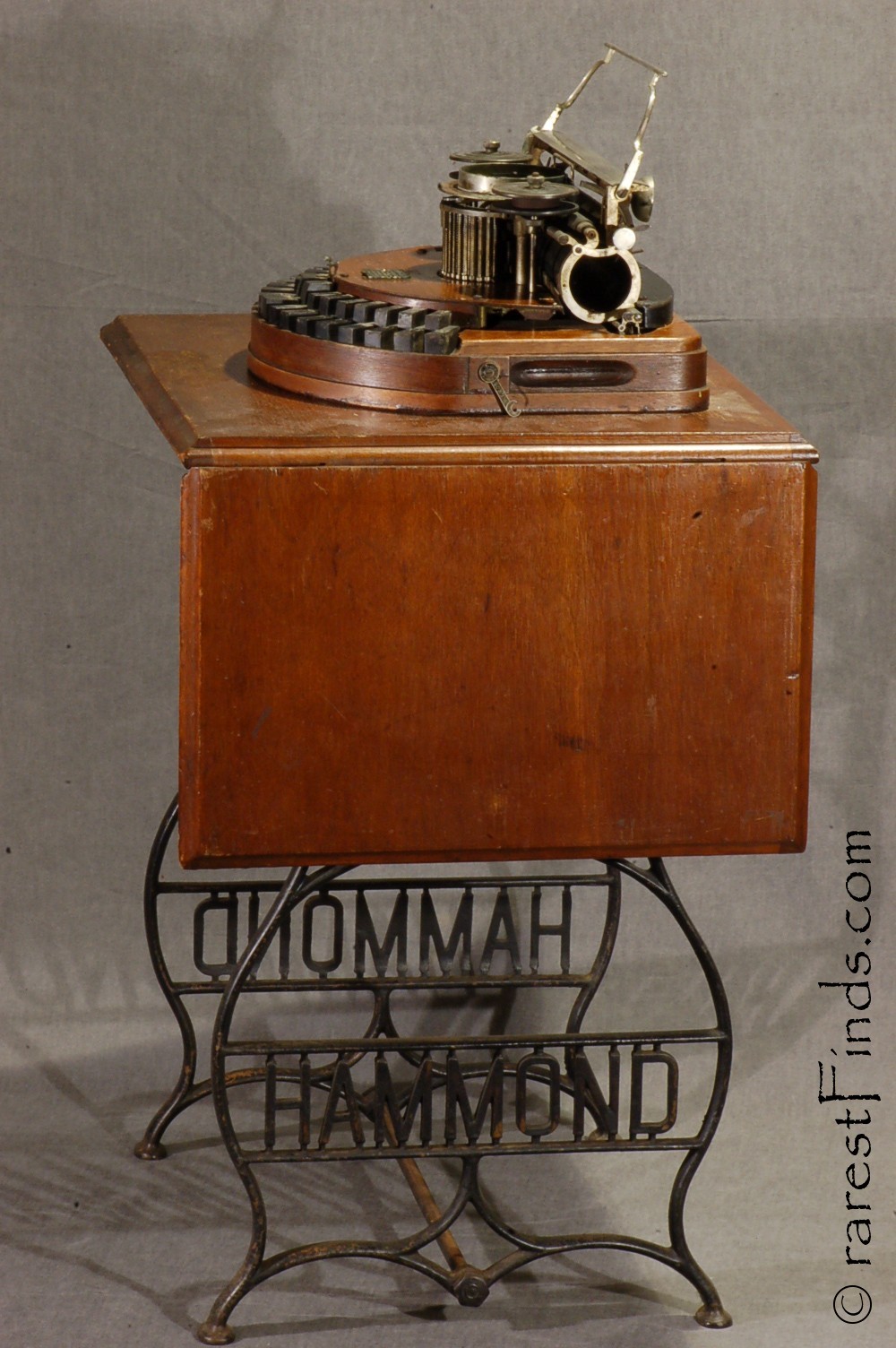
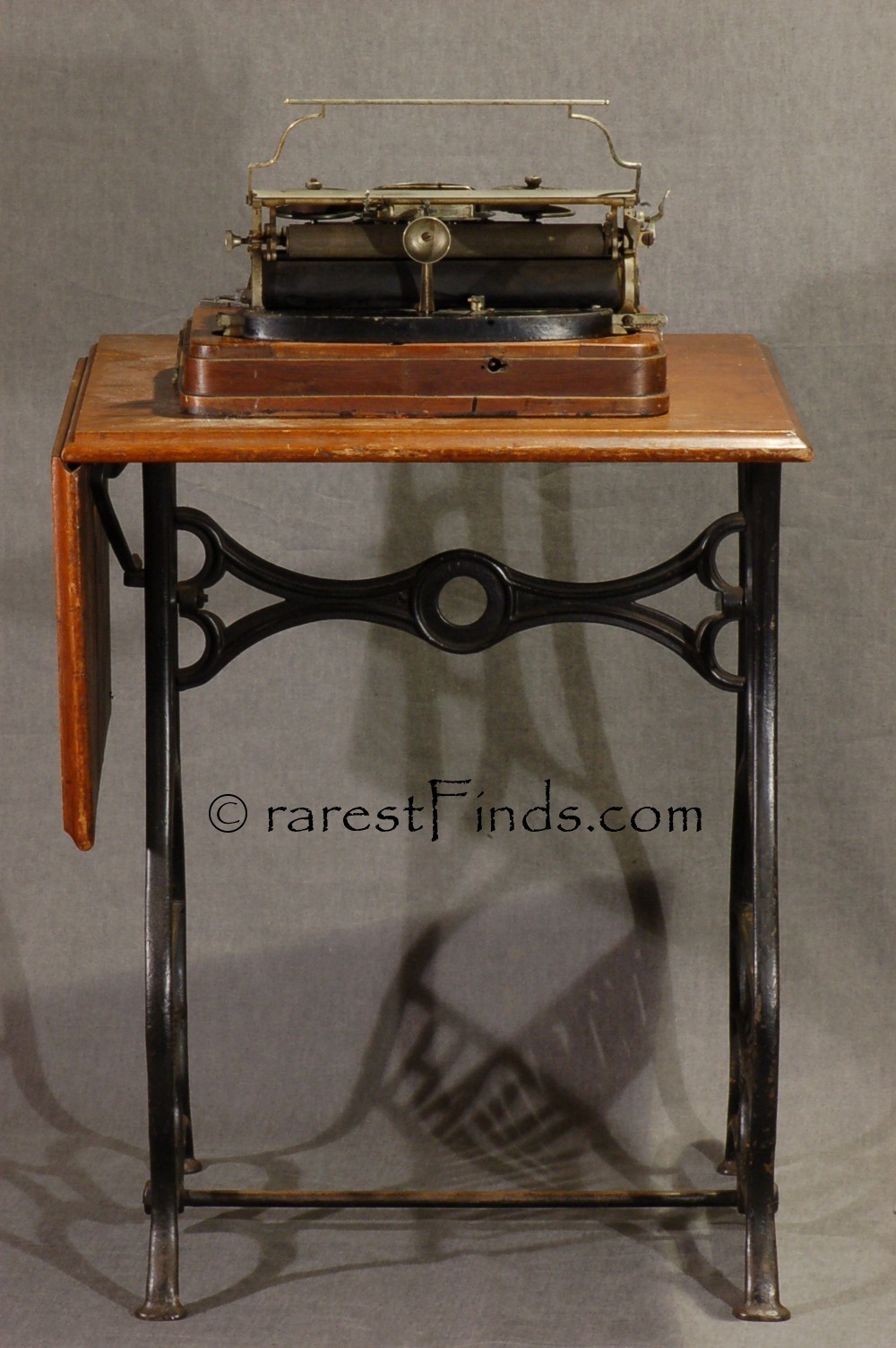
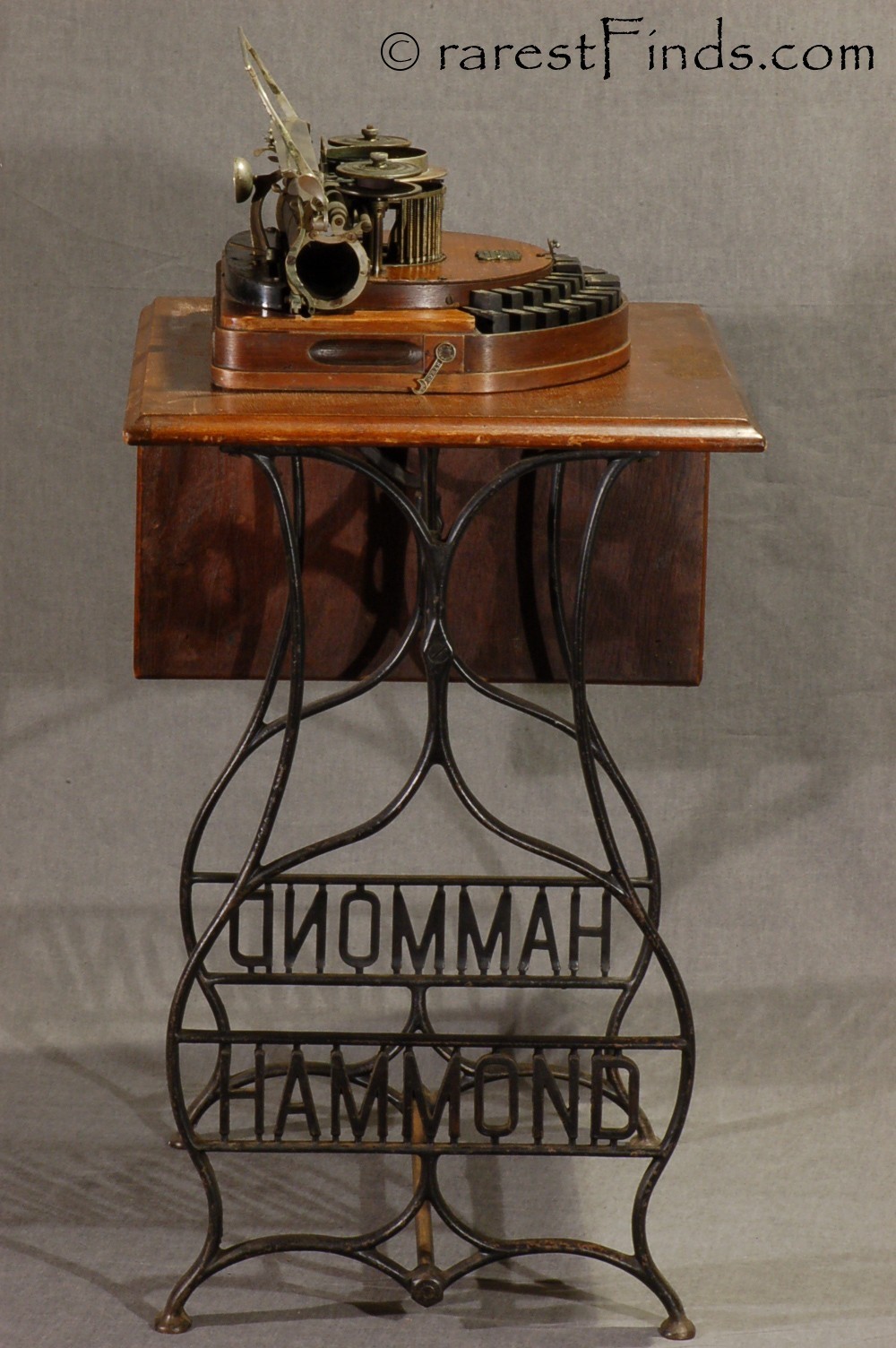
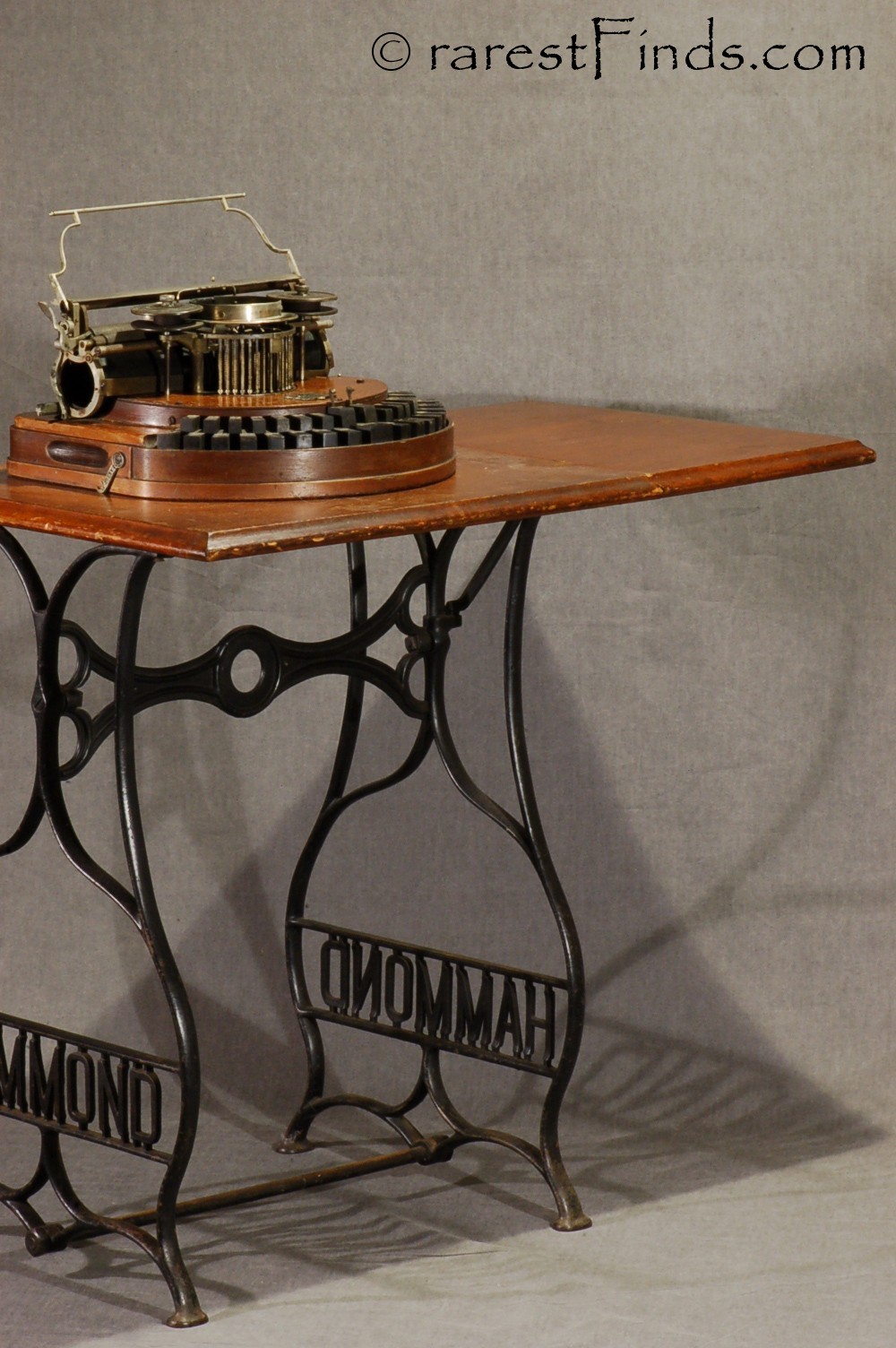
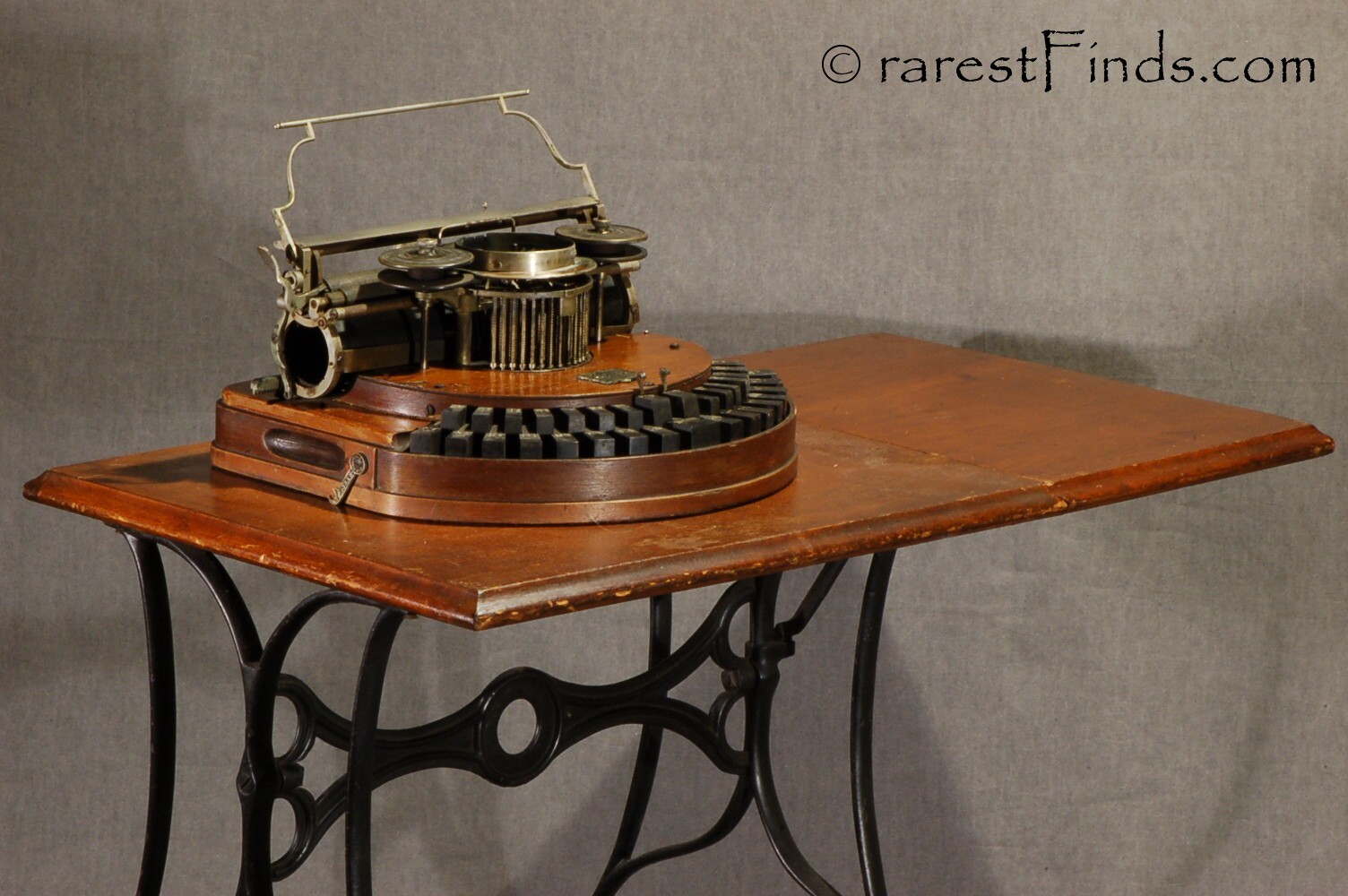
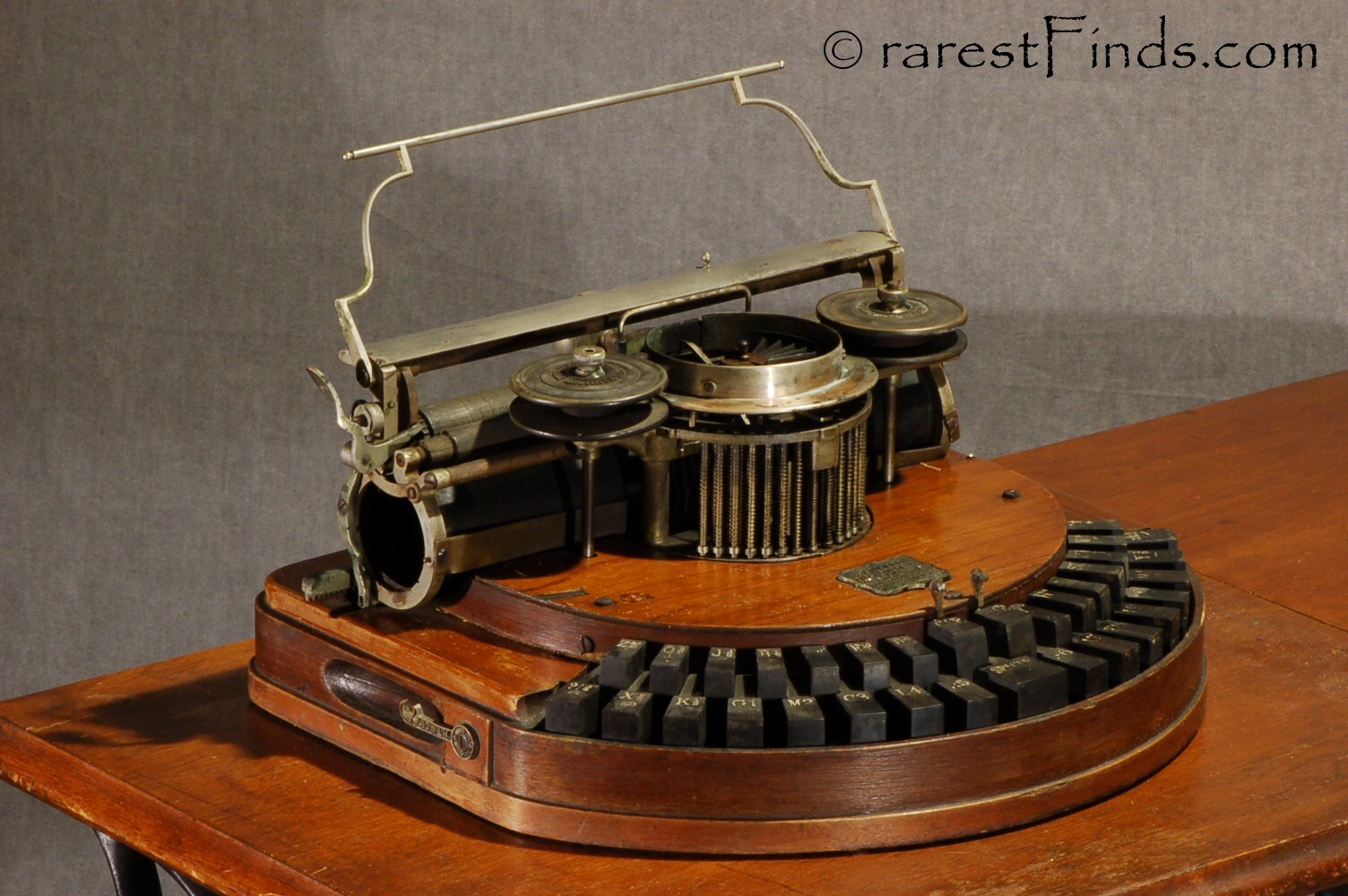
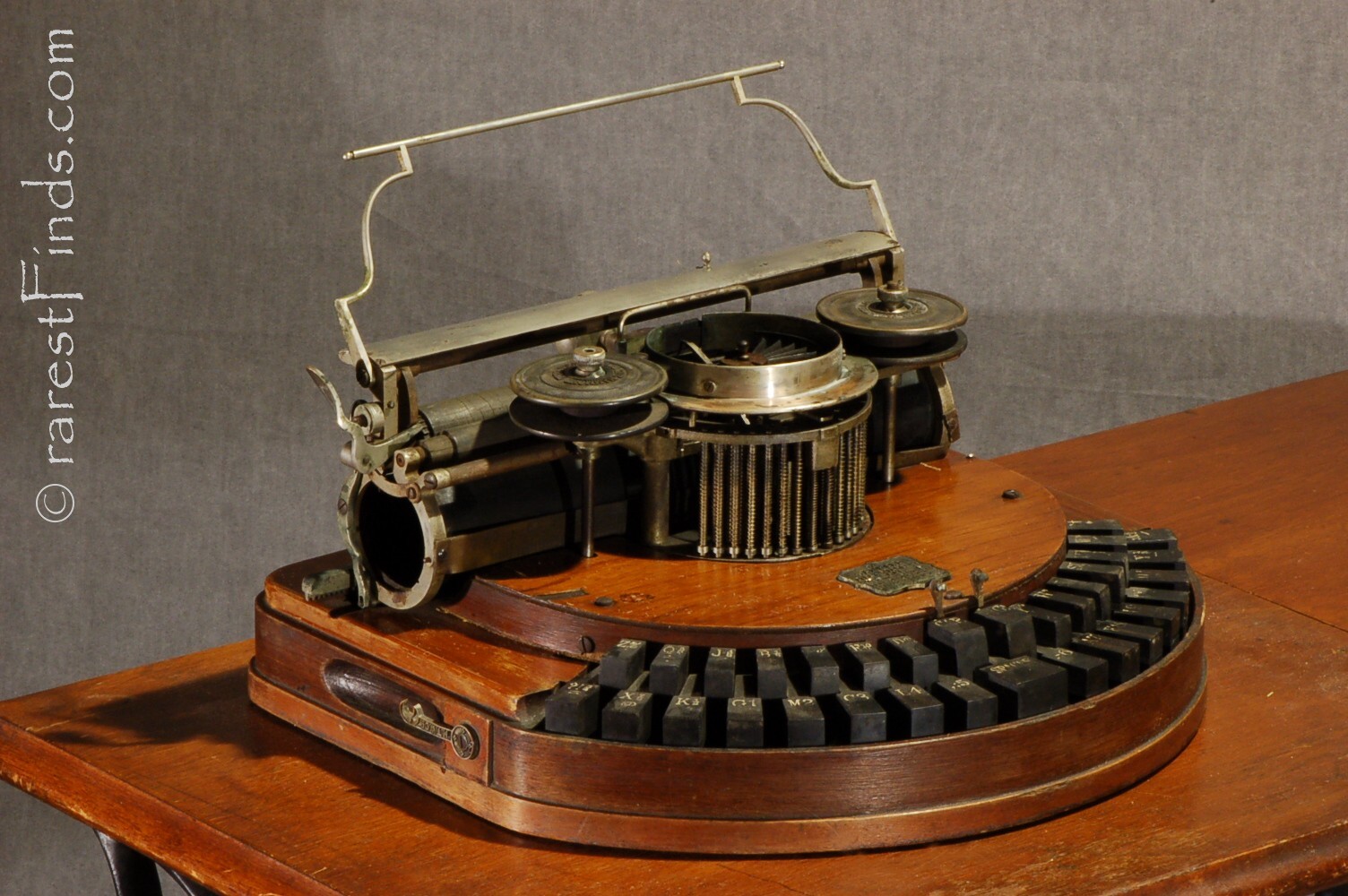
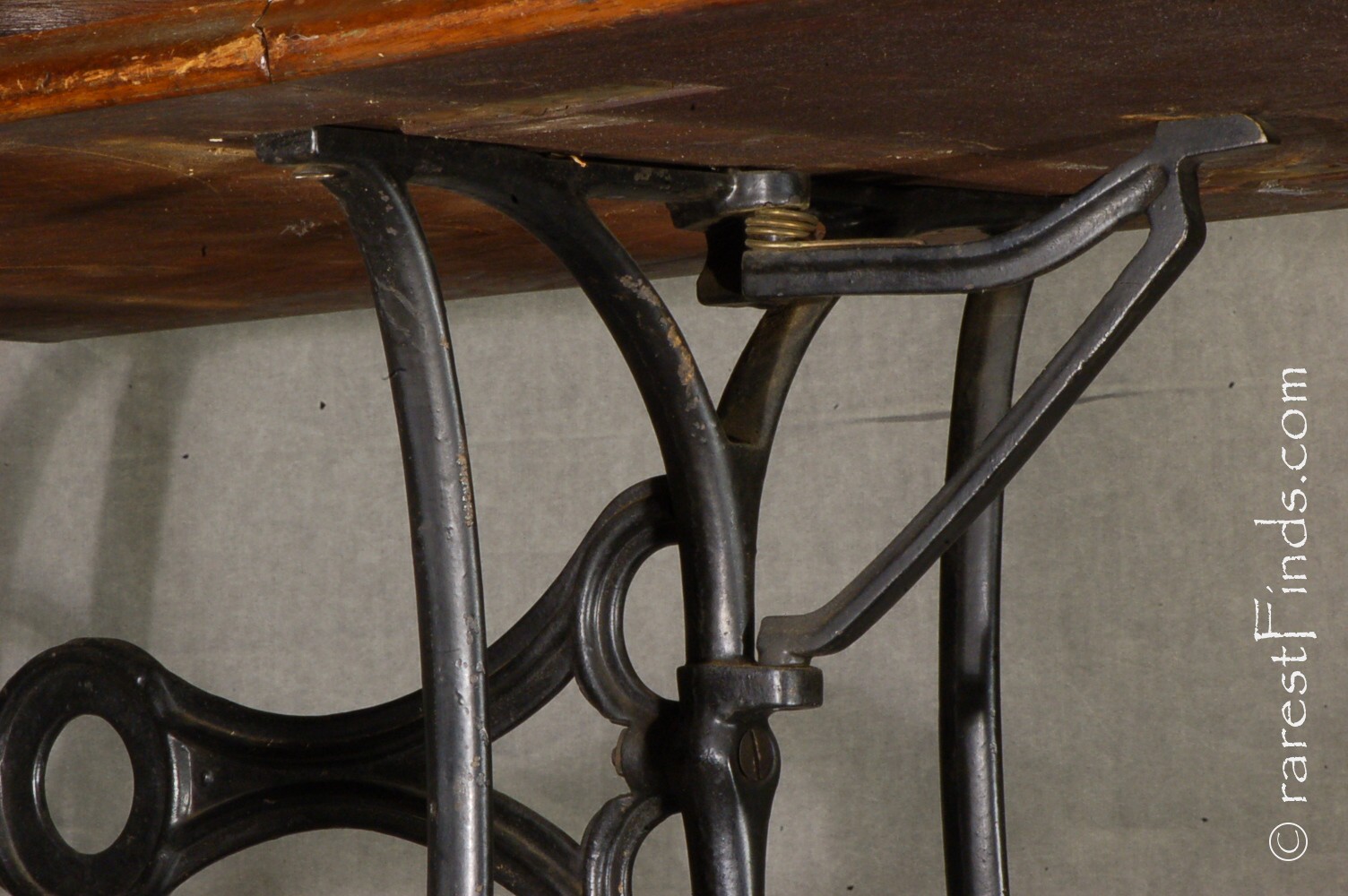
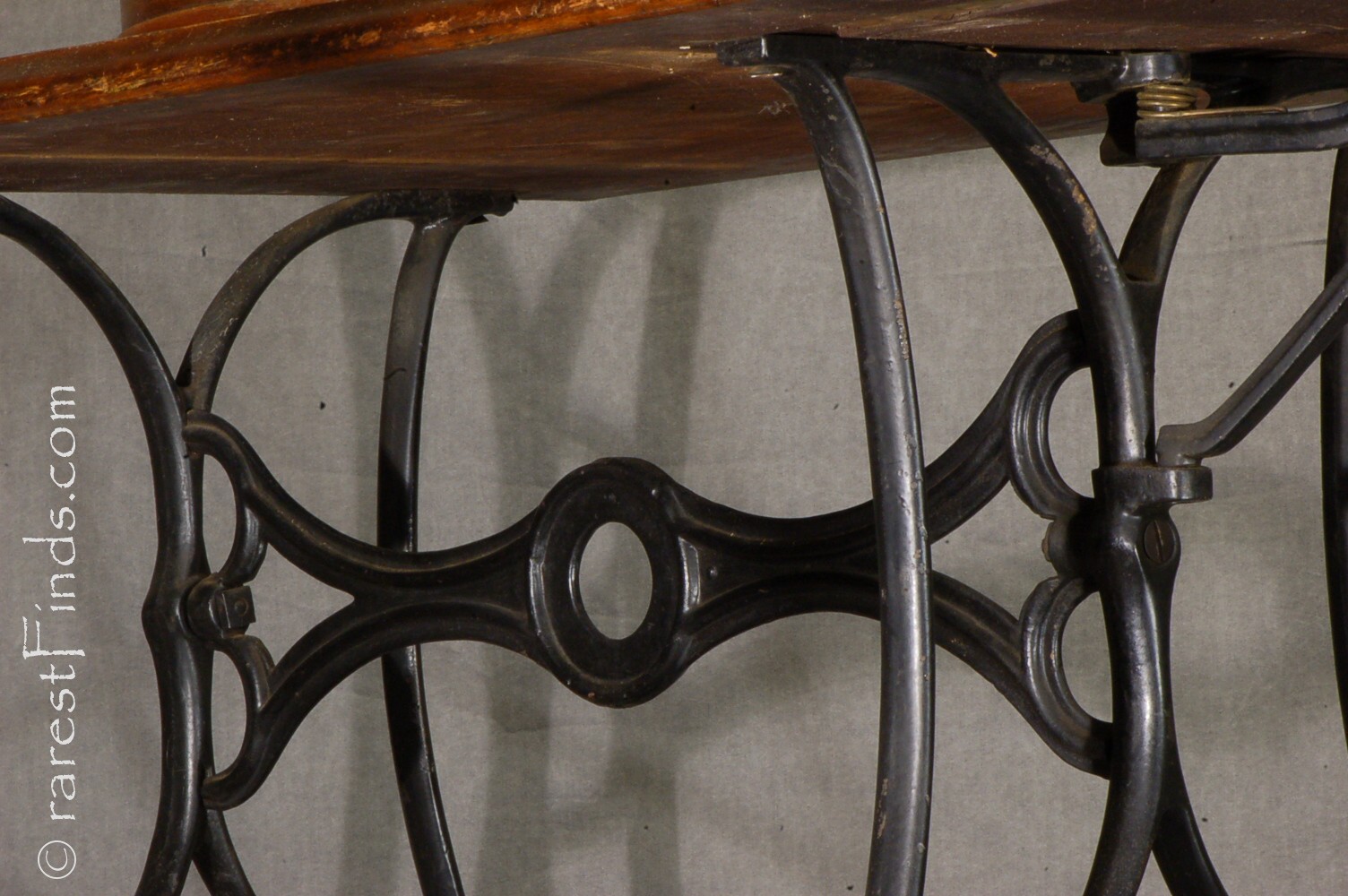
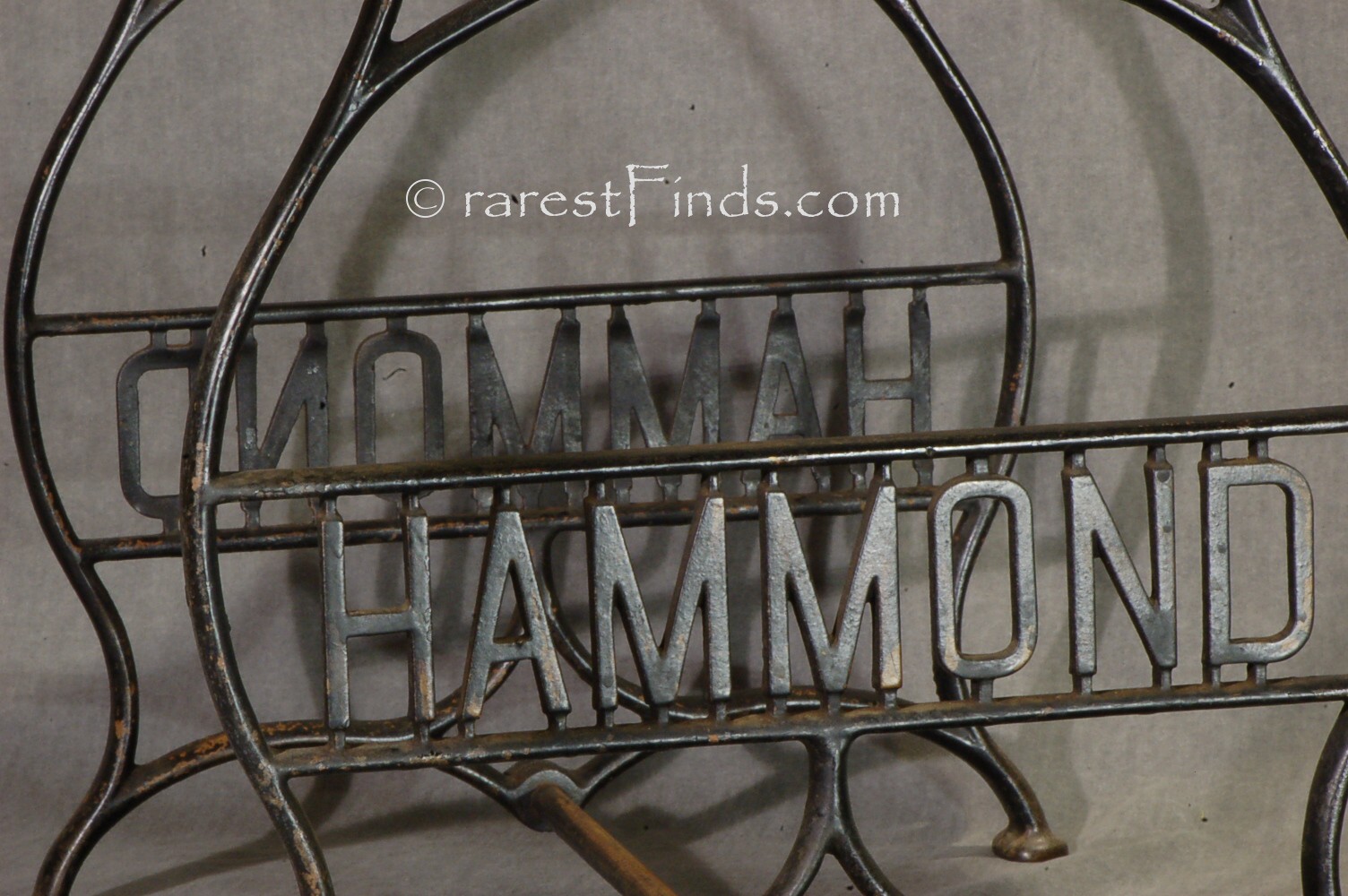
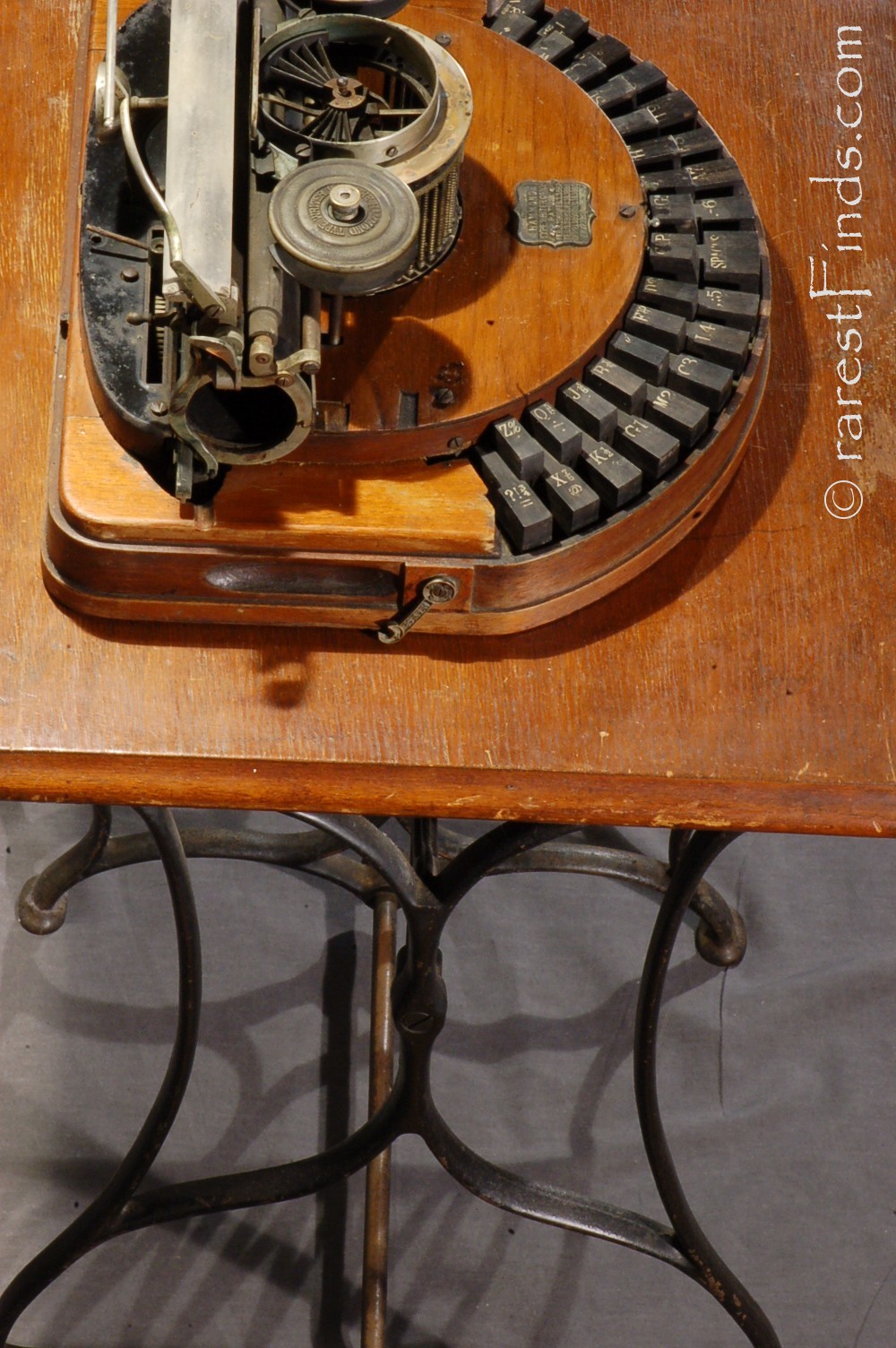
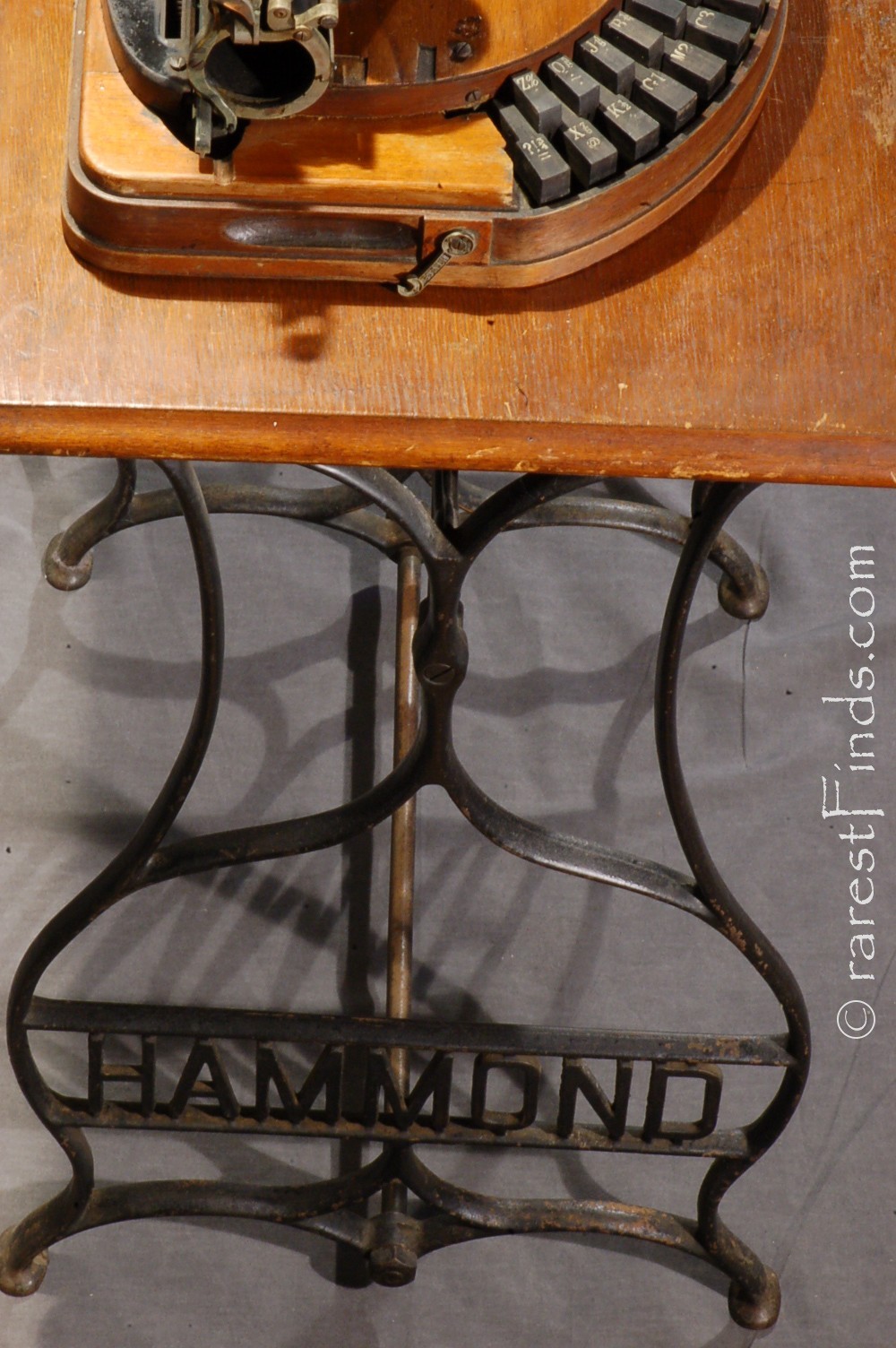
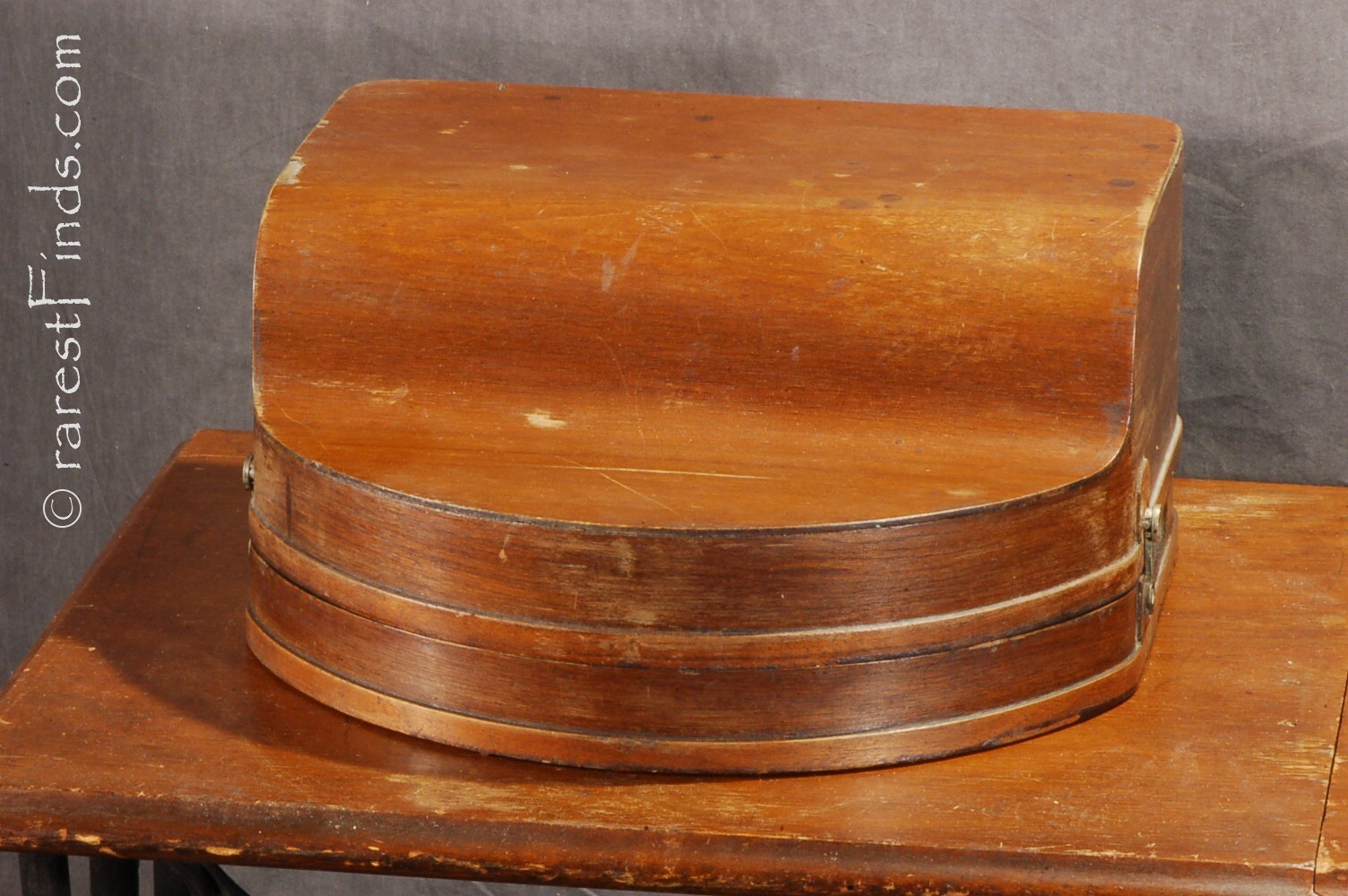
Hammond Type Writer, serial number 246, Manufactured in 1884, with table.
Patents, click on any image to see larger image!
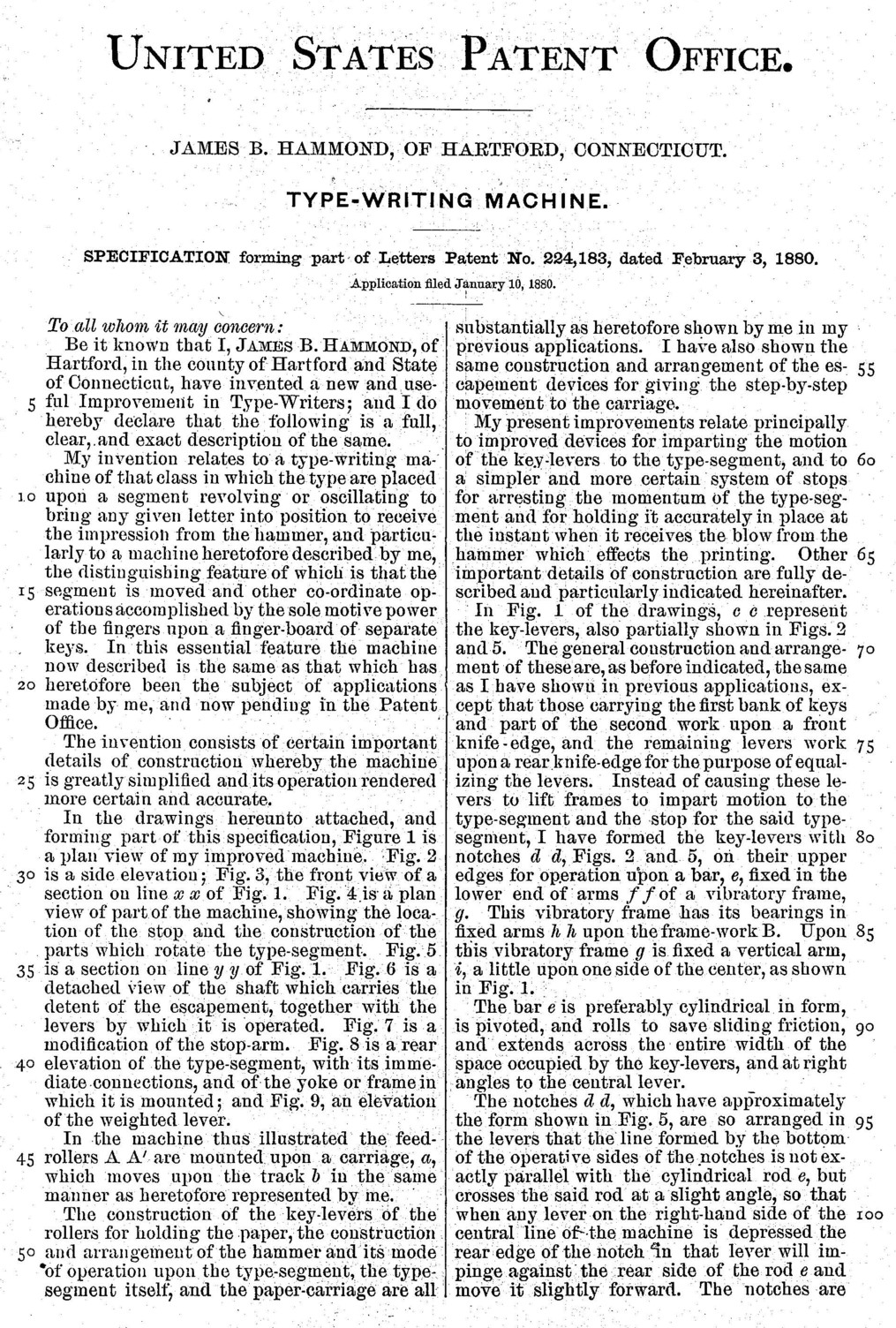
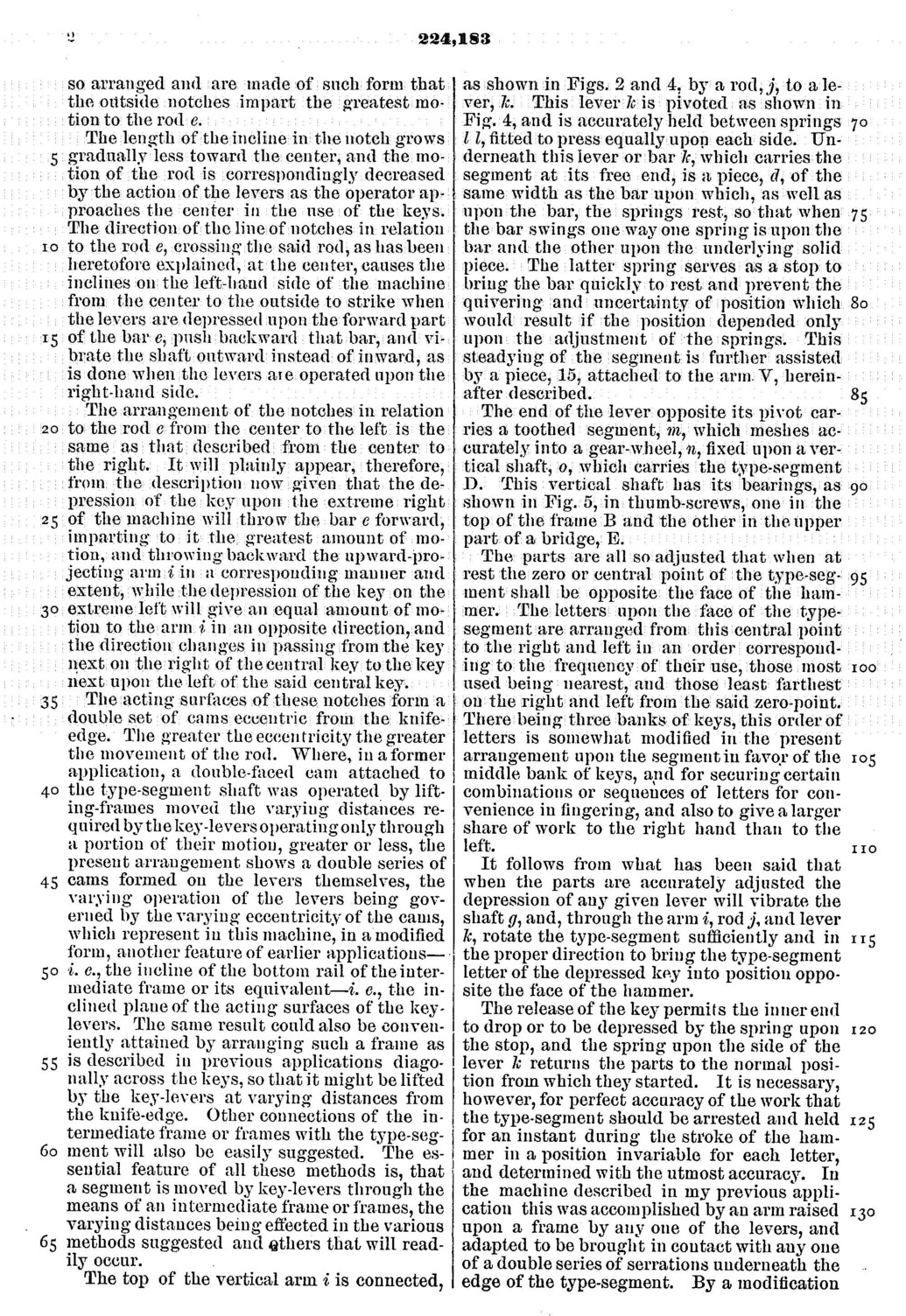
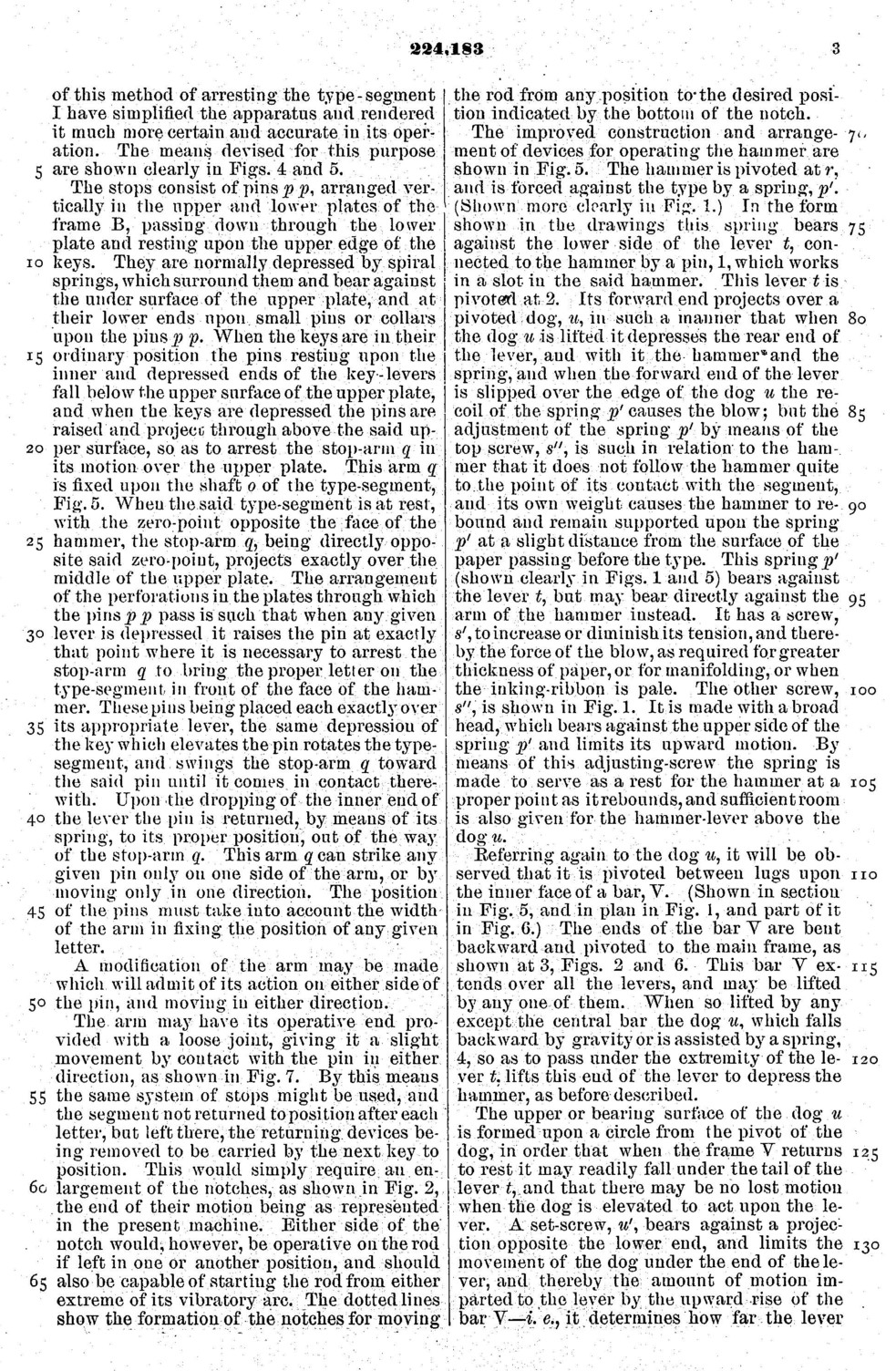
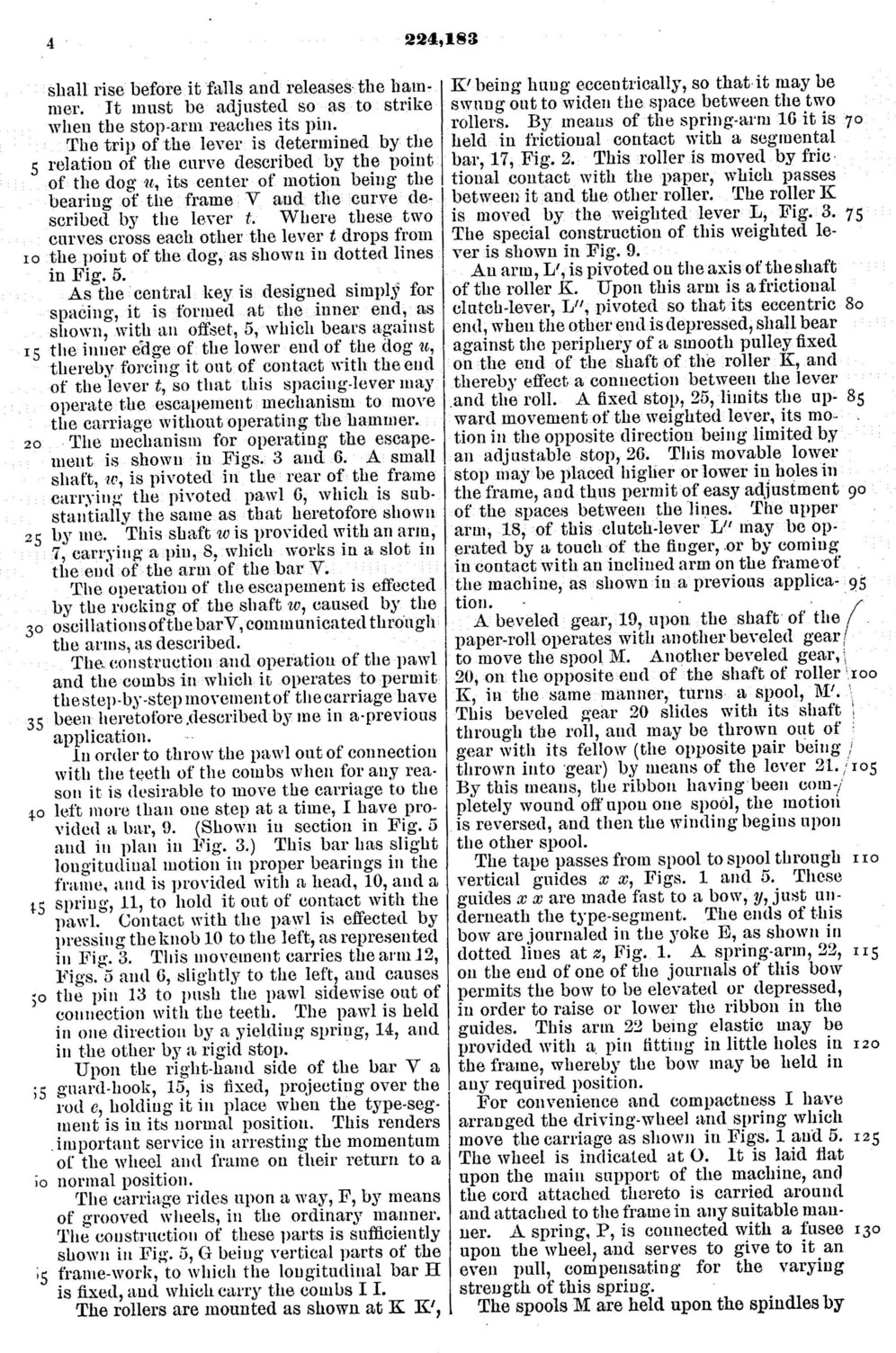
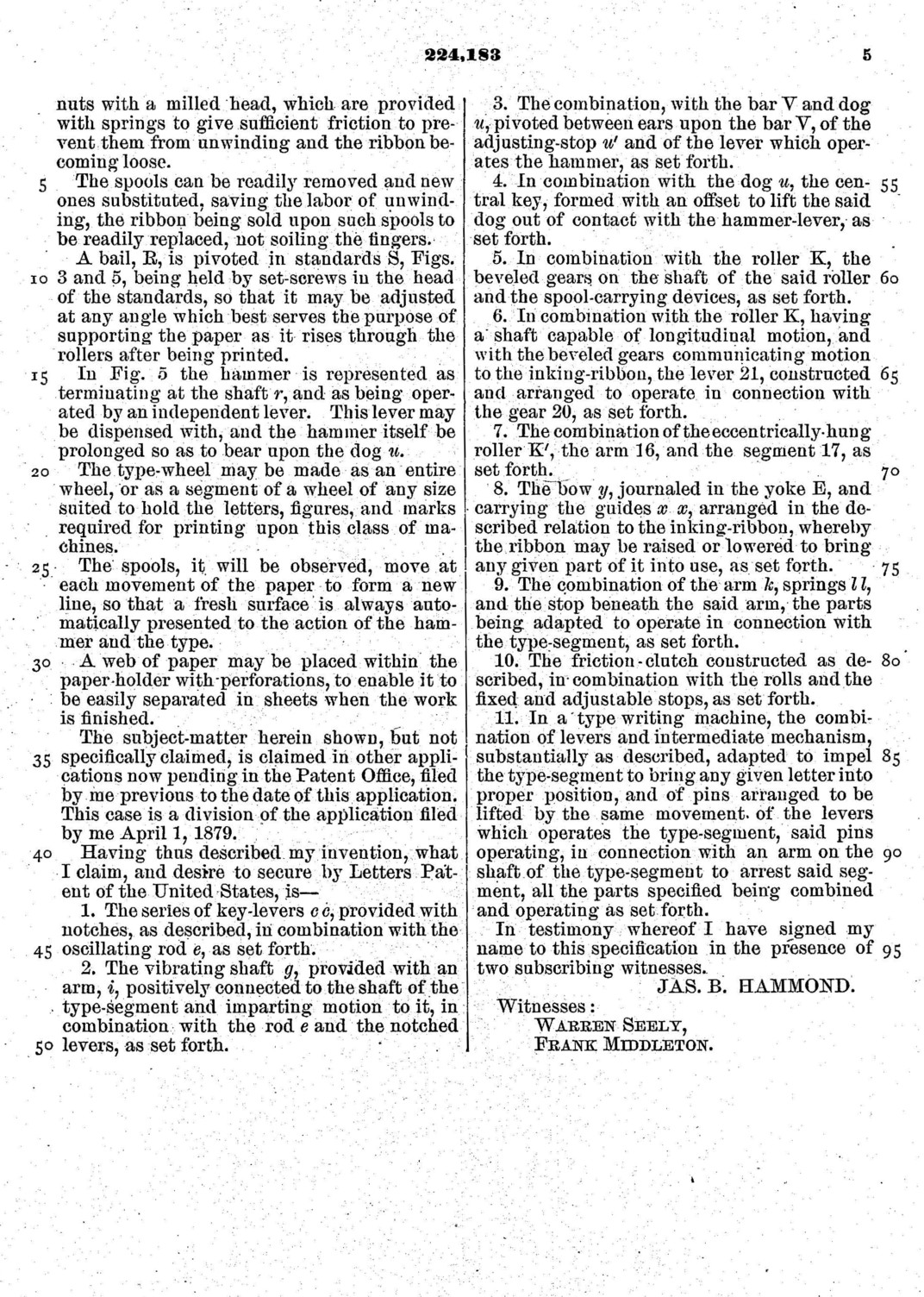
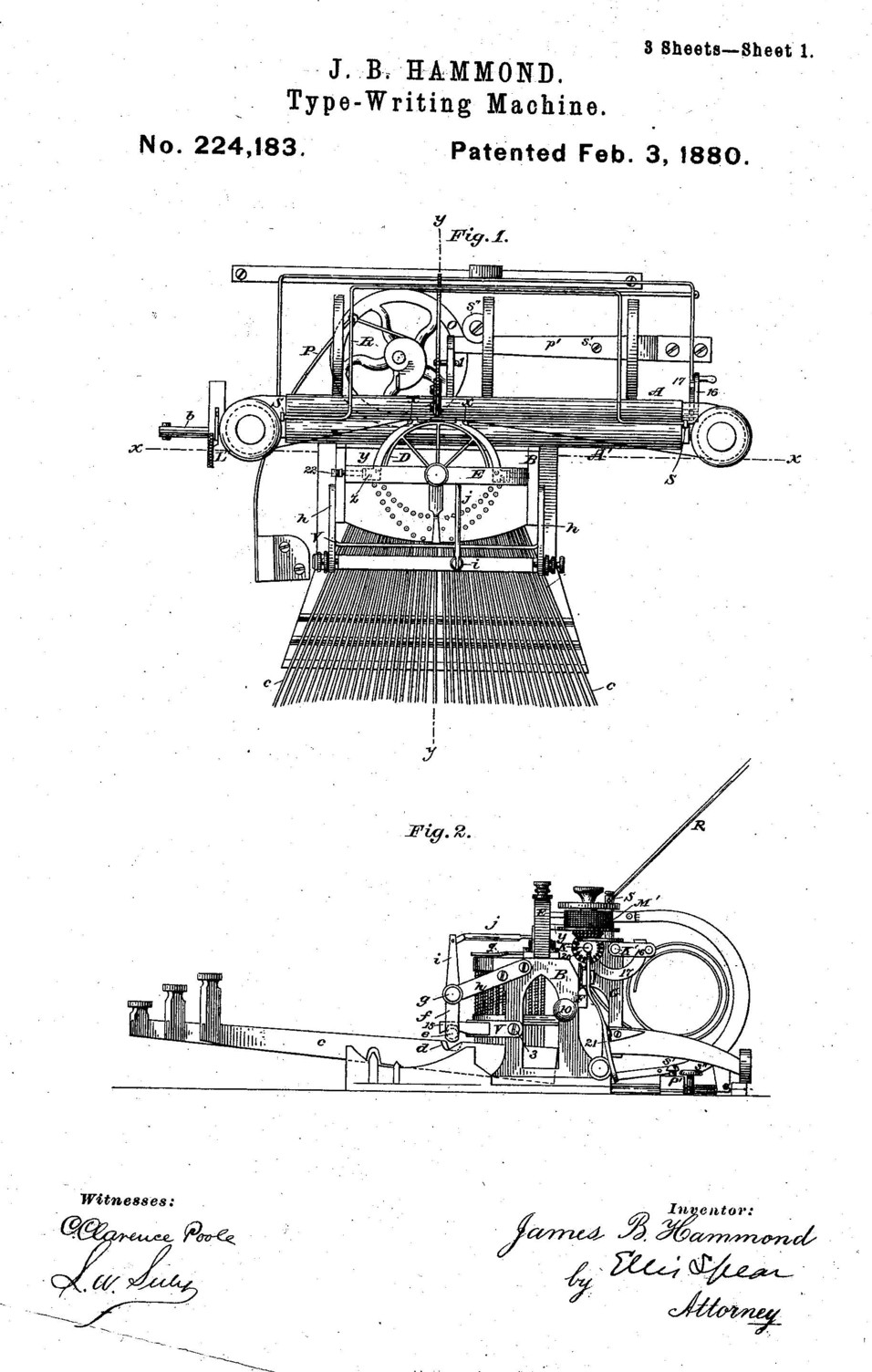
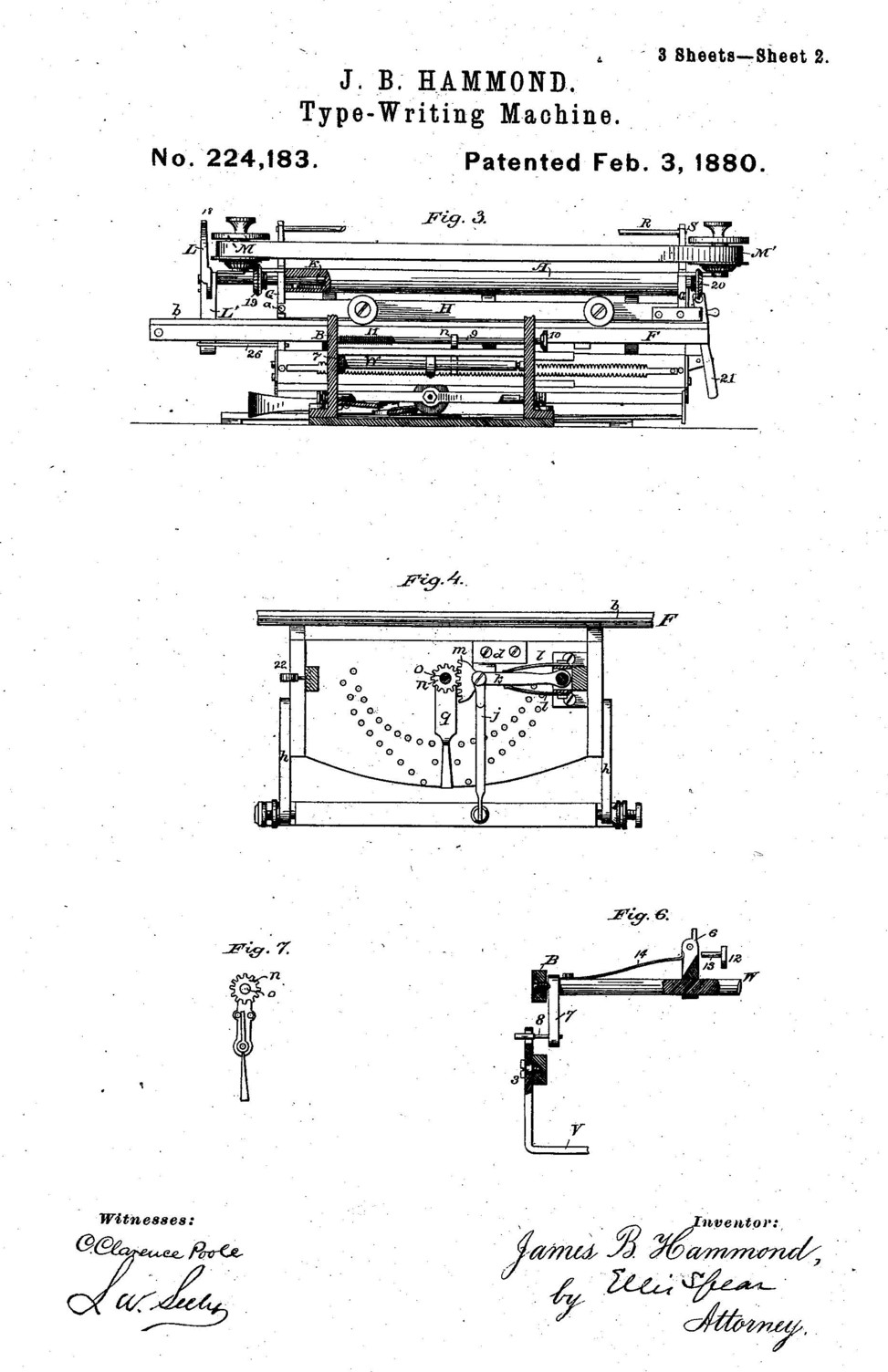
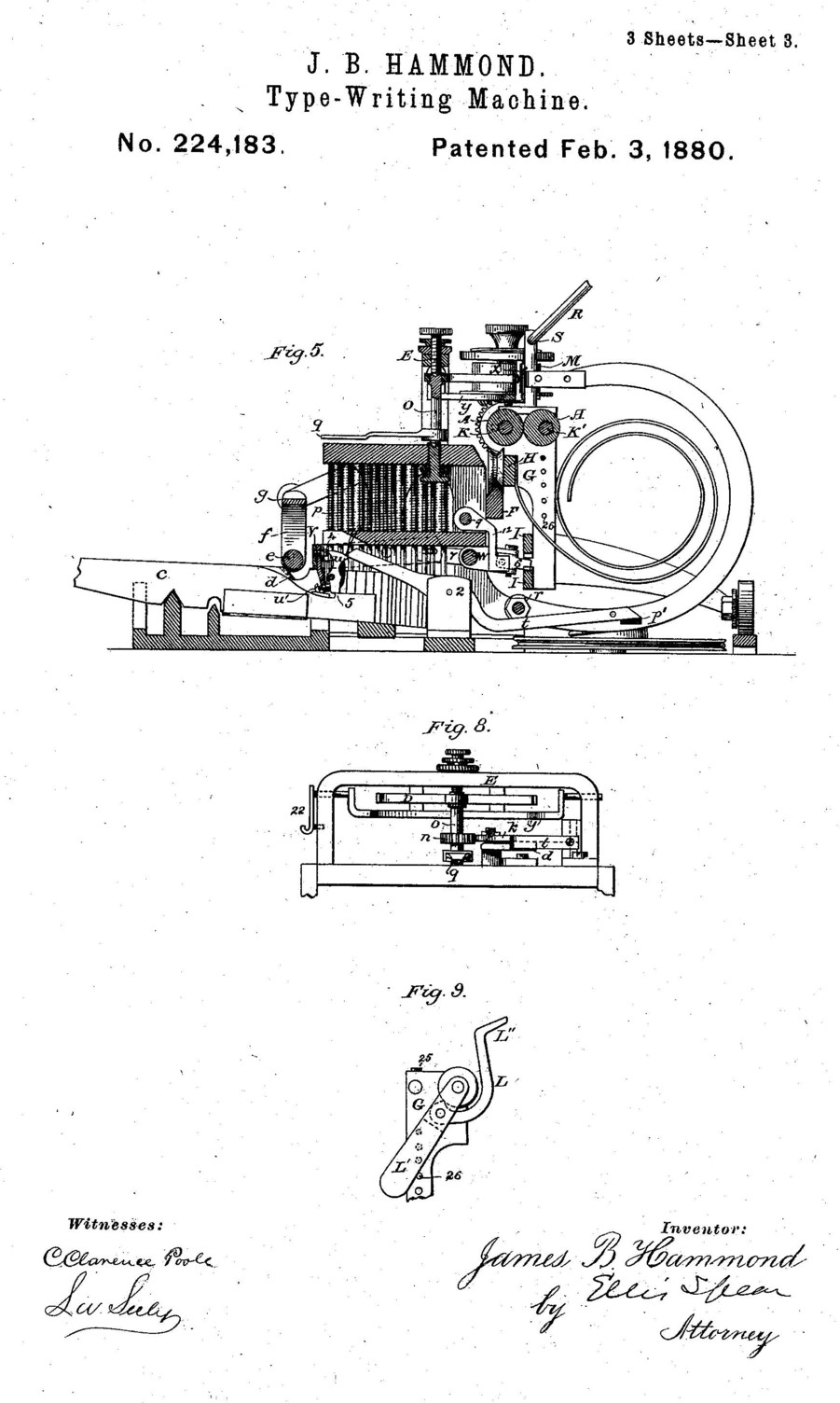
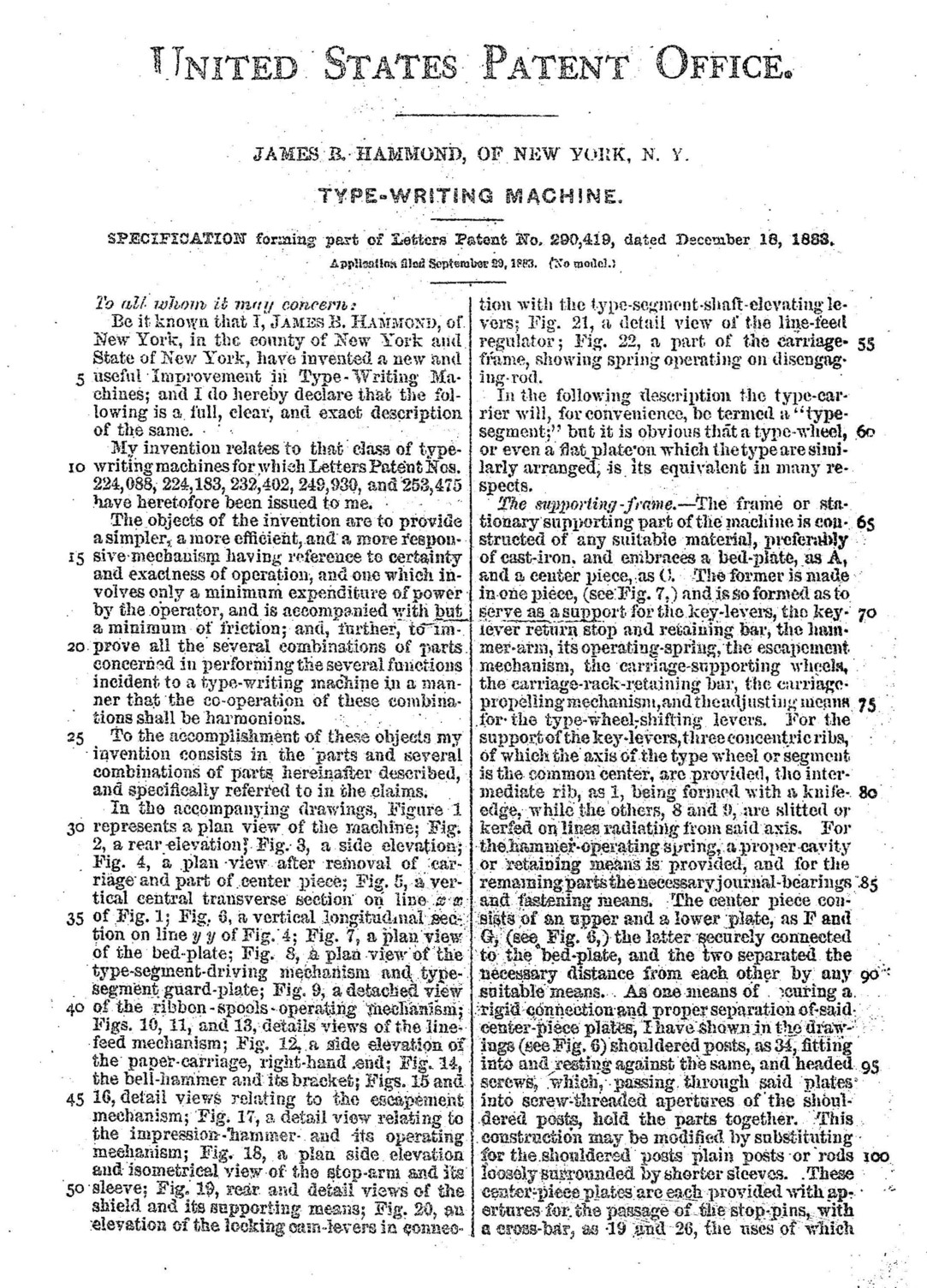
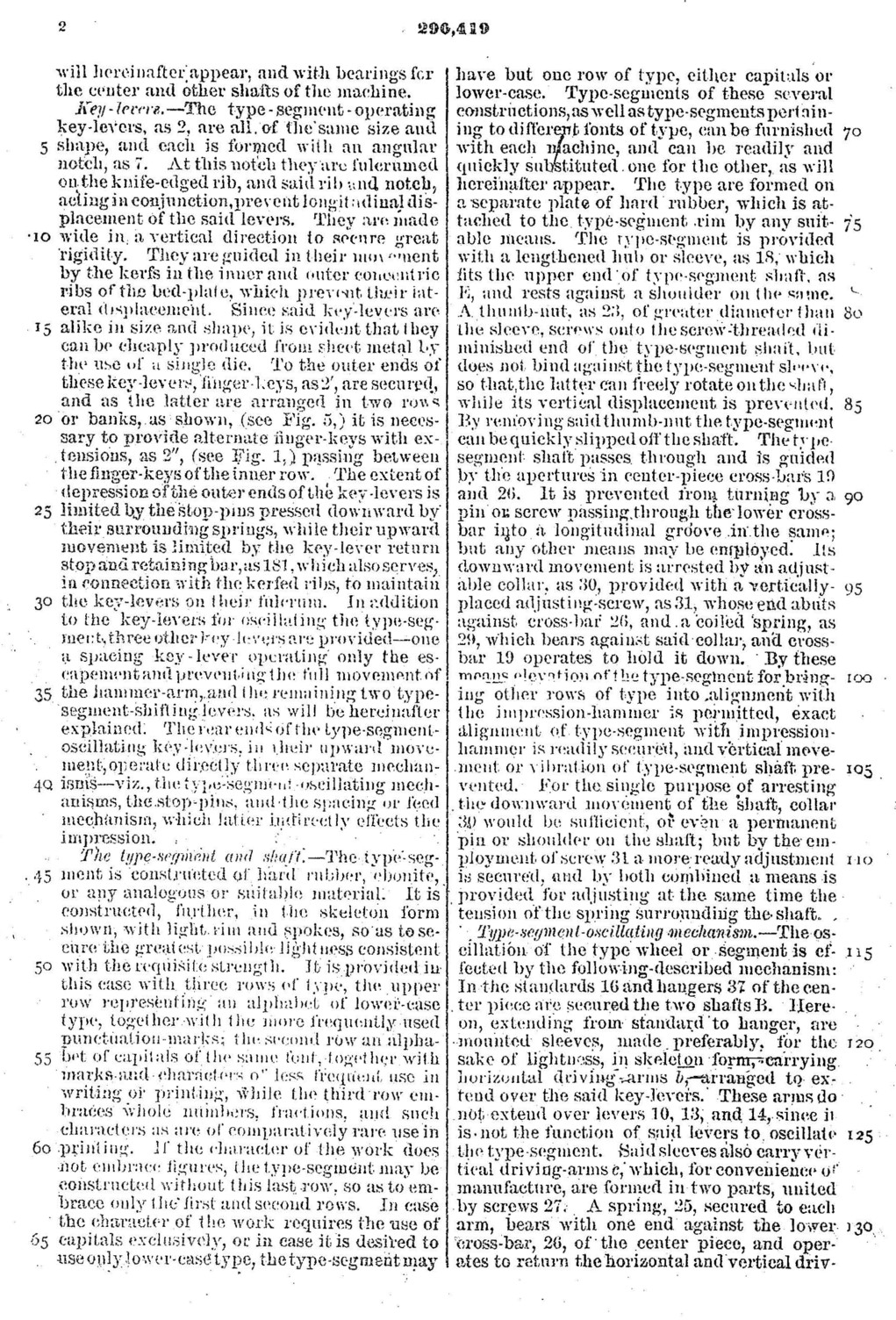
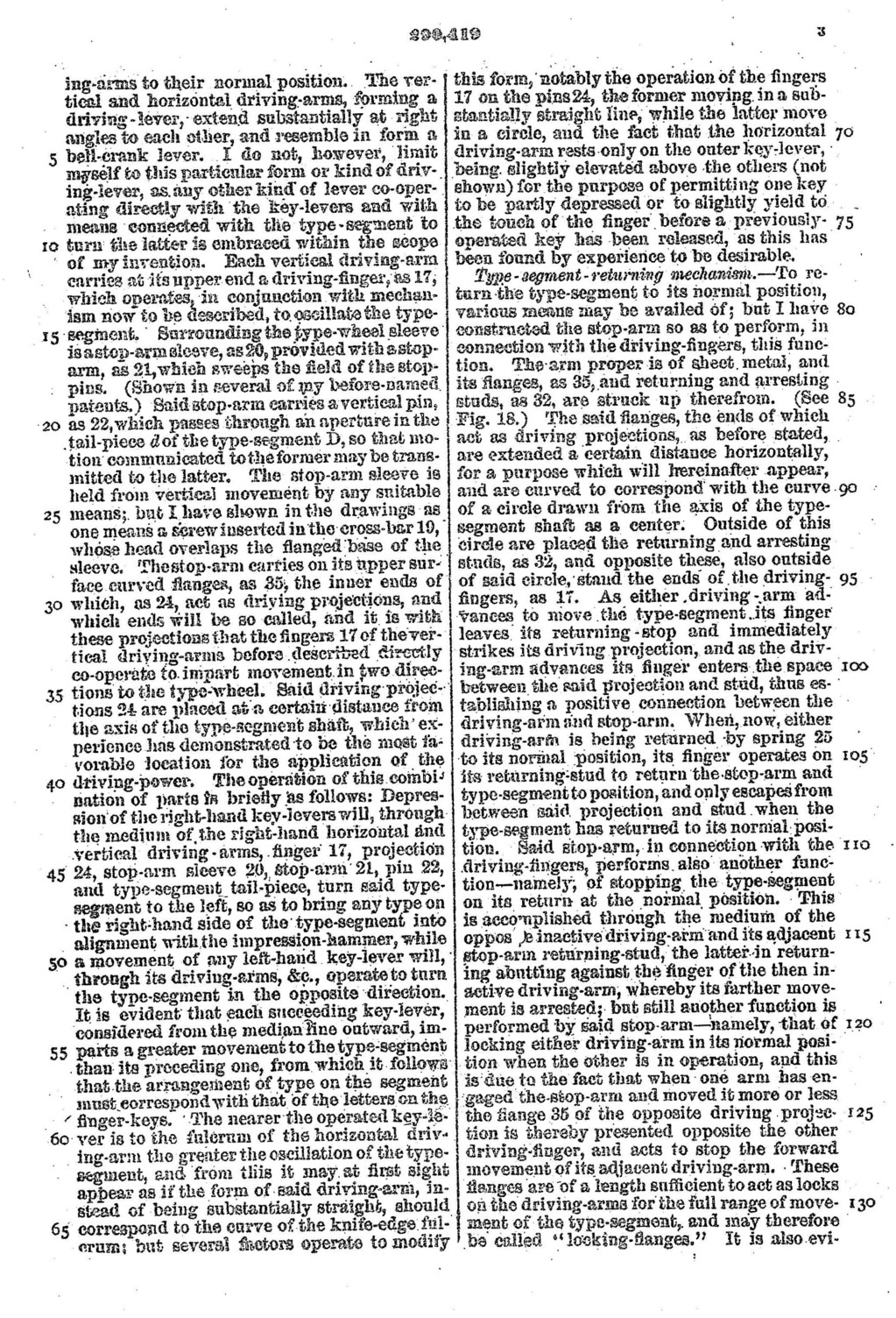
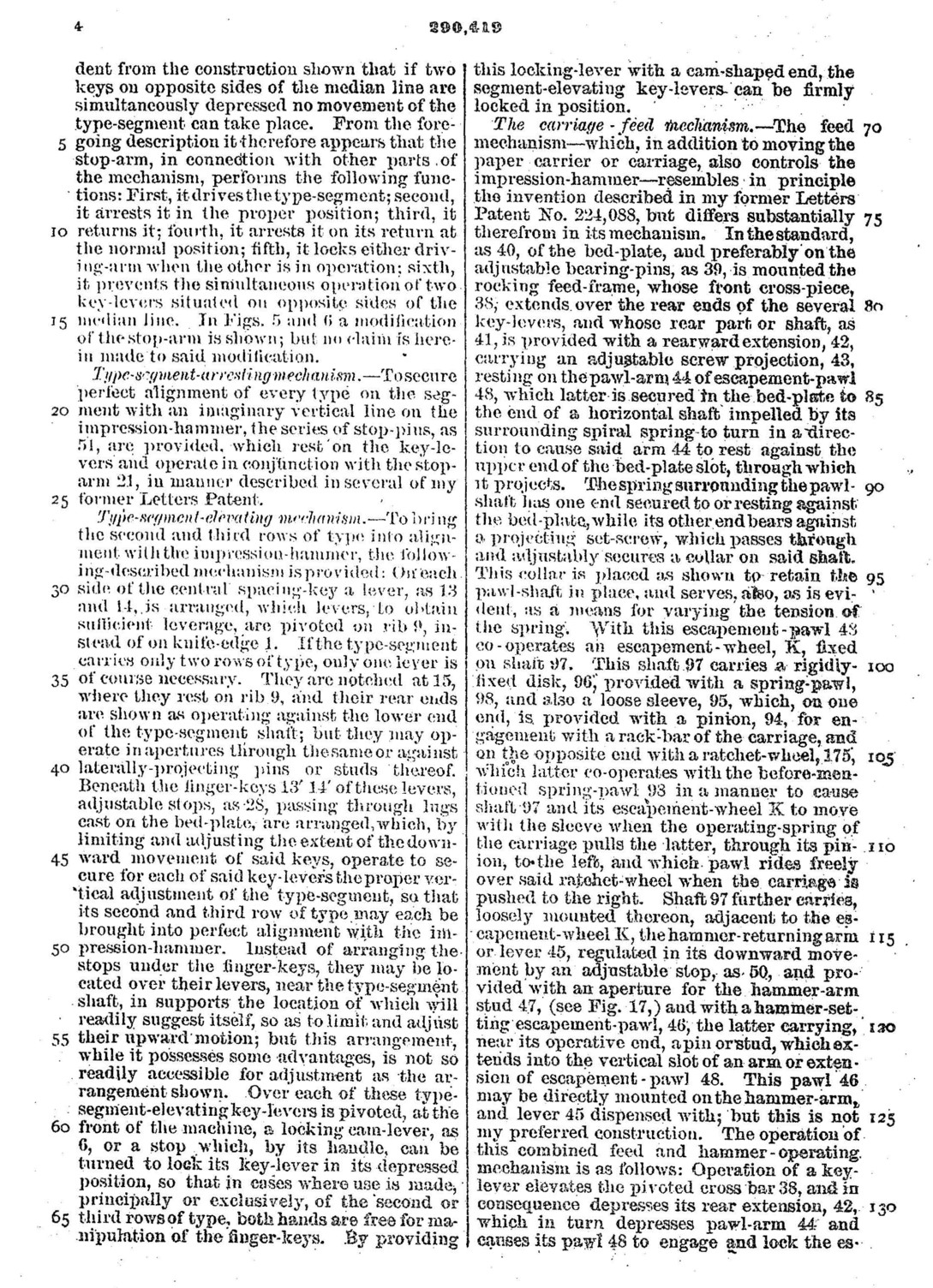
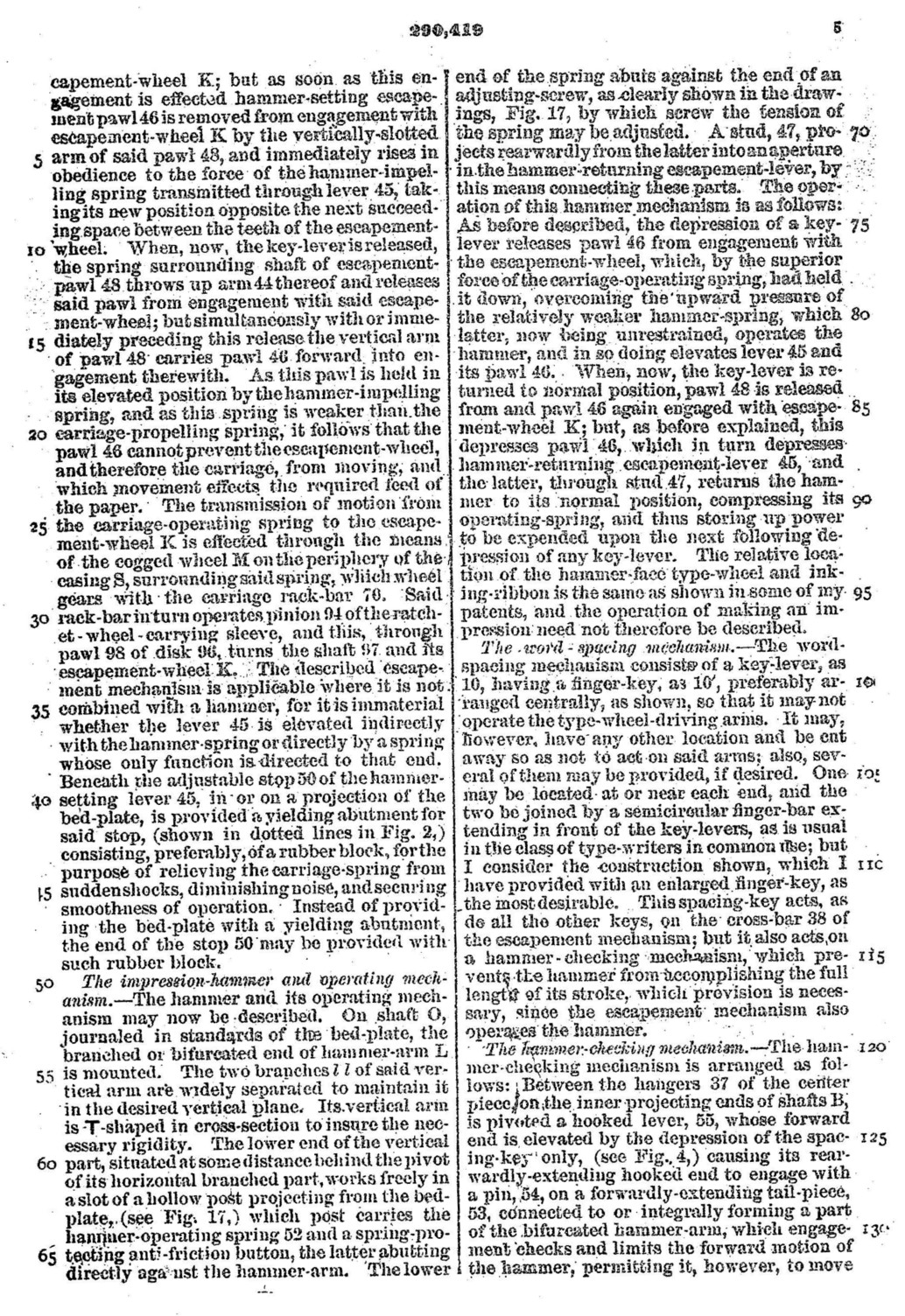
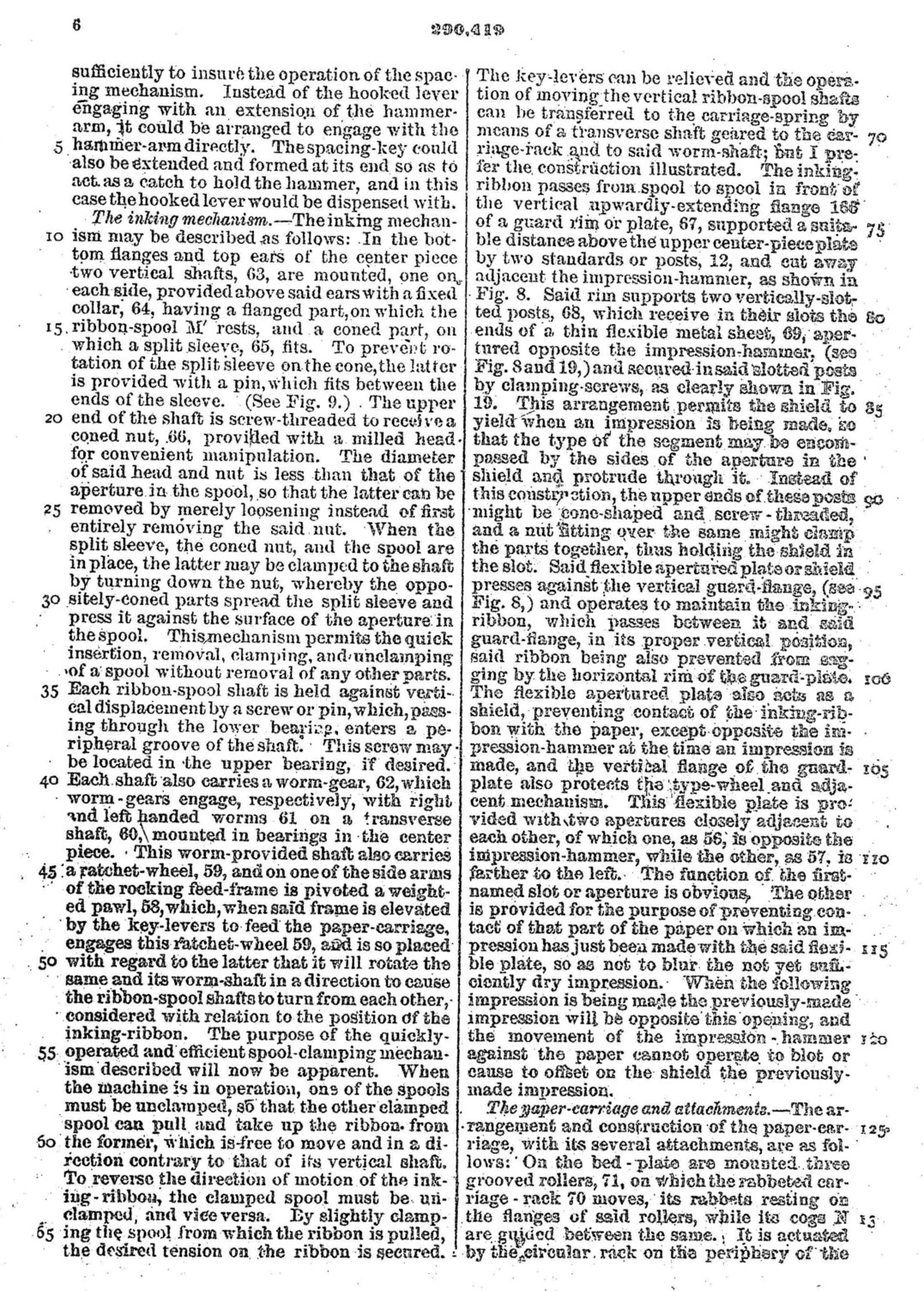
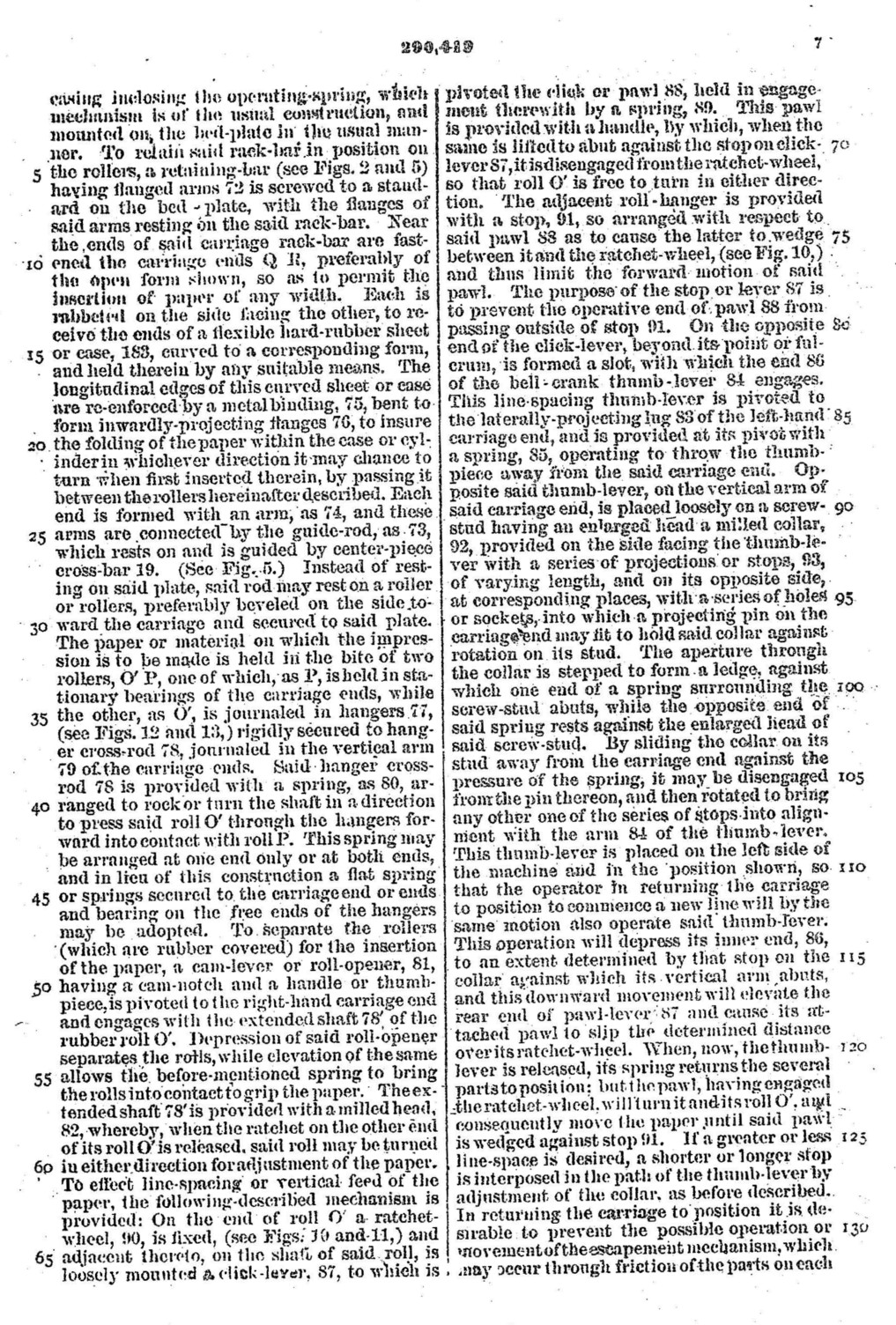
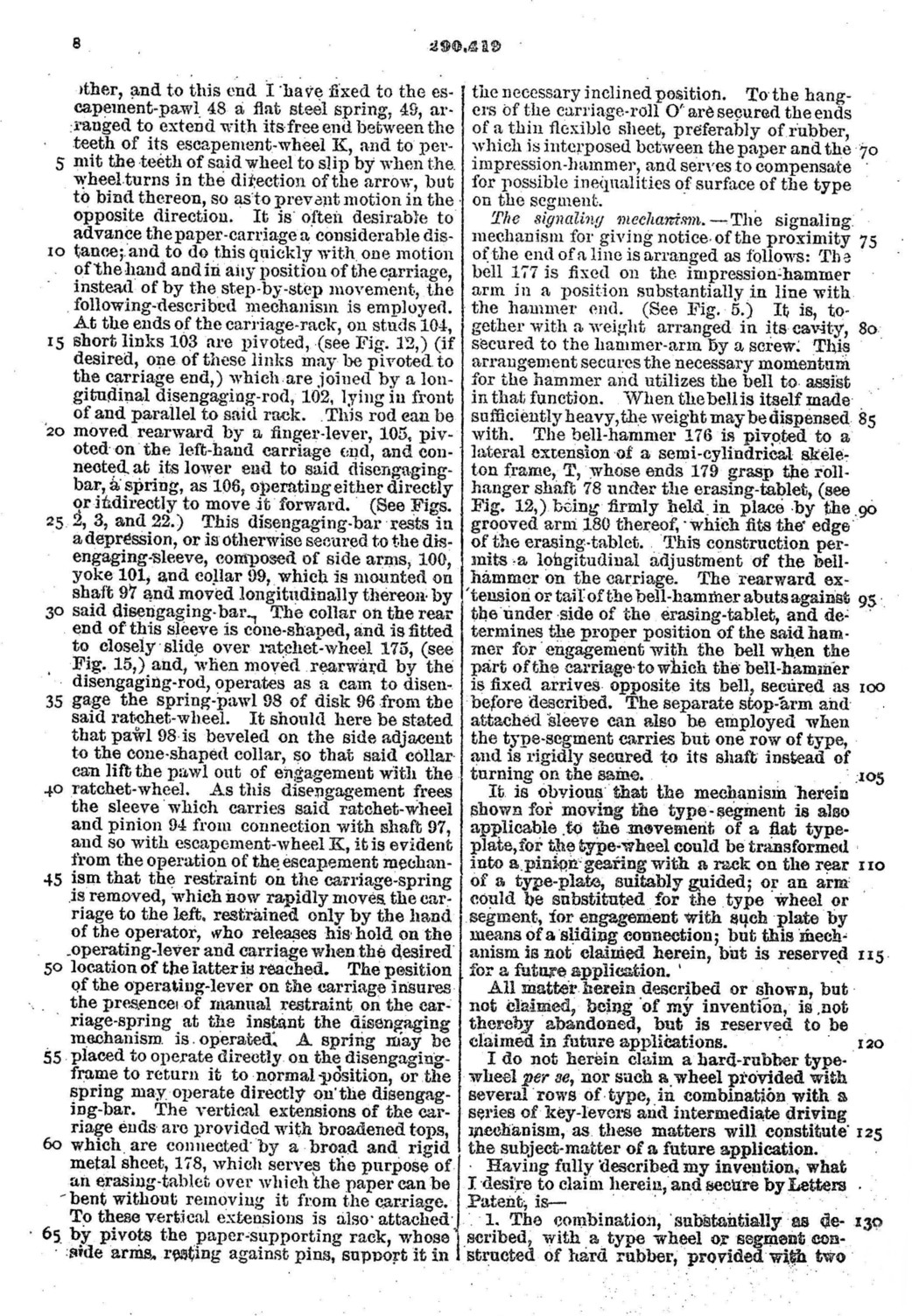
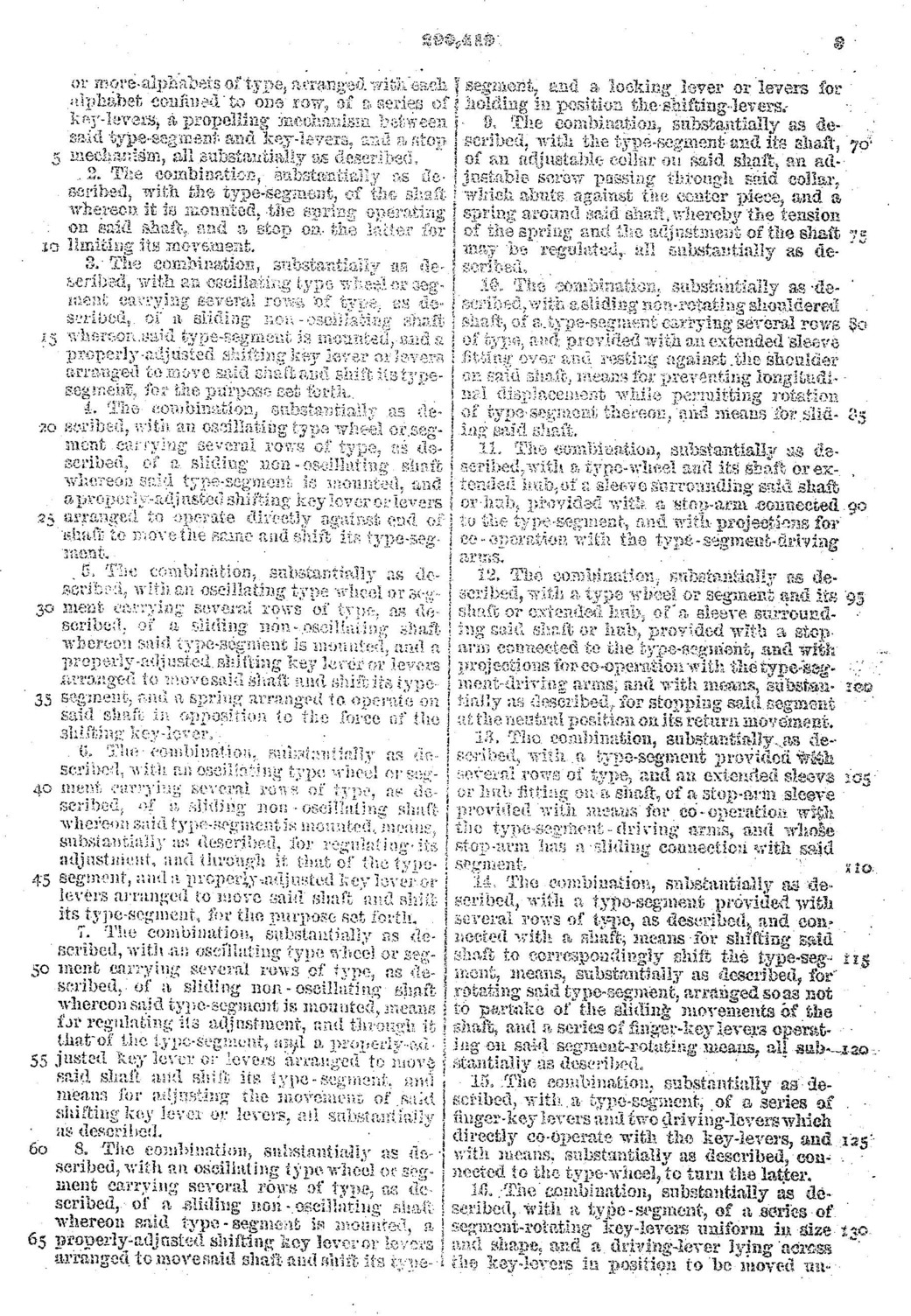
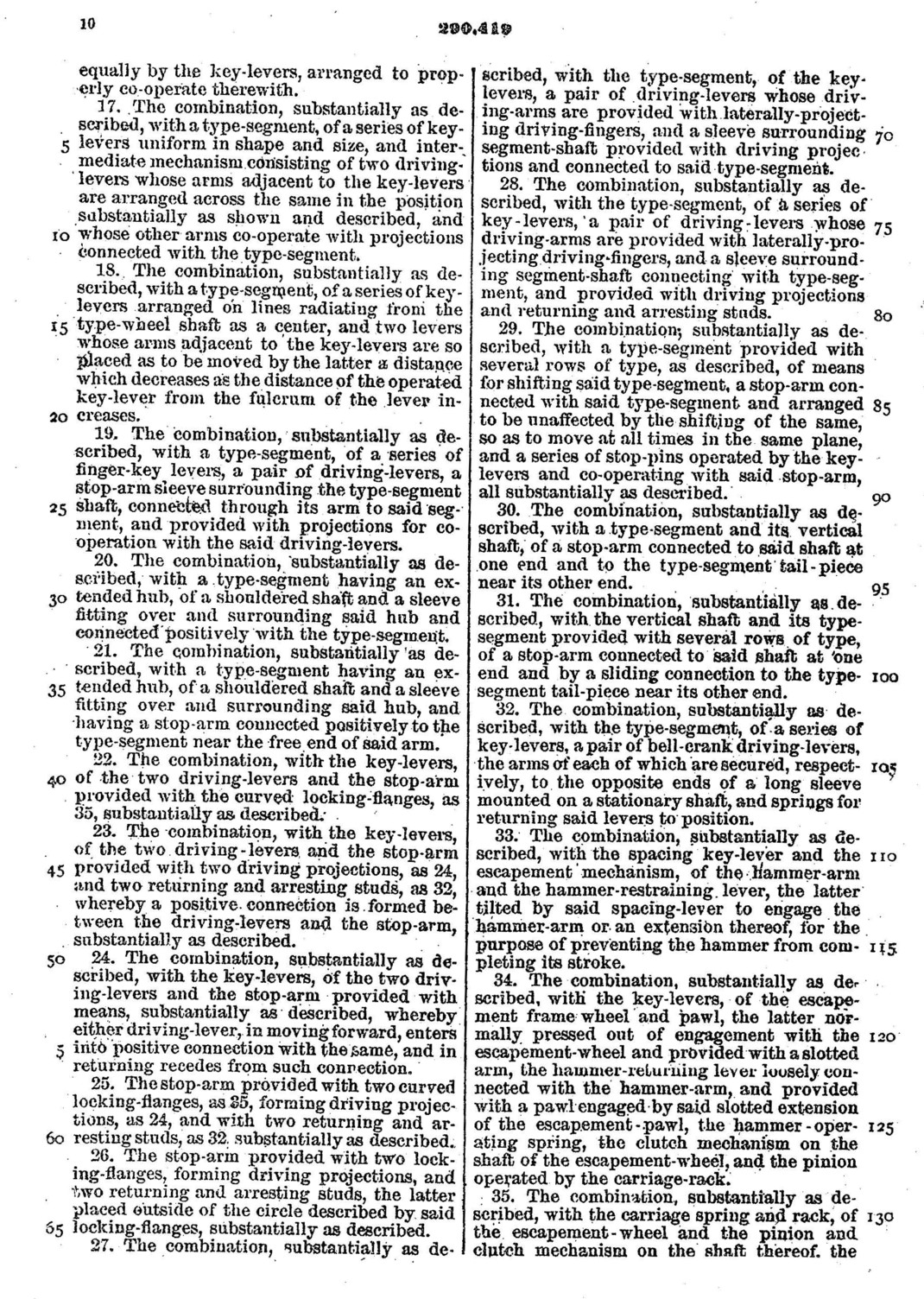
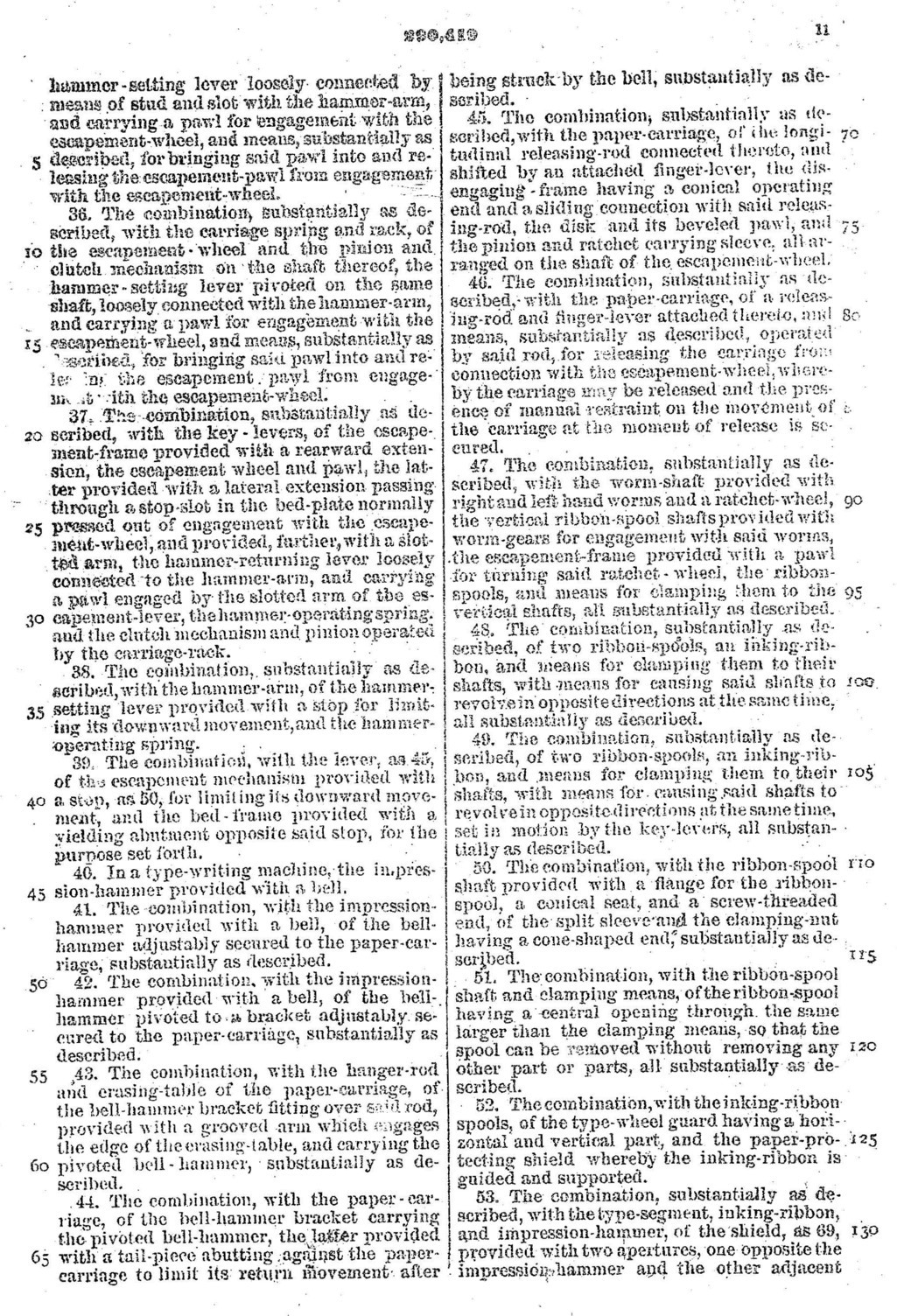
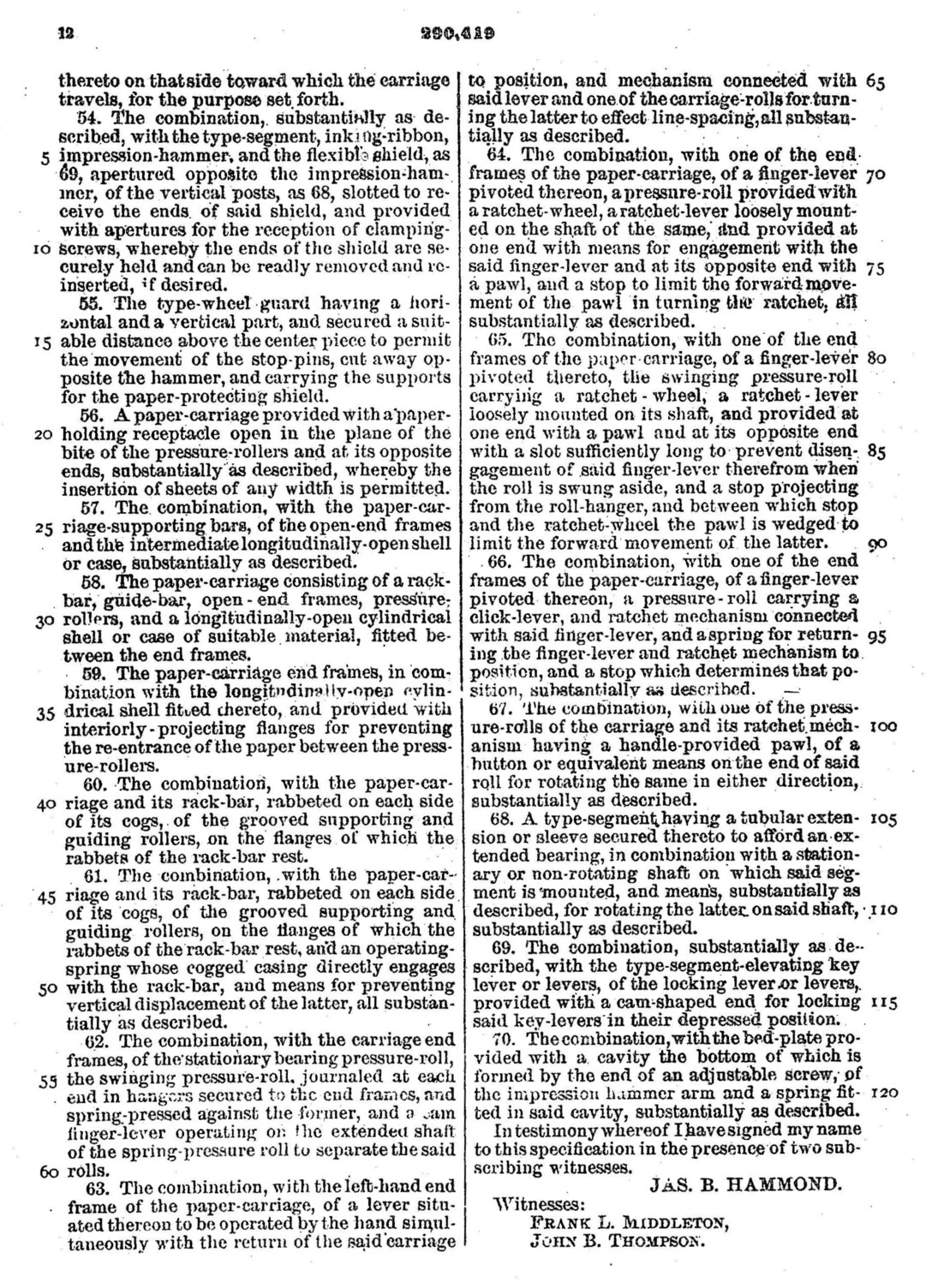
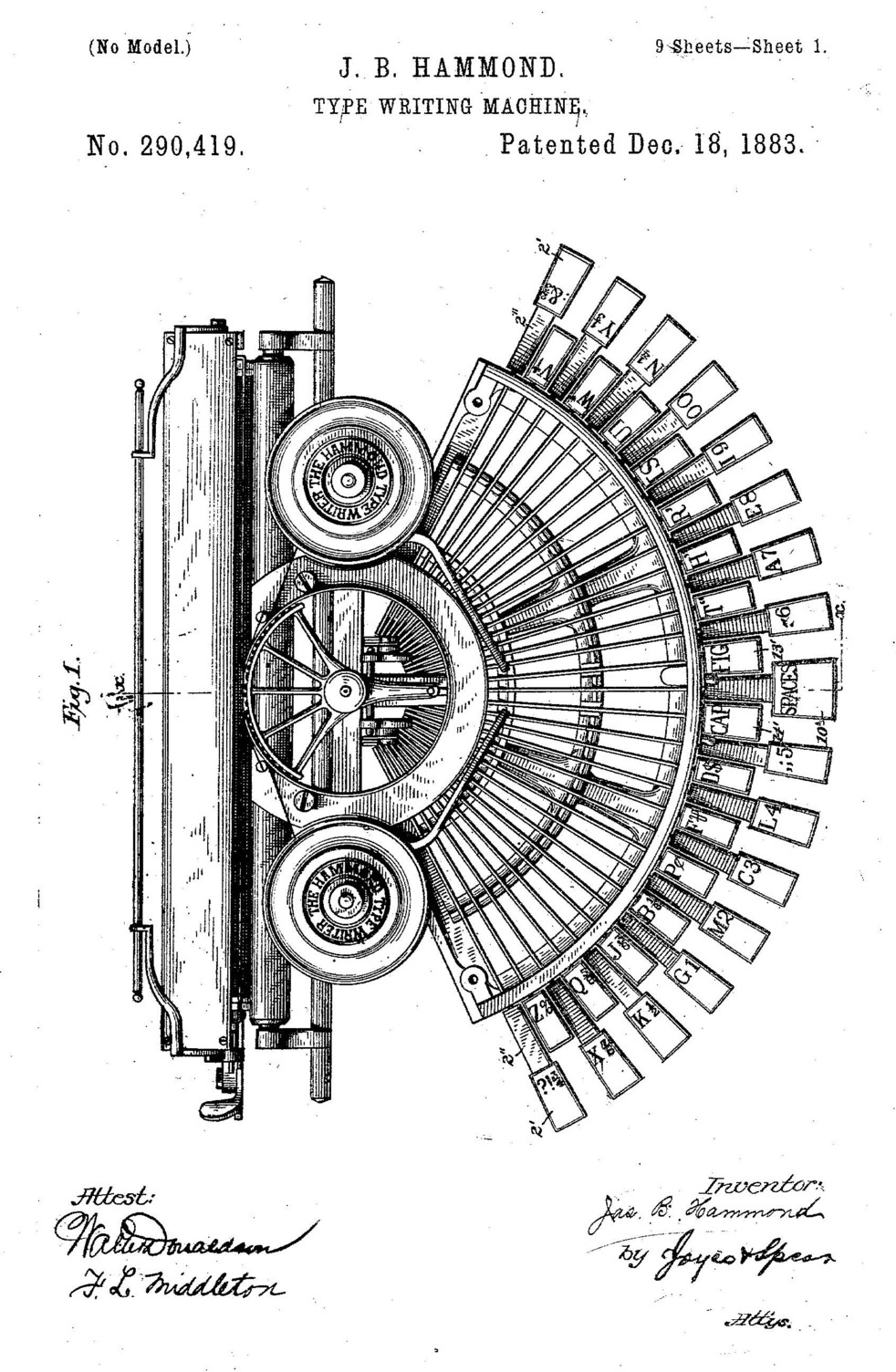
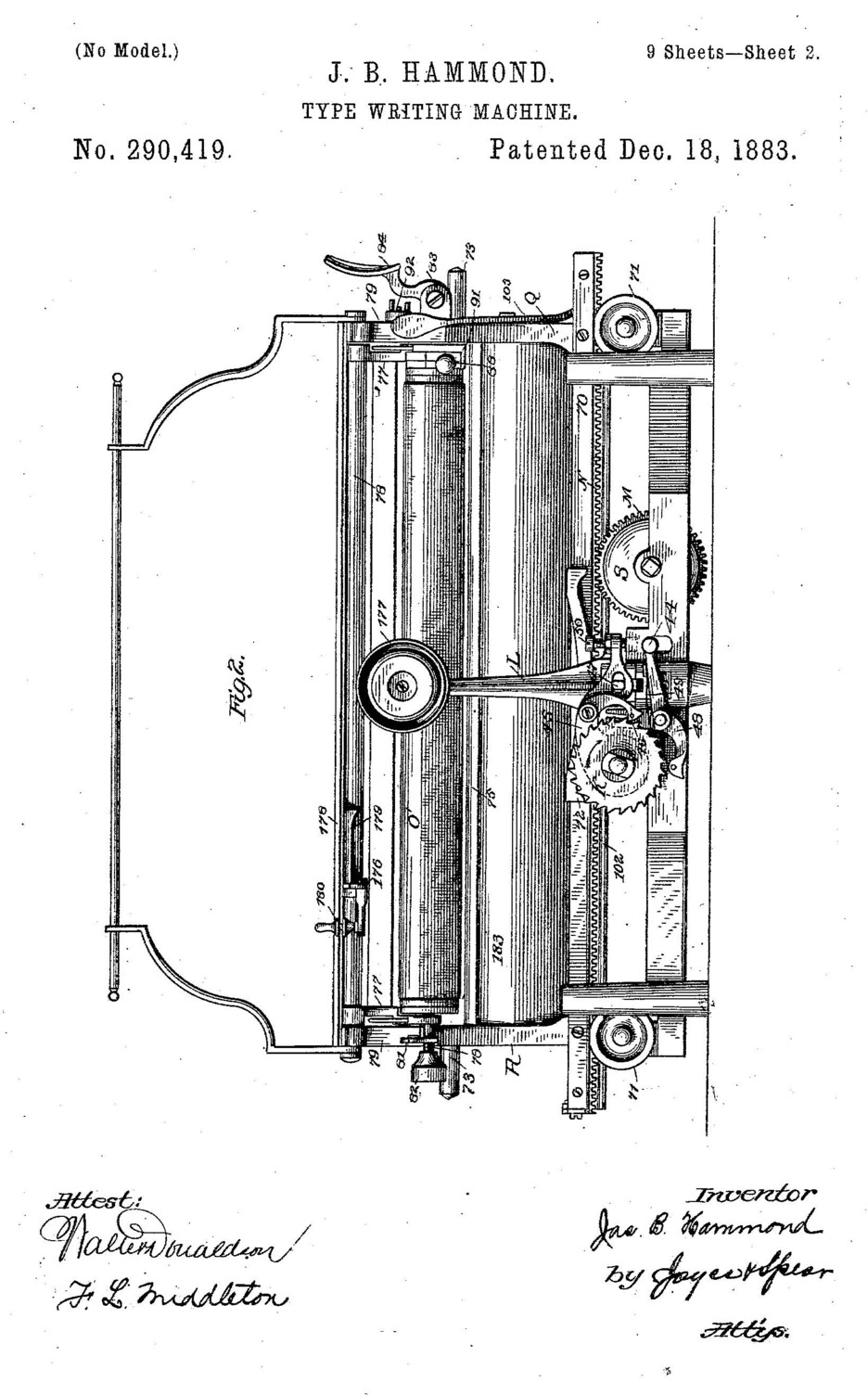
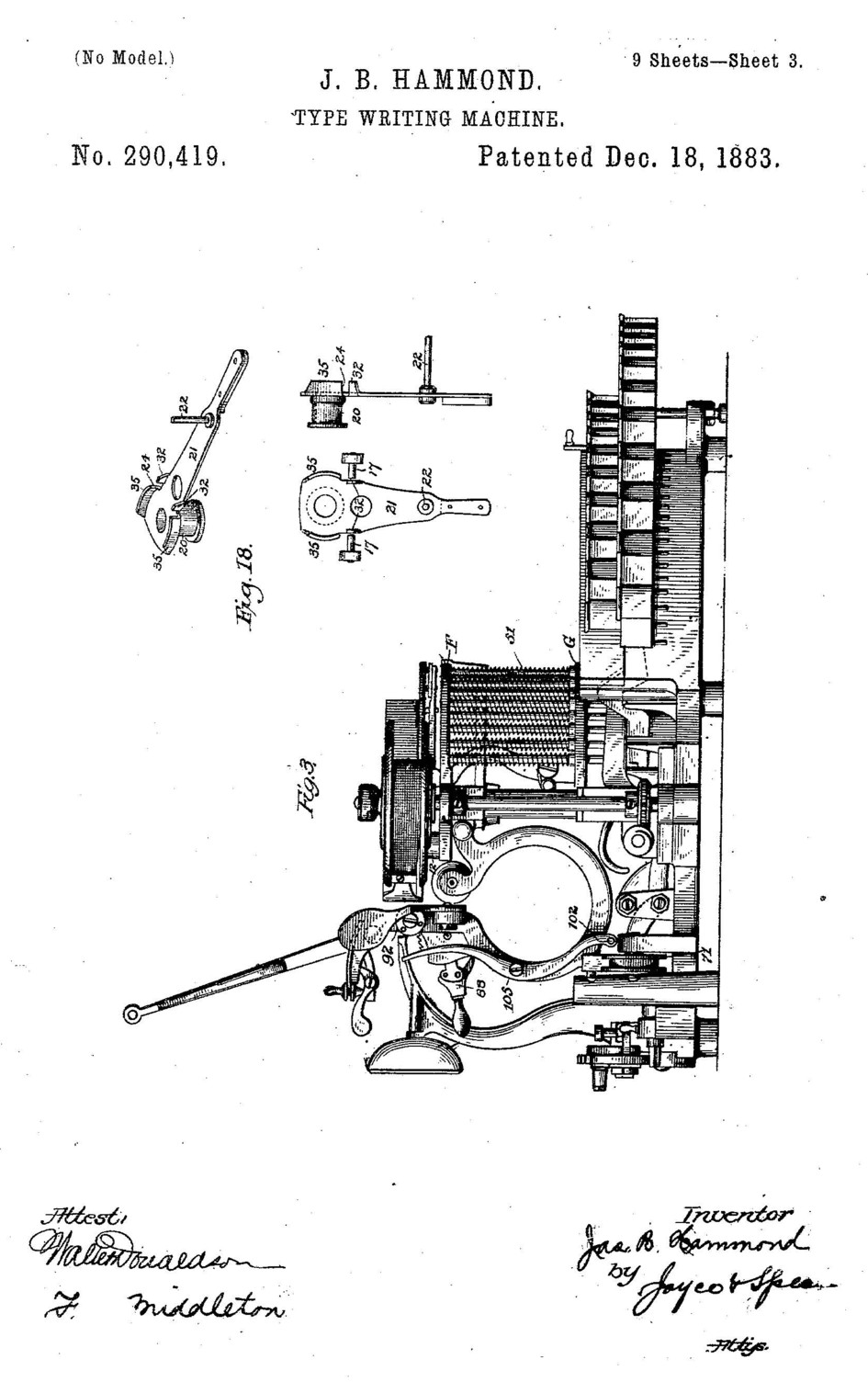
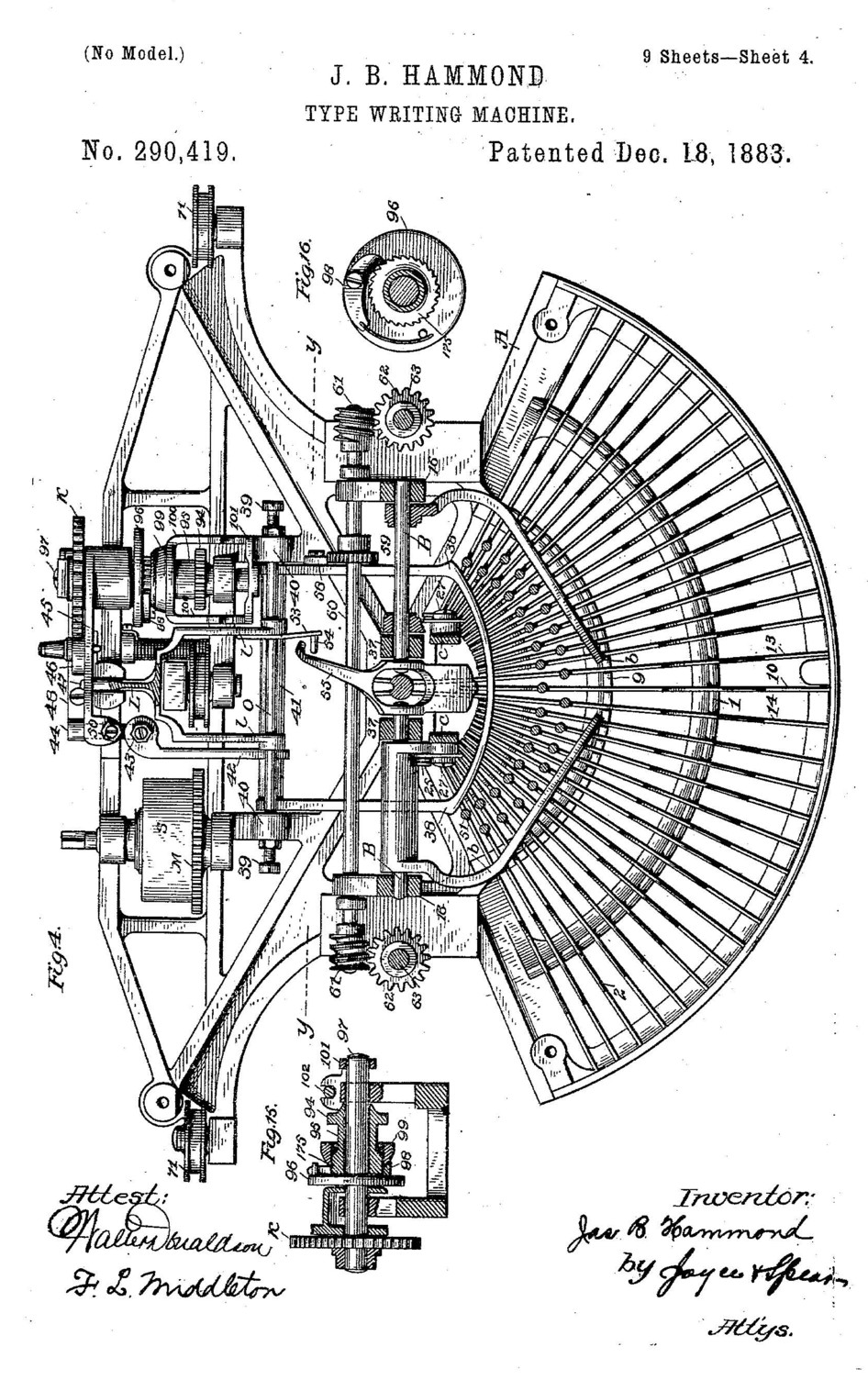
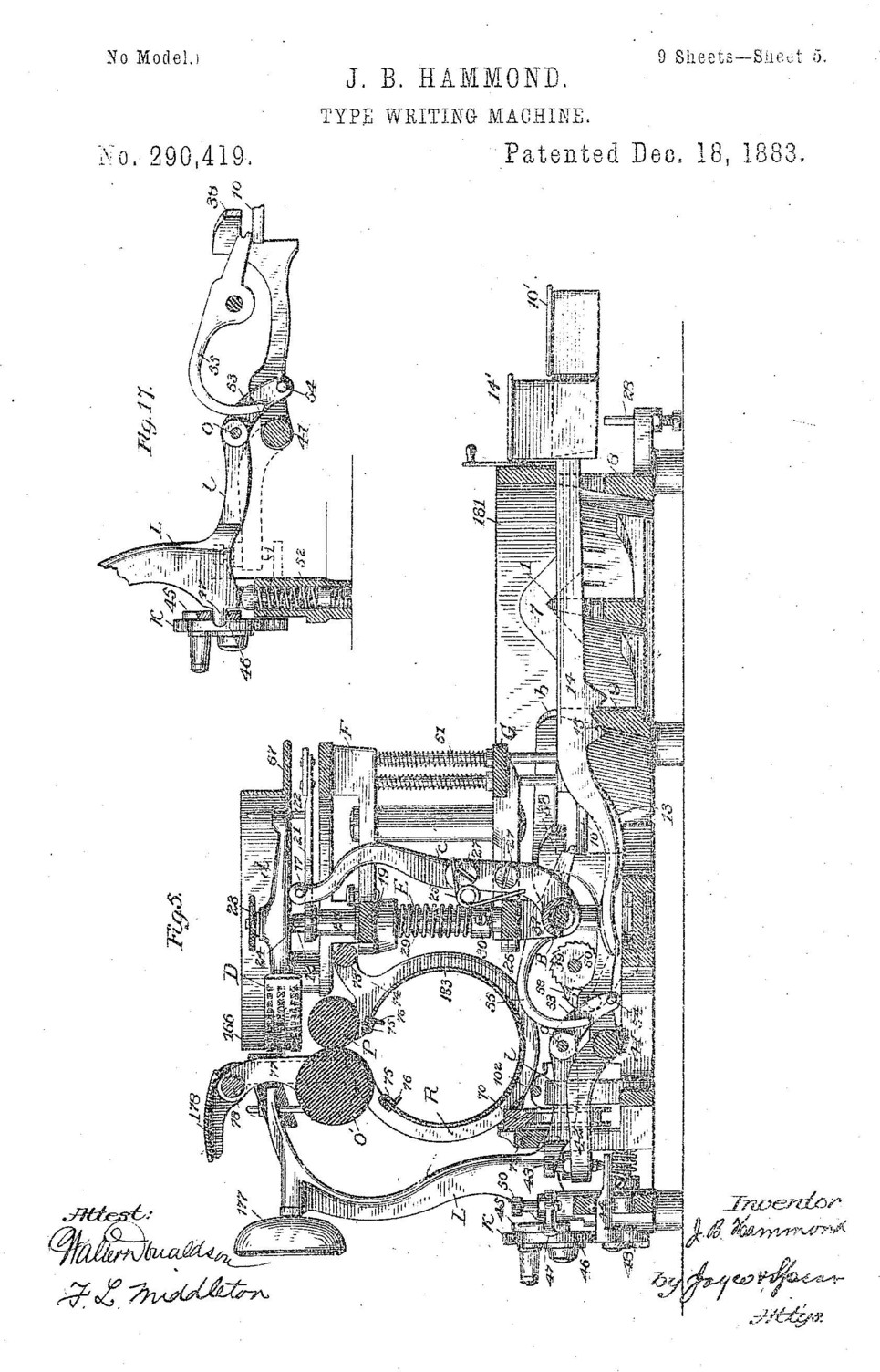
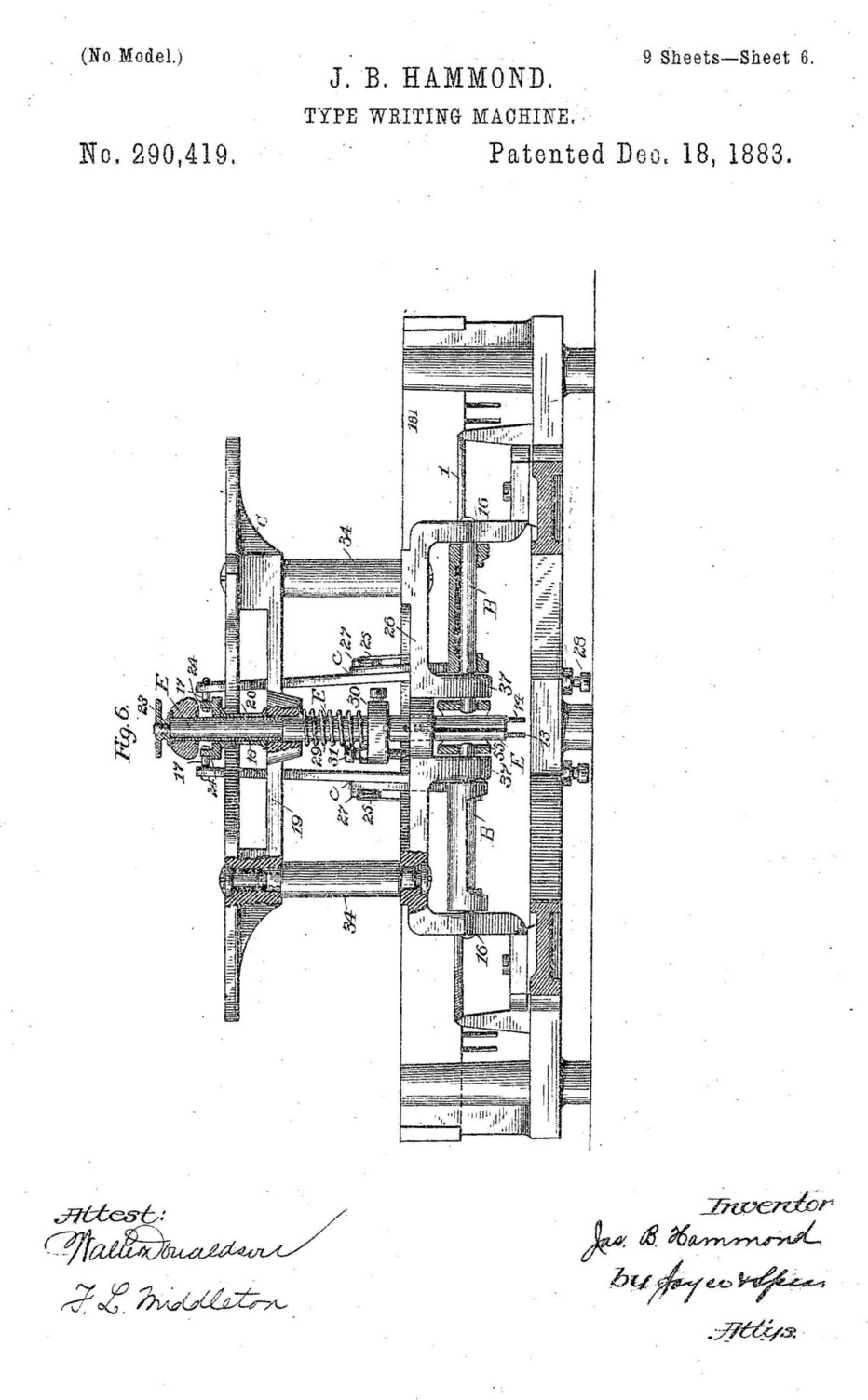
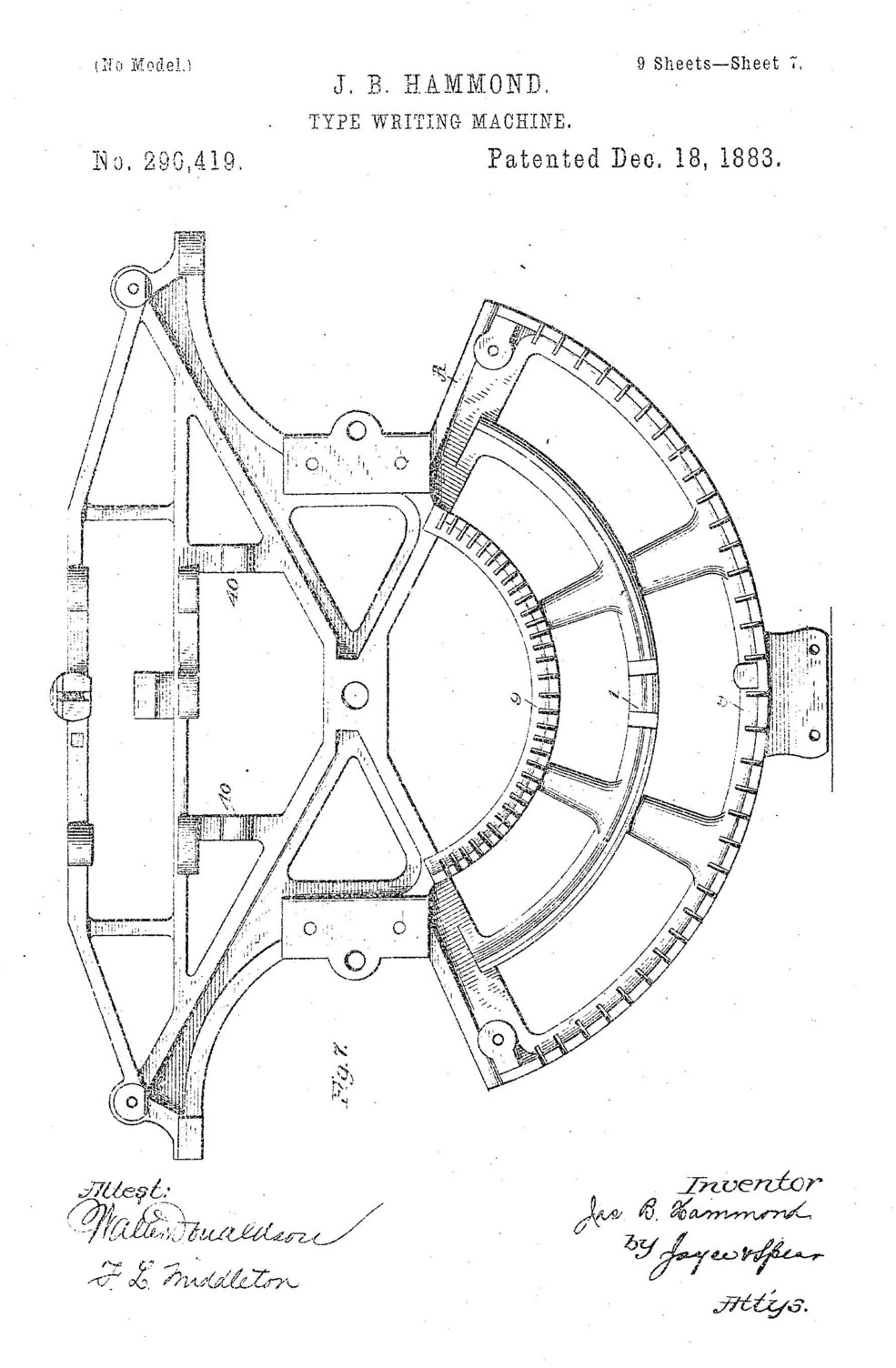
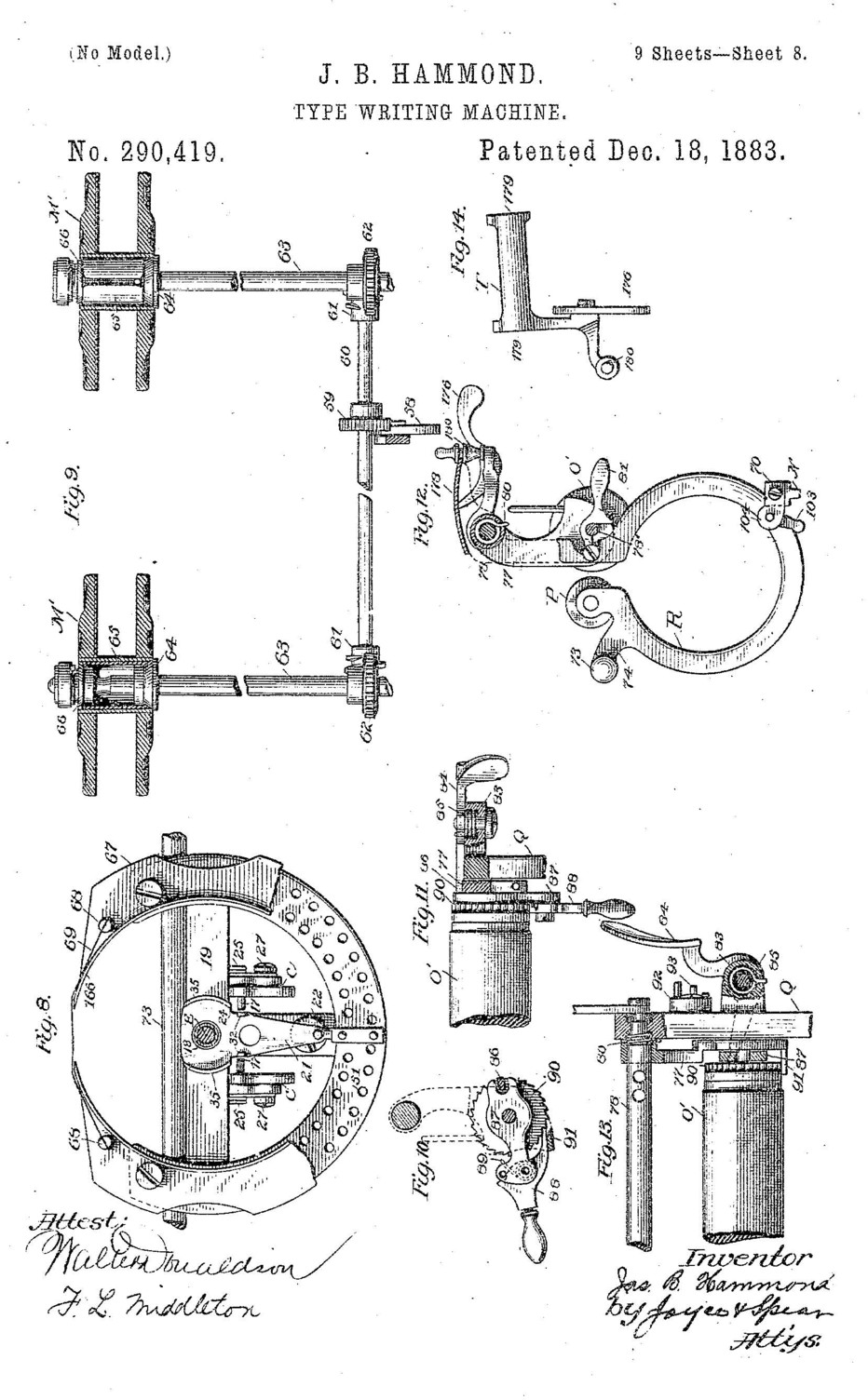
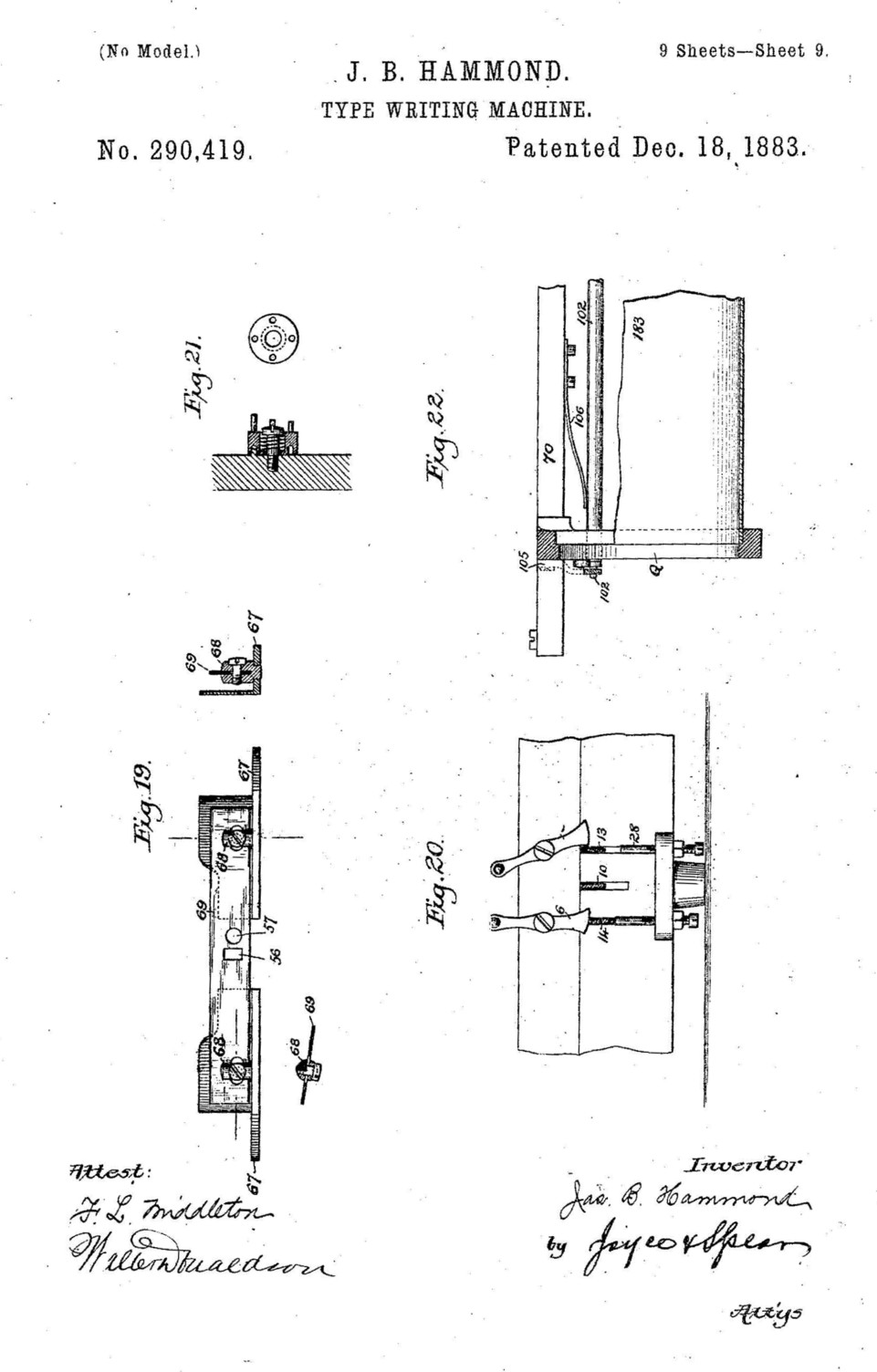
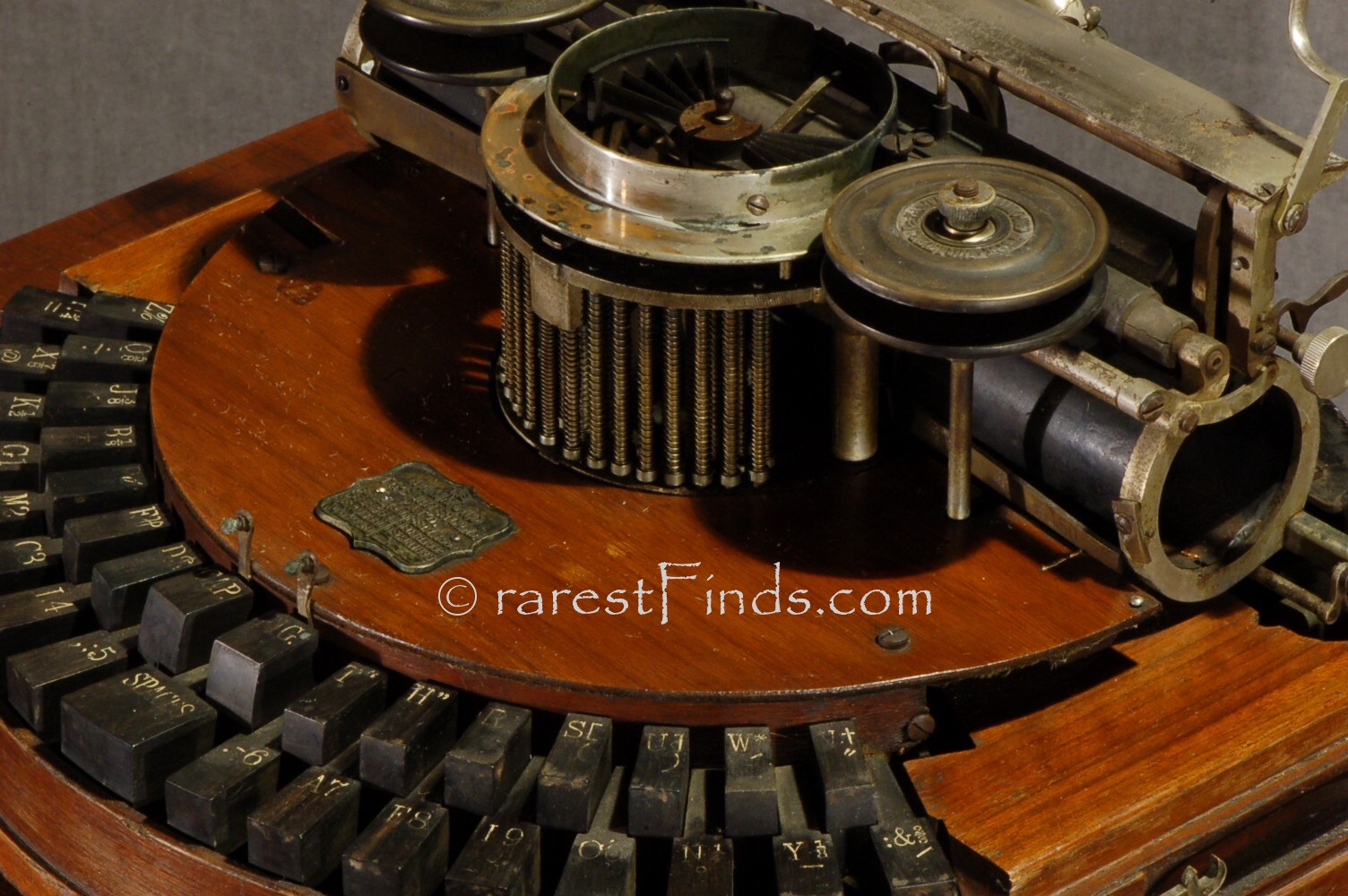
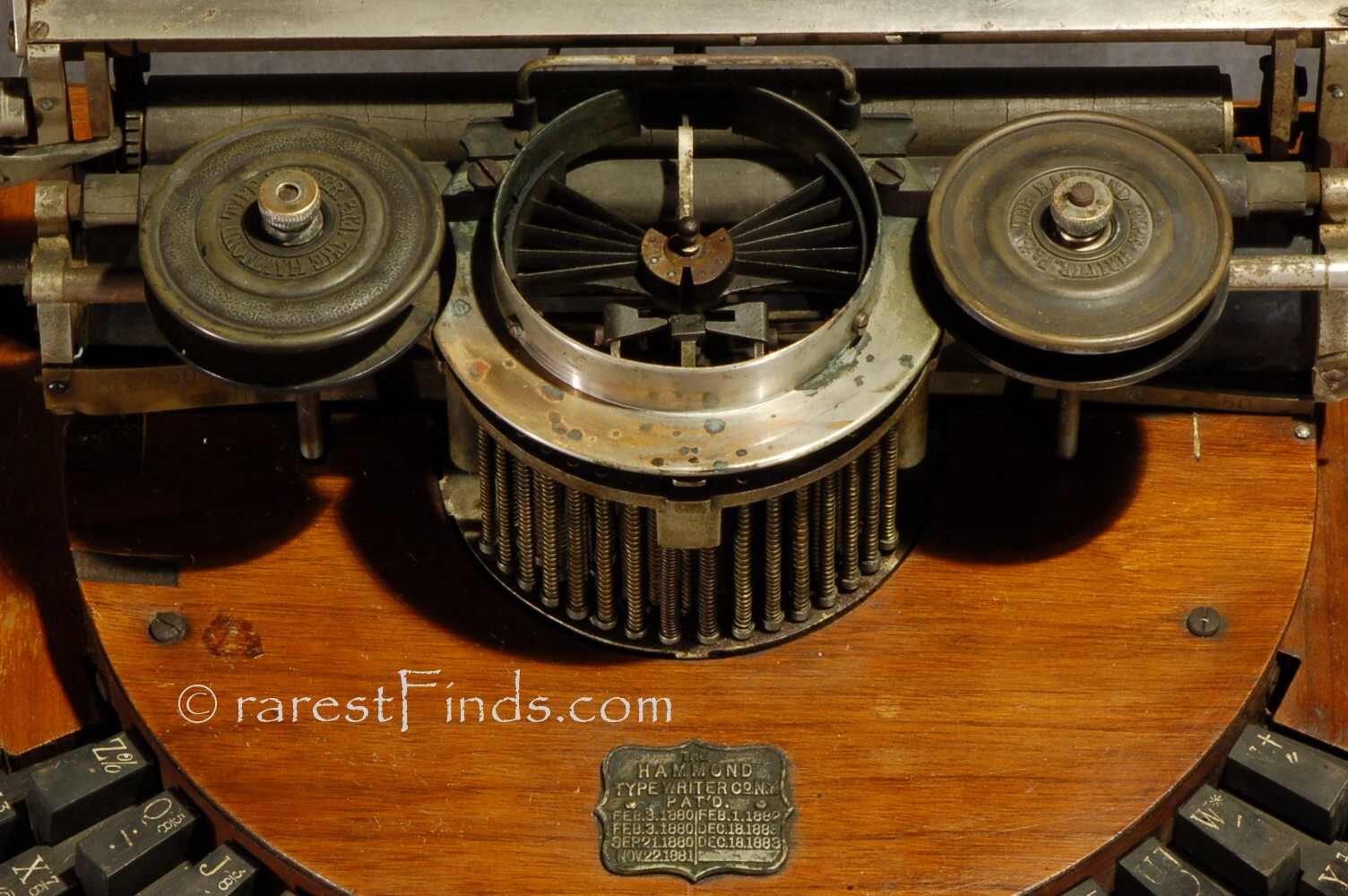
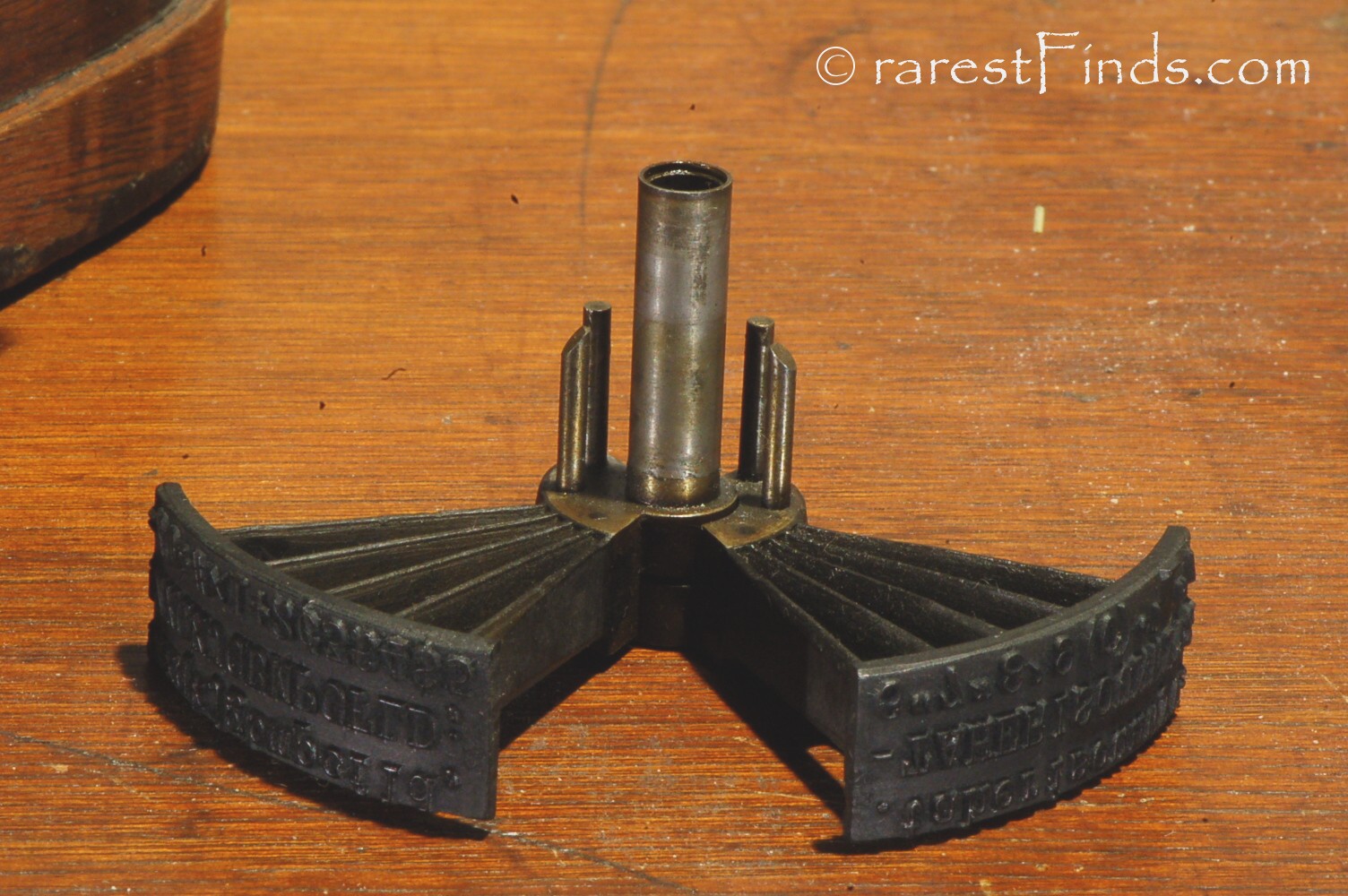
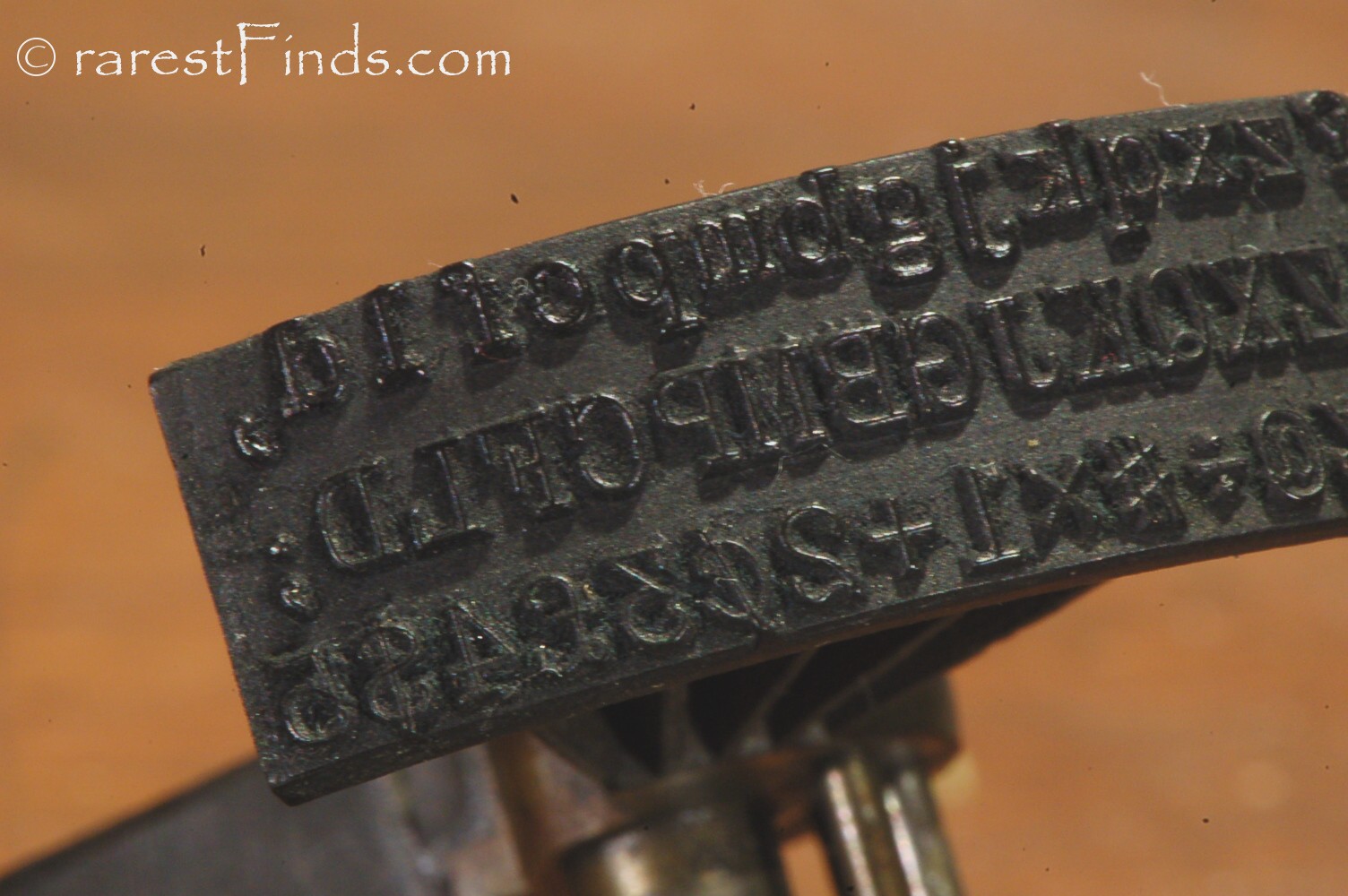
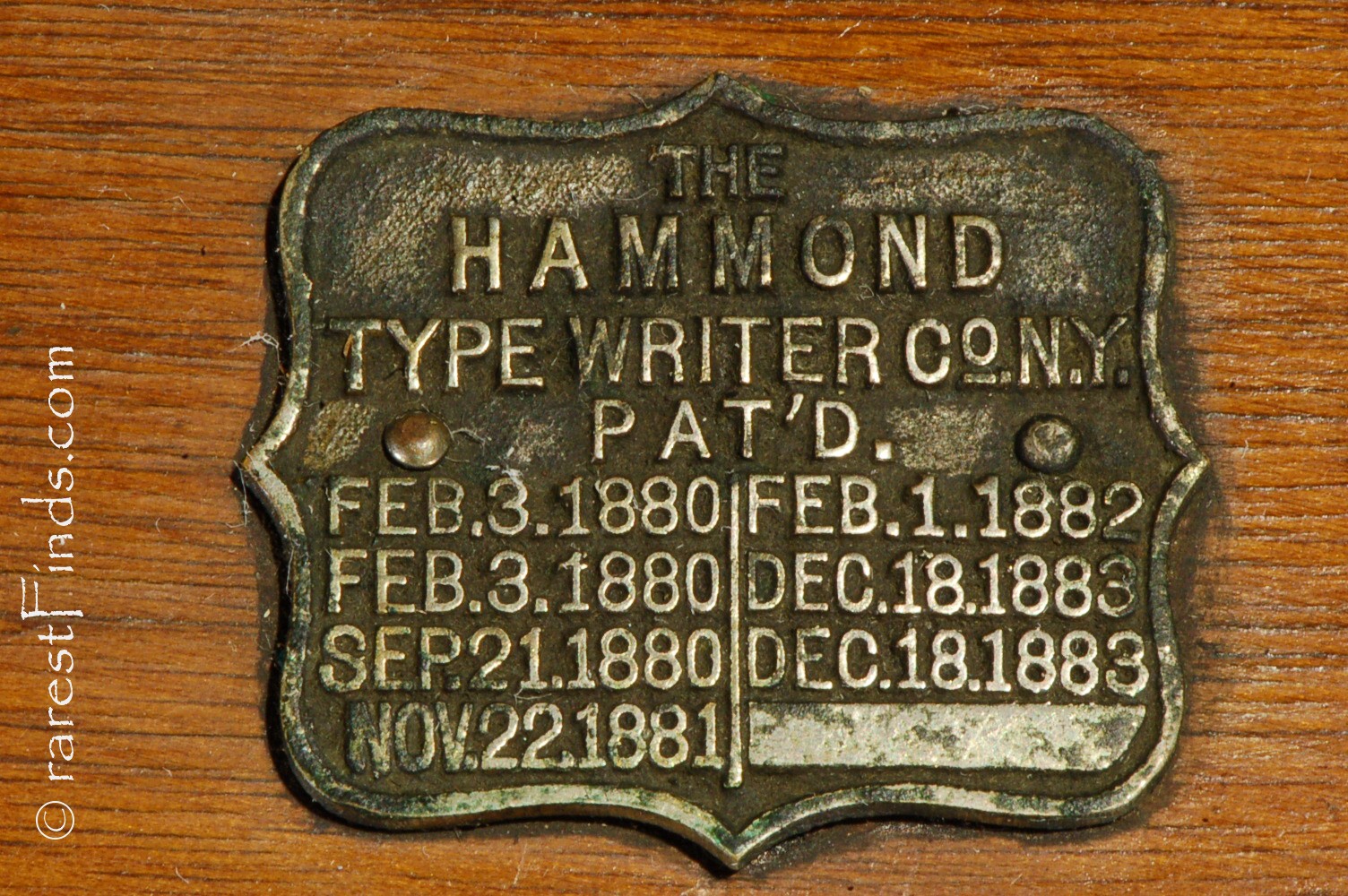
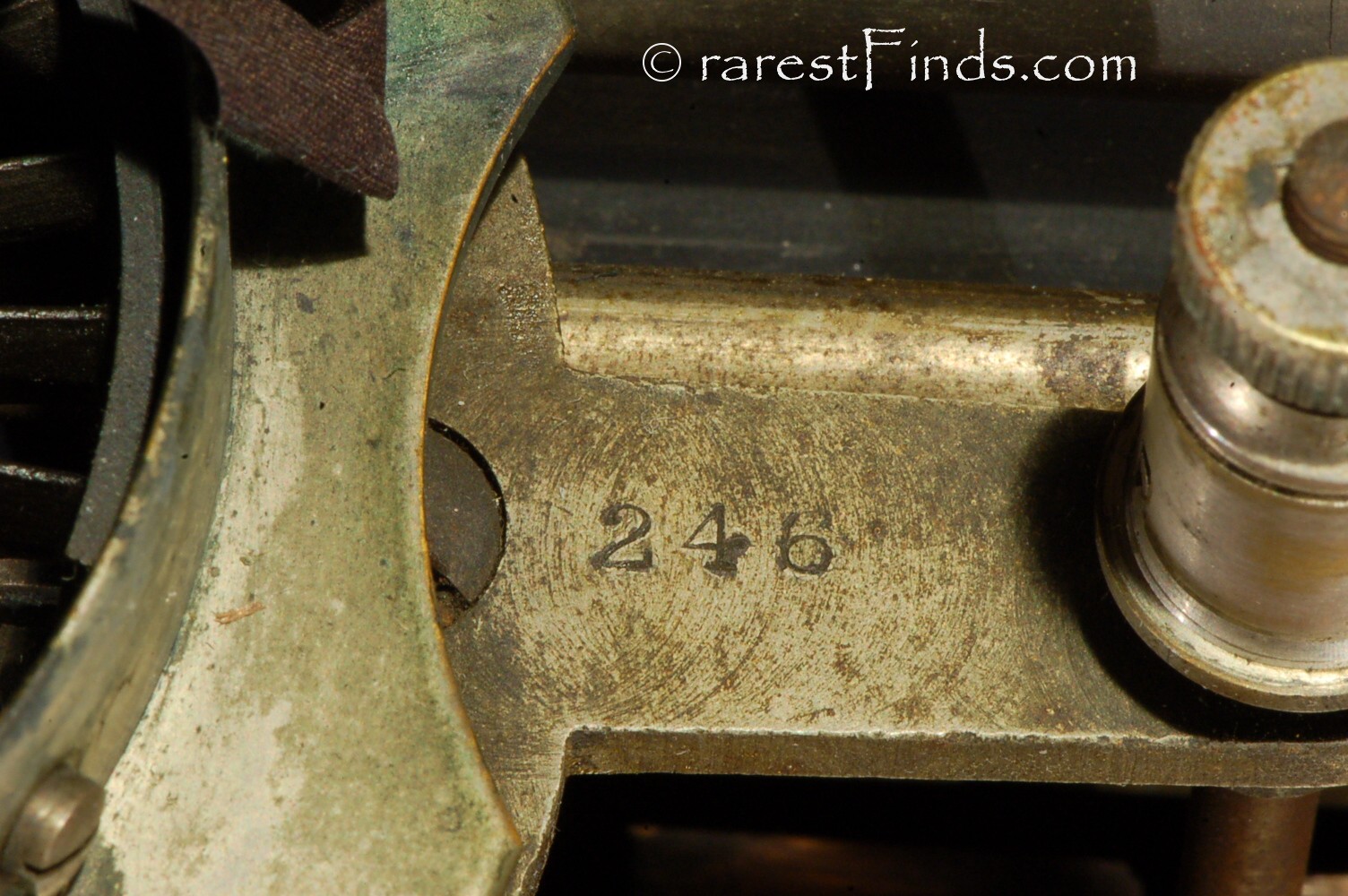
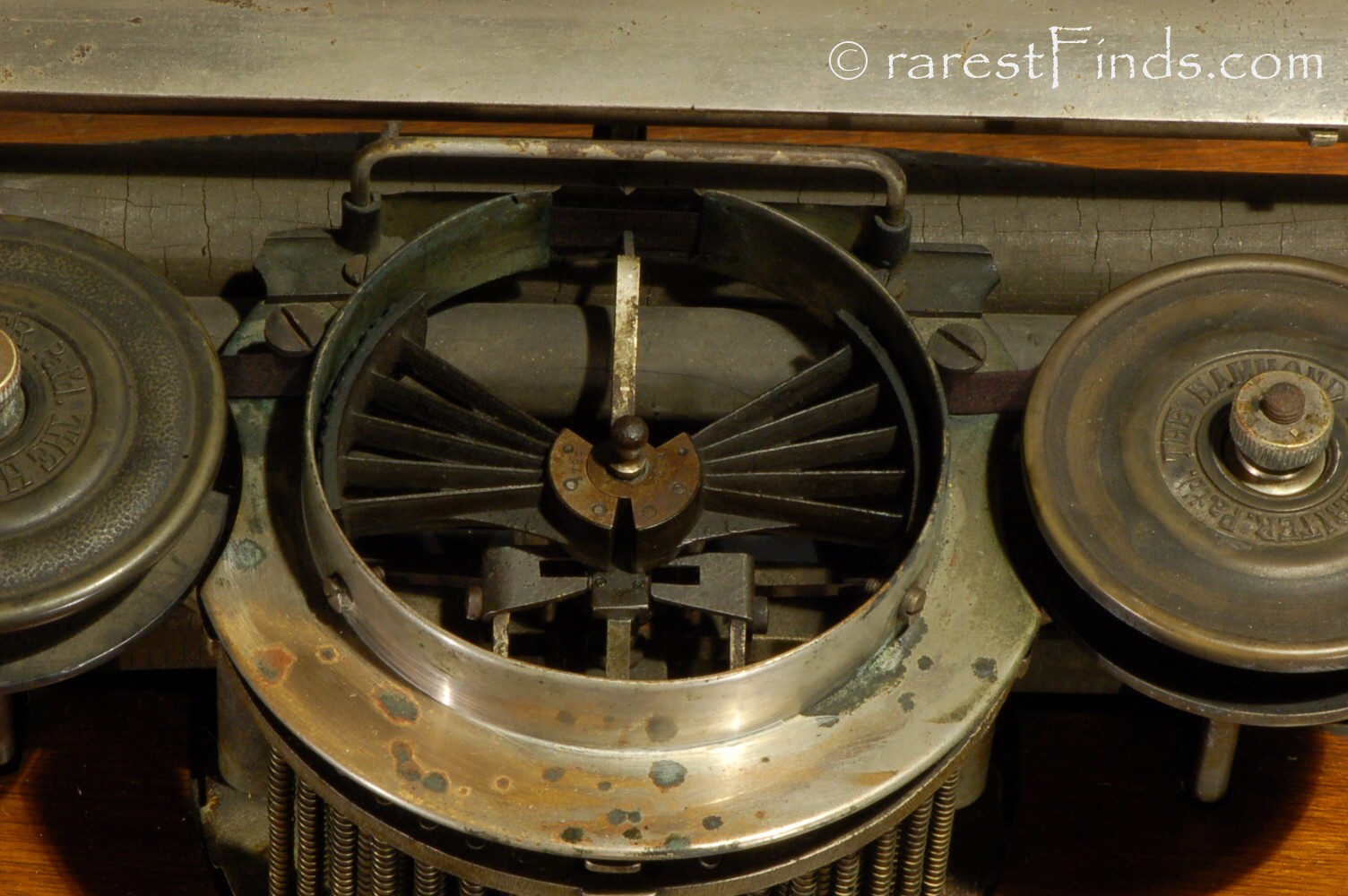
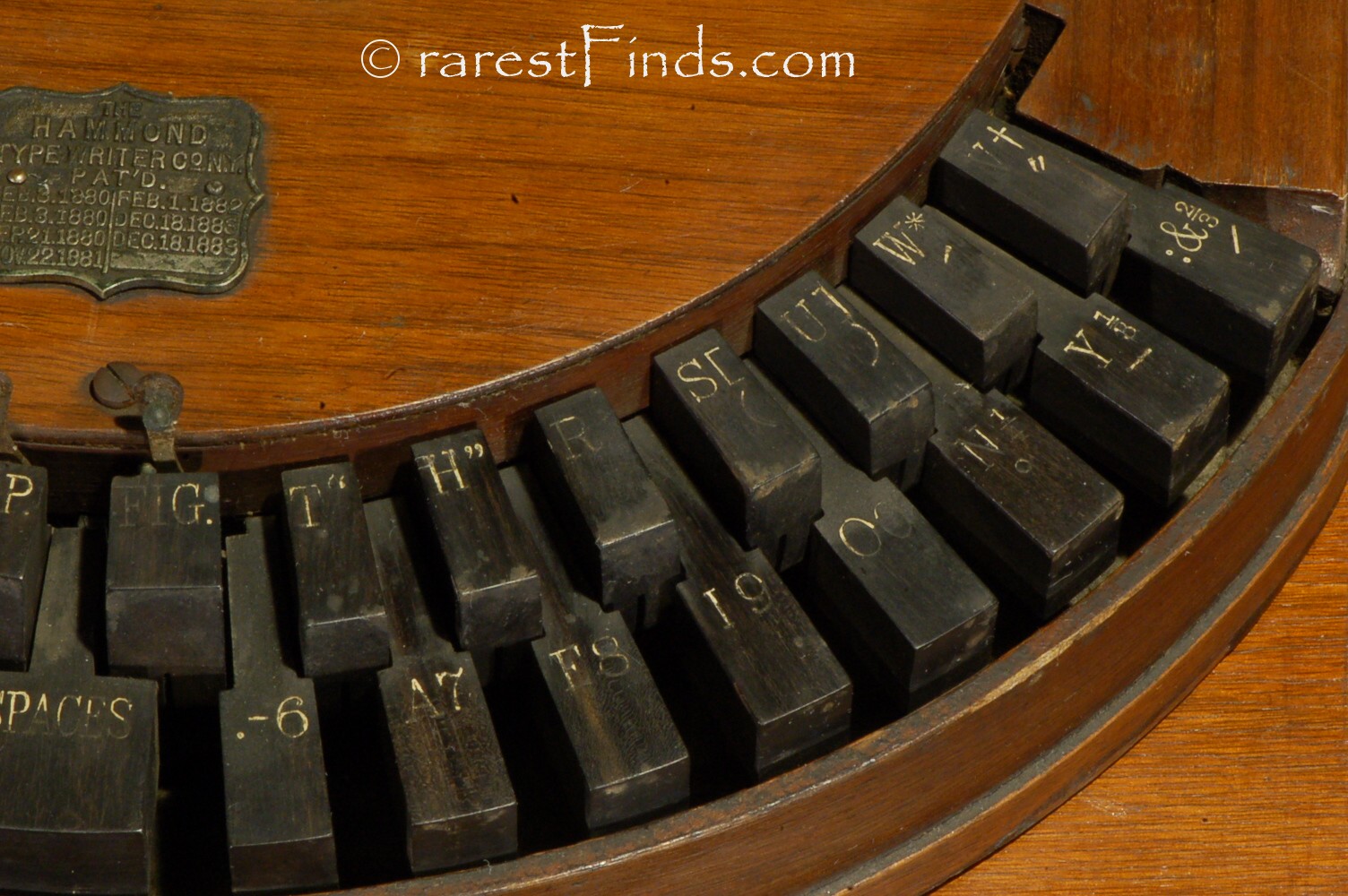
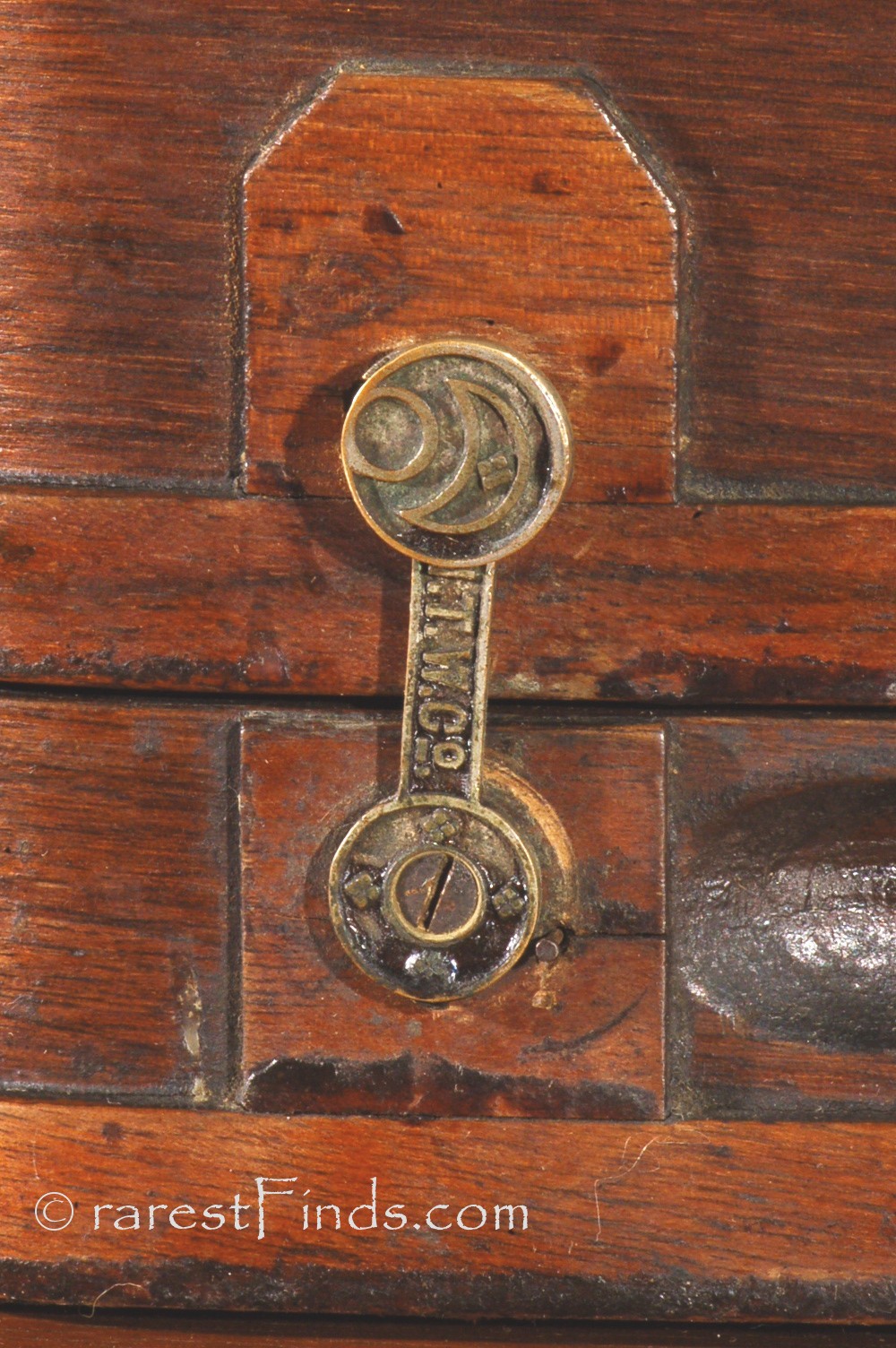
The Hammond Type Writer here offered, is one of the first ever built; the serial number is 246, see picture #24. This early machine bears the following patents: February 3, 1880, and another one on the same date; September 21, 1880; November 22, 1881; February 1, 1882; and the last two patents mentioned on the plaque attached to the machine have the same date, December 18, 1883, see picture #20. For the reader's convenience, I included images of the first patent description as well as the last patent description. As the reader can see, the first patent has little resemblance with the actual machine; the last one does very detailed. Interestingly the type-shuttle on the last patent was a one piece type-shuttle, the actual machine built had a split type-shuttle and consists of two parts, see pictures #18-19. Hammond would later change the design on its second model back to a type-shuttle made of one piece. Also worth noting is the fact that the type-shuttle on this machine has five spokes on each side and not the three spokes usually found on the first model; an early version only used at the very beginning??
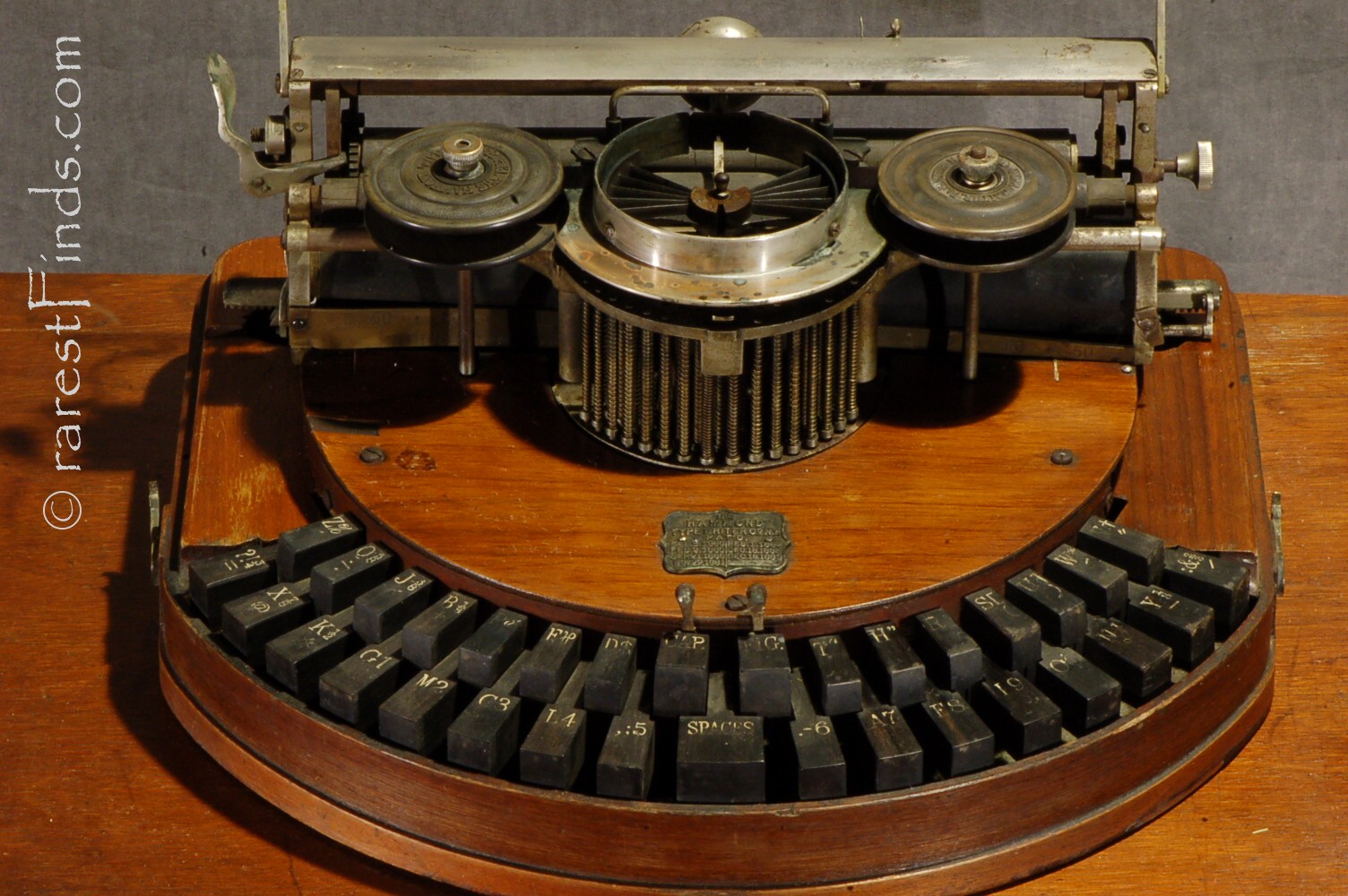
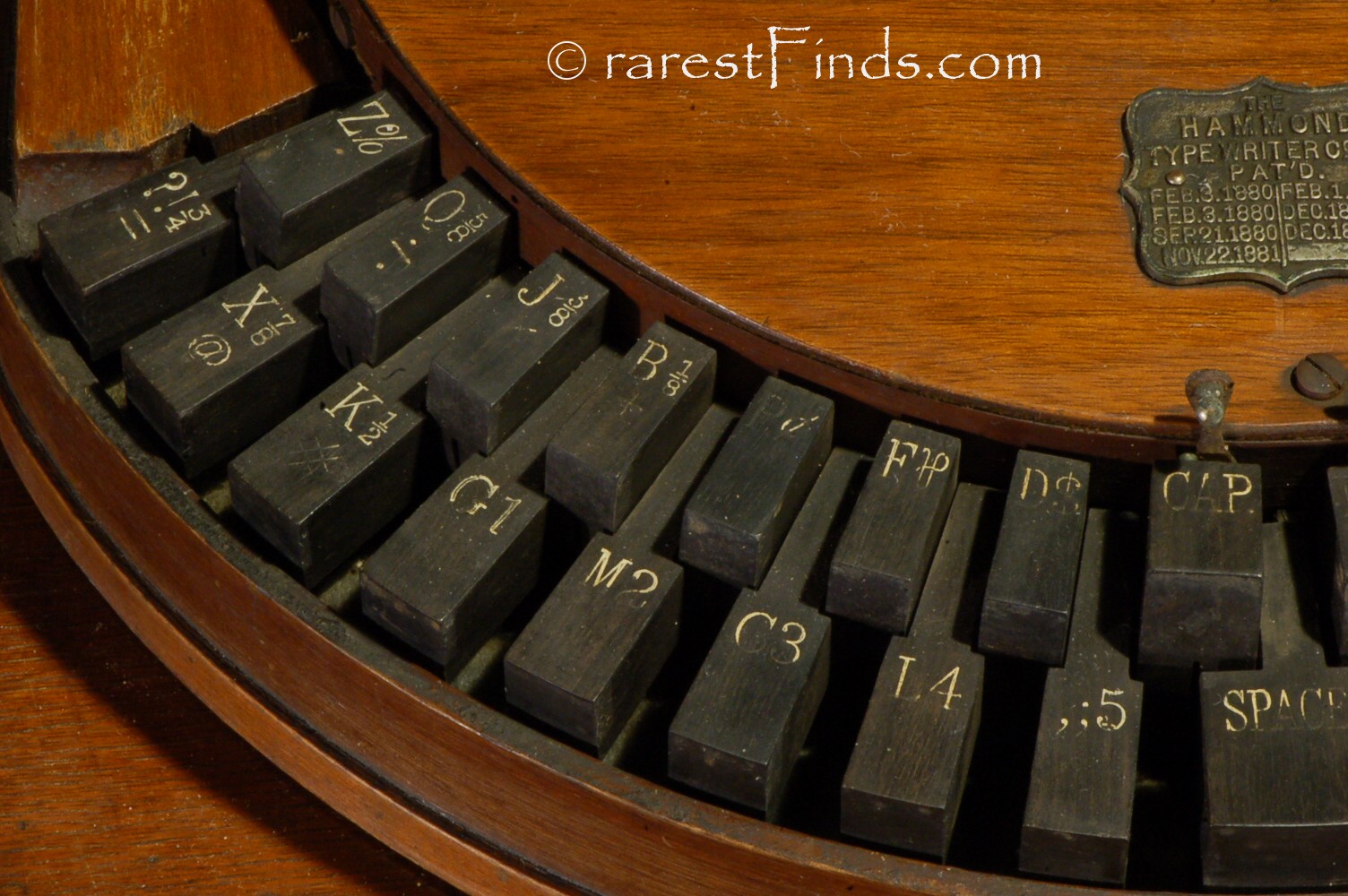
James B. Hammond's Type Writer had unusual features; the typeface could be changed for different fonds, sizes, and languages; the carriage could accommodate paper wider than the carriage as the frame of the carriage on the side is open (to transport the machine, there are two little brackets to close the gap in order to strengthen the frame and to prevent it from breaking, (on this machine both sides are intact and free of breaks or repairs). The keyboard is arranged in a semi-circle and the keys are made of ebony wood. Every key can print three characters (double shift keys). The imprint is not dependent from the force of the writer pressing the keys as the hammer hitting the type-shuttle is independent from the force the keys are pressed, hence creating an even printing force and as a result an even printing image.
Here a discription published in 1895 in, Johnson's Universal Cyclopadia, Vol.VIII, 1895, page 329:
The Hammond typewriter invented by James B. Hammond, is covered by patents taken out in 1880, 1881, 1882, and 1883. The applications for some of these were filed as early as 1875.
The machine is of the type-wheel variety, and presents radical differences in theory and when compared with other writing-machine inventions, except the "pterotype," invented by John Pratt, of Centre, AL, and fully described in a paper read by him before the London Society of Arts in 1867. In the latter, of which only a very few were ever made, the types were arranged all on one plate which was moved so as to bring the desired letter to the printing-point, when the impression was made by a hammer-blow on the paper, this being carried along in a square frame furnished with devices for line and letter spacing.
Hammond's invention, which appears to have been a conception entirely independent of Pratt's, very strongly resembles it in principle. Hammond was finally successful in his efforts to control the motion of the type-wheel, a problem which Pratt failed to solve. The two inventors were placed in interference in the U.S. Patent-office, with additional complications arising from the presence of a third application upon a type wheel machine by Lucien S. Crandall, whose device is described later on.
By concessions on the part of Pratt, Hammond was enabled to proceed with his applications. The "Ideal" model Hammond first put on the market in 1884, has an almost semicircular keyboard, consisting of two banks of ebony keys. Each key controls the printing of three characters. The key-levers radiate from the center of a small turret-like casing, which contains the printing apparatus in the shape of a type-wheel, or, type sectors, a small hard-rubber partial wheel (180 degrees) made in two sectors of a circle, each containing forty-five characters disposed in three rows upon its outside periphery. This wheel turns freely in a horizontal direction. The depression of any key serves to throw forward the type-wheel a greater or less distance, bringing the proper type to the printing-point. The exact position of the type is determined by a small stop-arm oscillating on the shaft of the type-wheel, and engaging one of a series of thirty hardened steel index-pins, one for each key-lever. The lower end of each of these pins stands directly above its corresponding key-lever, and when a key is depressed the corresponding index-pin rises immediately, throwing its upper end into the path of the stop-arm, thus checking it, and consequently the type-wheel or sector at the exact point required.
The type-wheel or sector can readily be removed and another substituted for it. The paper-carriage runs directly behind the type-wheel turret. A pair of rubber-covered rollers hold the paper in a vertical position against the face of the type-wheel or sector. An impression-hammer strikes from behind, carrying the paper forward upon the face of the type with sufficient force to cause an impression to be made. The spacing mechanism consists of an ingenious though very complicated set of leverages, which also impel the hammer. An escapement wheel with pawls regulates the step-by-step motion of the letter-spacing. The inking is done by a narrow ribbon. When capitals or figures are required the use of the proper shift-key elevates the type-wheel, bringing another line of type into the printing line. The arrangement of the original (now termed the Ideal") keyboard of the Hammond machine differs materially from that adopted by the Remington, to which almost all new machines conform. This led to the manufacture of a new model of the Hammond which appeared in 1890, termed by the makers the "Universal Hammond." This machine differs from the first model only in adopting three banks of keys ranged according to the Remington Standard, with the space-key in the same position as in that machine. Still later, a light rubber shell containing the type-faces was substituted for the type- wheel. This was supported by a metal backing, giving rise to the name "anvil and shuttle" machine.
James B. Hammond
Condition:
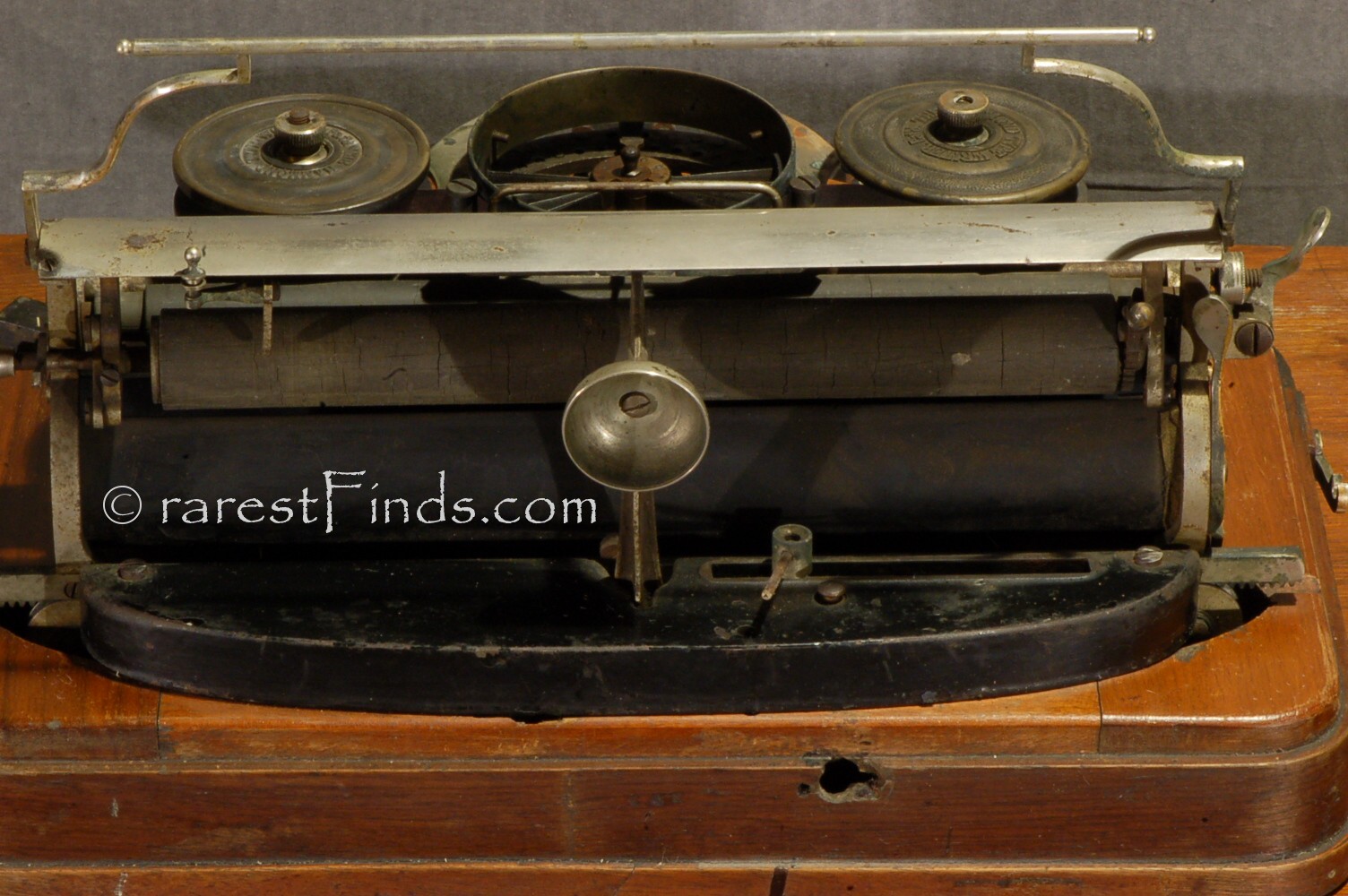
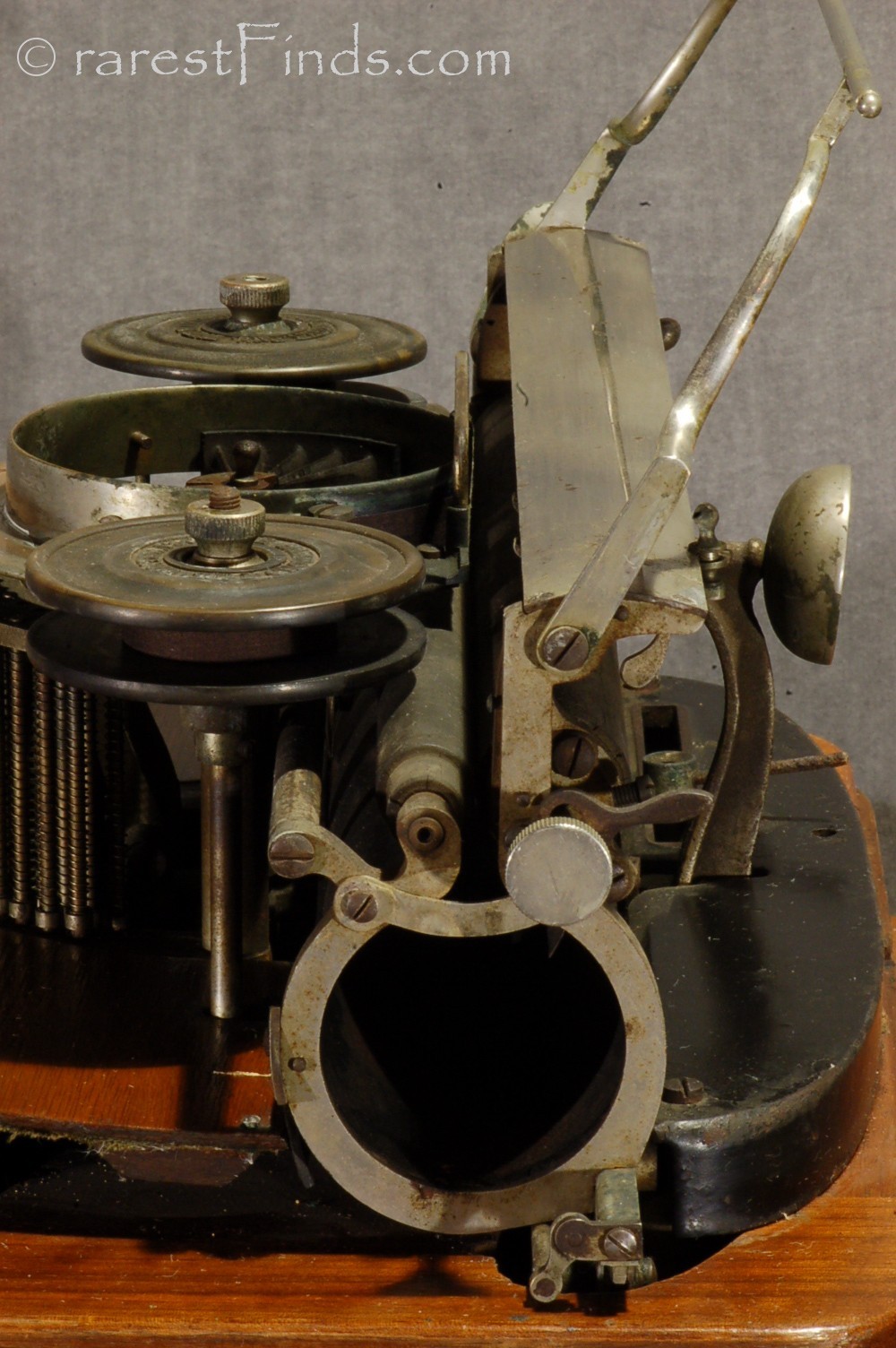
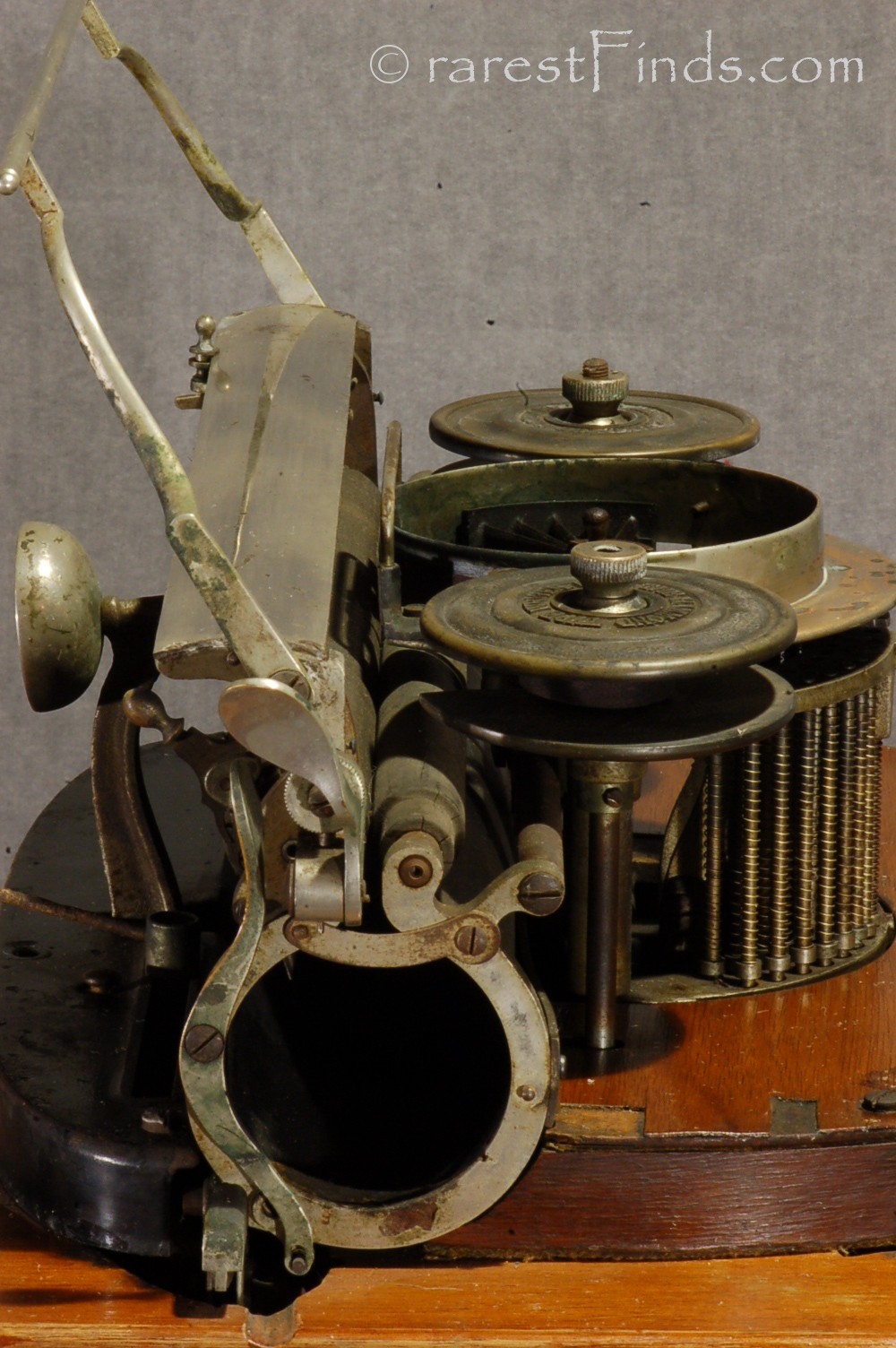
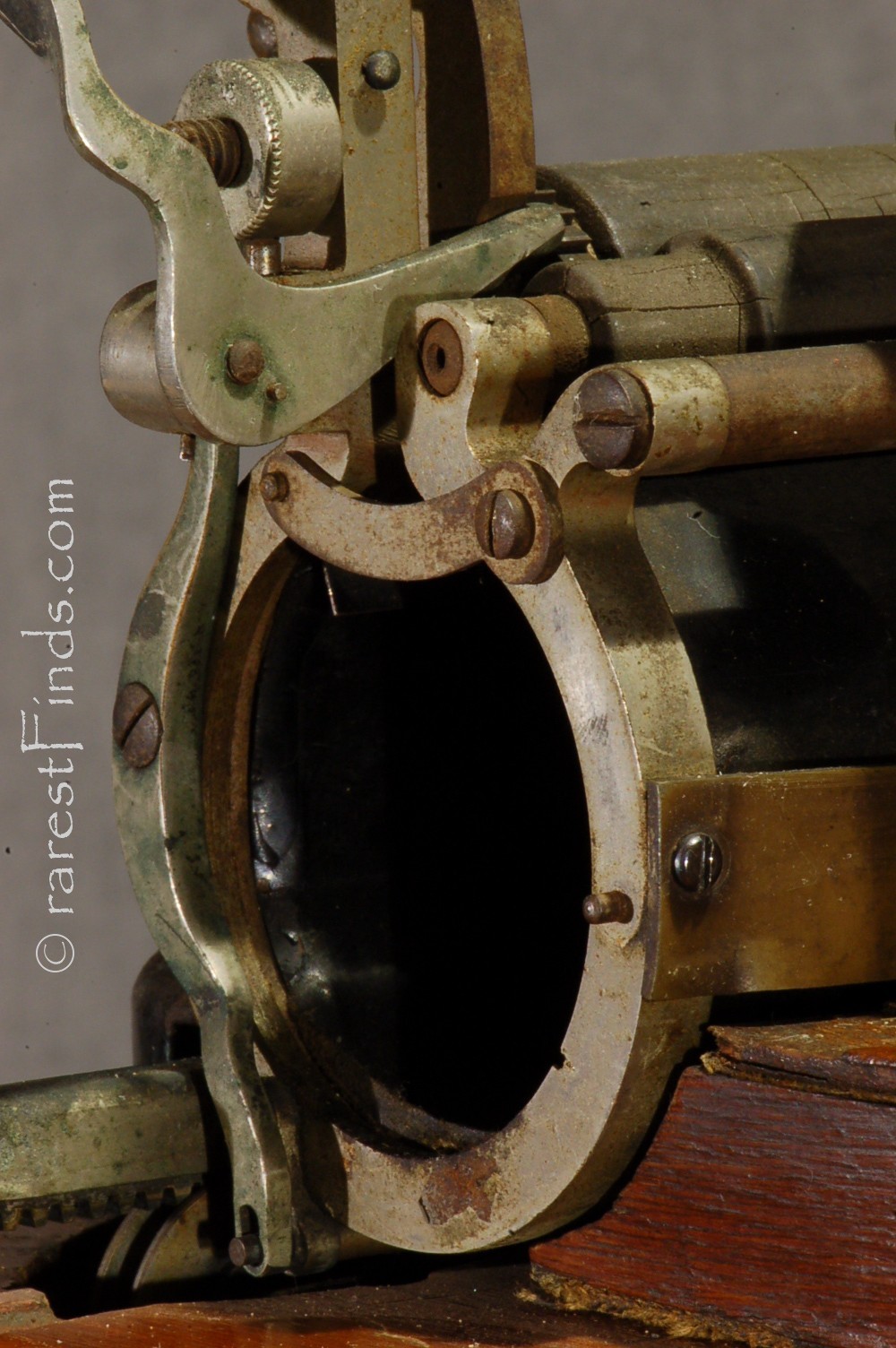
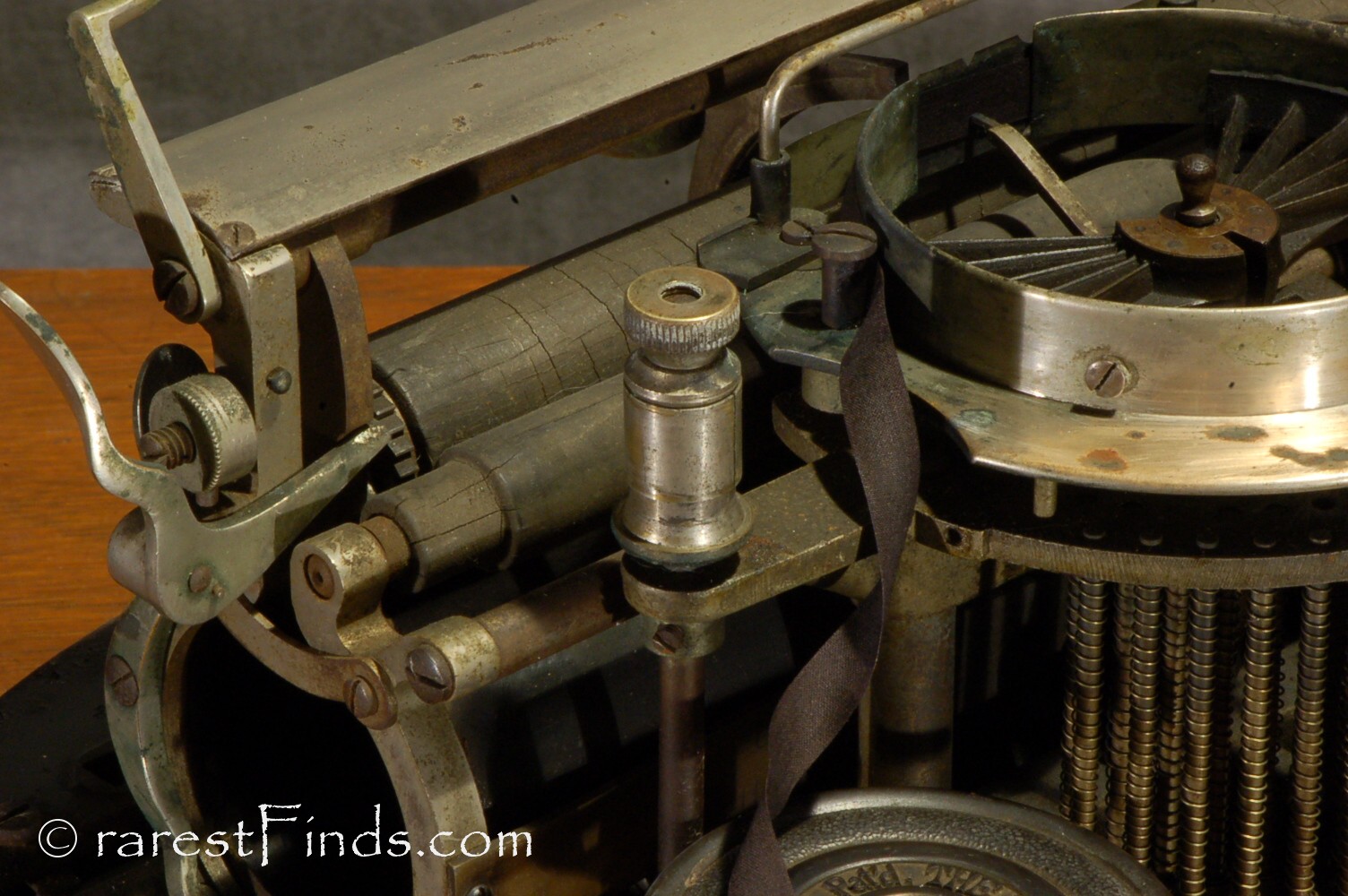
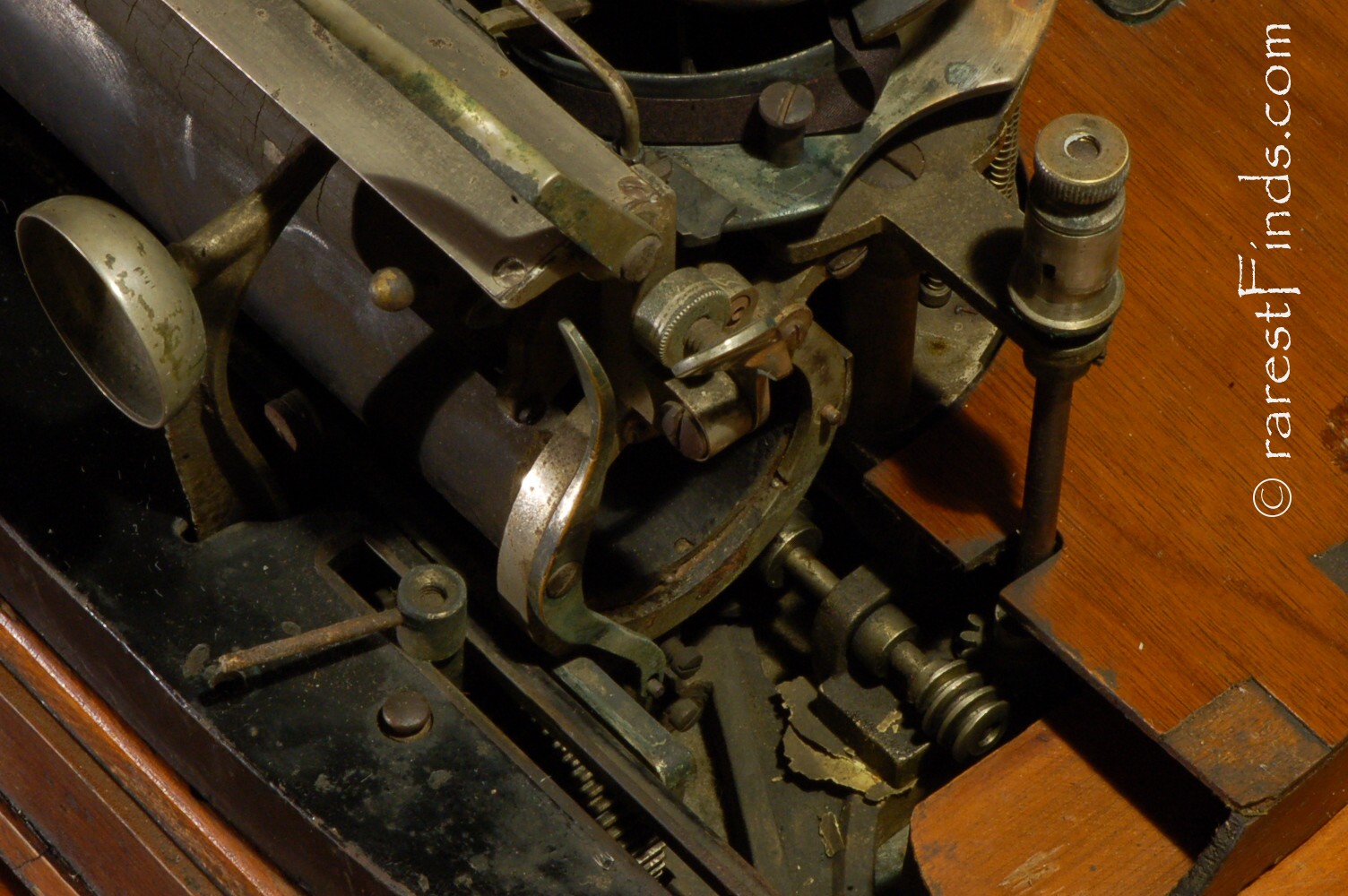
To protect the Gutta Purcha type-shuttle from the impact of the hammer striking from behind and also to achieve a uniform imprint, there was a rubber impression band mounted across the carriage. This rubber band did get bridle a long time ago and did disintegrate. It is therefore missing. This rubber band attaches to the little pins on each side of the carriage, see picture #16 (pin in upper middle of picture, left side of carriage frame). Picture #9 shows the pin on the right side of the carriage frame, see vertical part of the the carriage frame.
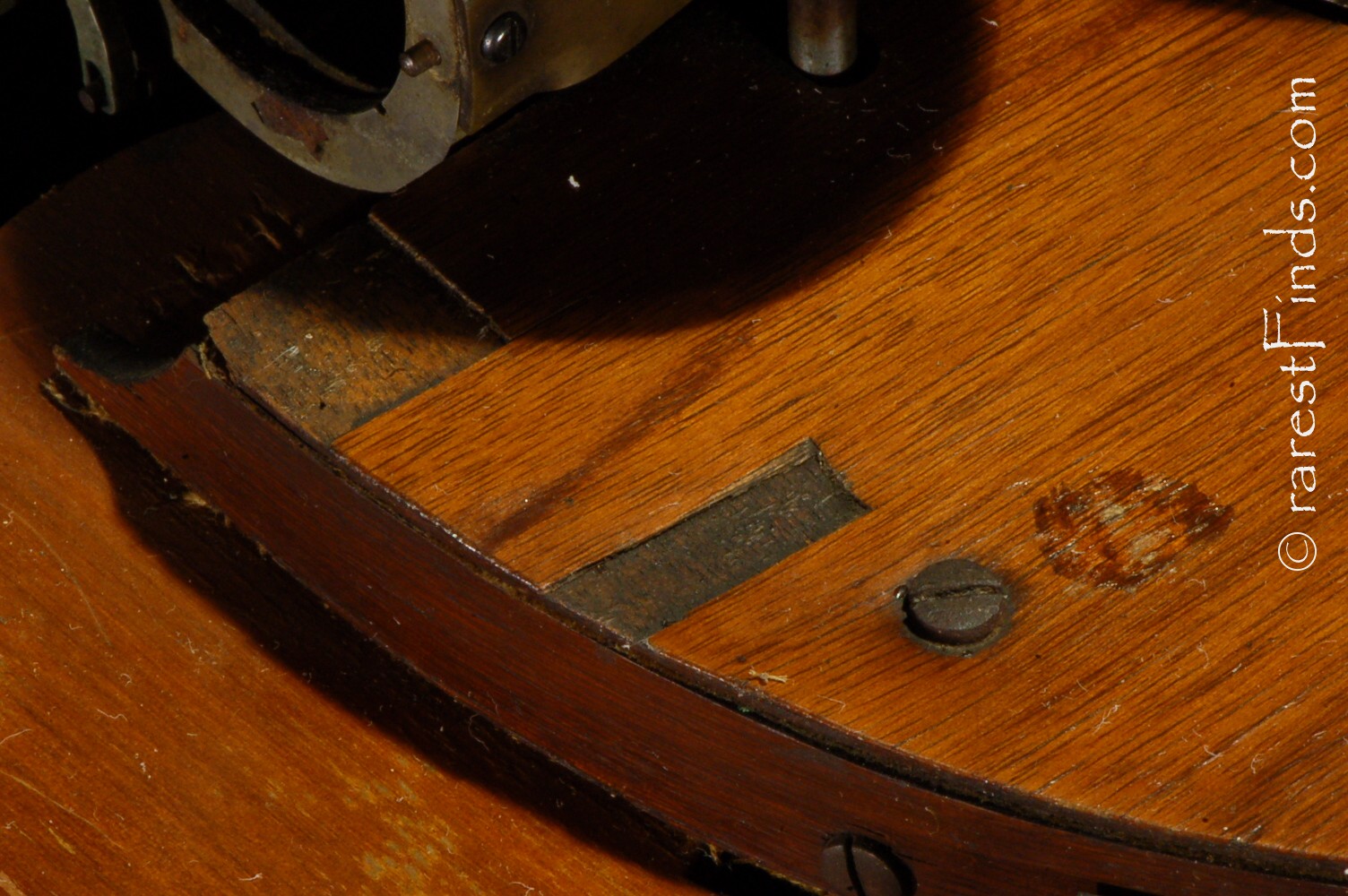
There are two little pieces of veneer missing, see picture #22;
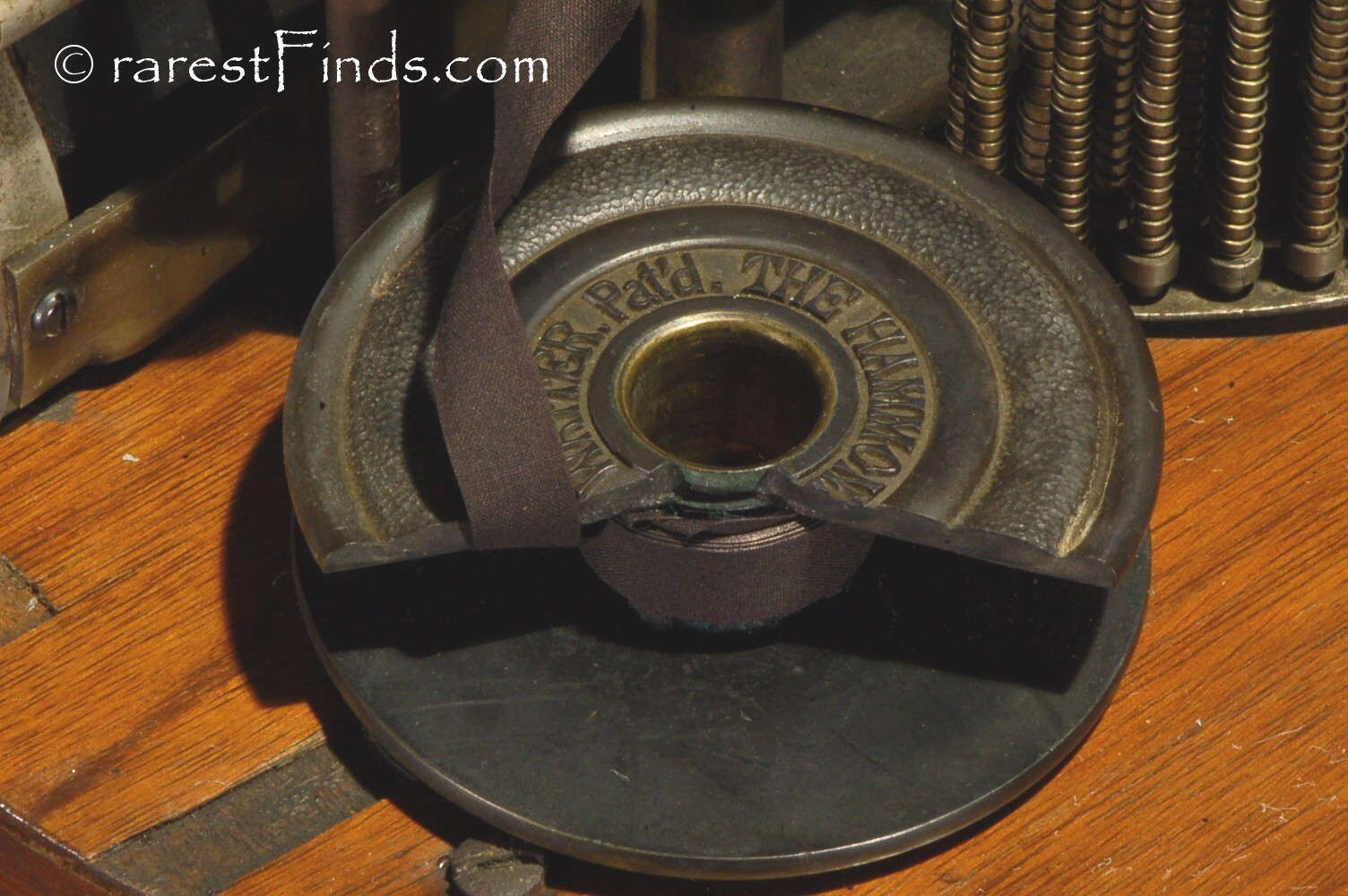
one of the Gutta Percha or Indian Rubber ribbon spools has some damage, see picture #23; as these spools are looking the same on both sides it is not visible as the spool can be placed so the broken side is on the bottom. There are reproductions available on eBay or with a little bit of patience, you can find an original one on eBay.
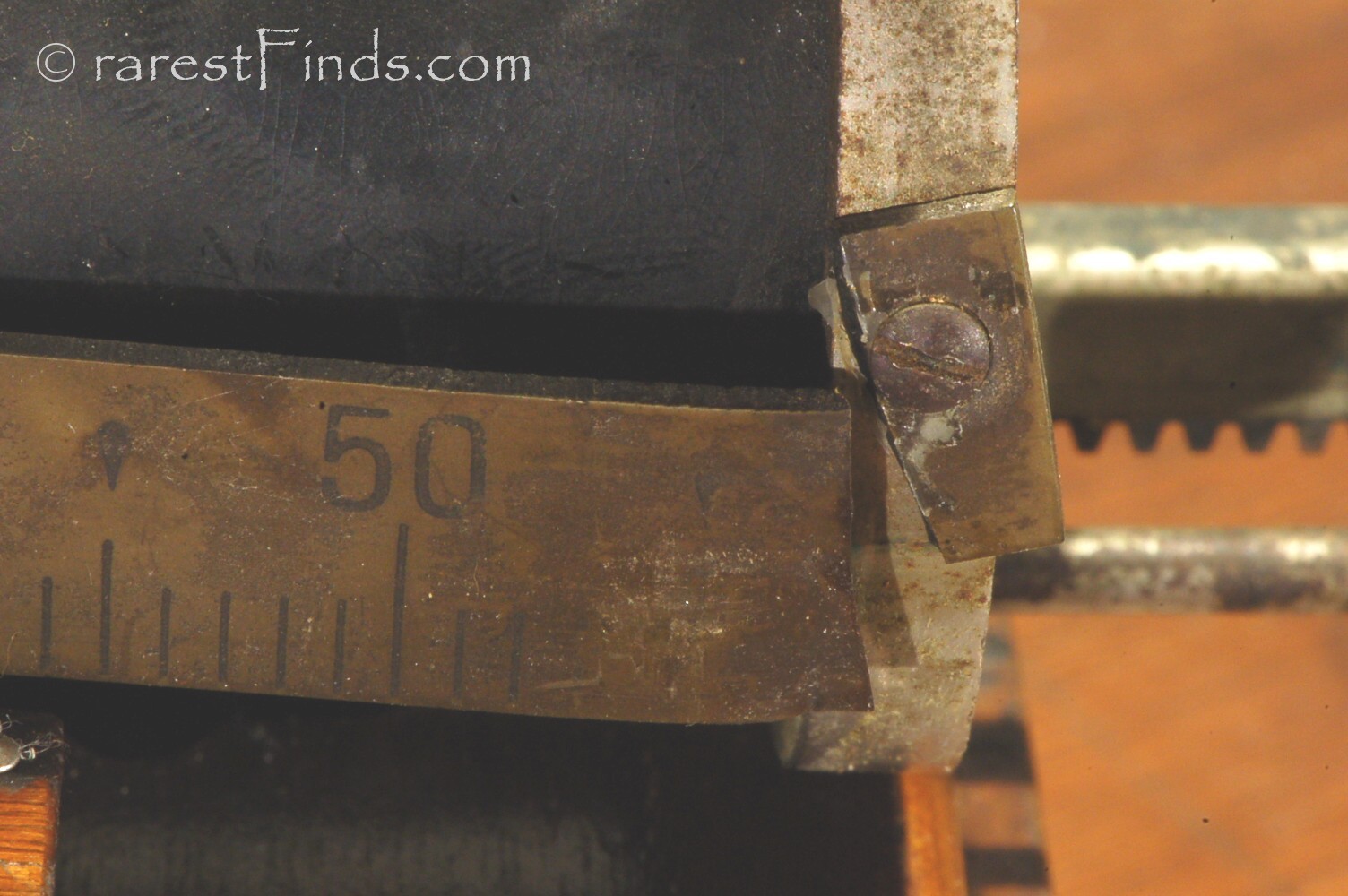
The ruler attached to the front of the carriage which is also made of Gutta Purcha is broken, see picture #xx. This can be glued. These rulers are missing on most machines as they break if the carriage is moved by grabbing onto the side of the carriage by hand. The machine is working, all the parts move and work as intended. If you plan to use the machine, it is imperative that the rubber impact band be installed and the dried out inking ribbon band be replaced to prevent damage to the type-shuttle.
History:
James B. Hammond, born on April 23, 1839, a resident of Hartford Connecticut, USA, devoted most of his life to invent, perfect, and manufacturing the typewriter which beard his name, the Hammond Type Writer. The term typewriter was not even coined by the time he filed his patents, hence, he called it Type Writer. He took out many patents before he started manufacturing his type writer in 1884.
Literature:
(Click on any title to see the online version of the book or publication if there is one.)
[1]
Title of the book, author, edition (year published).
or simply info without link
Inventory Number 09290;
Sold!
Prices realized in the past:
- I could not find a price of a number one with low serial number and/or on an original table.